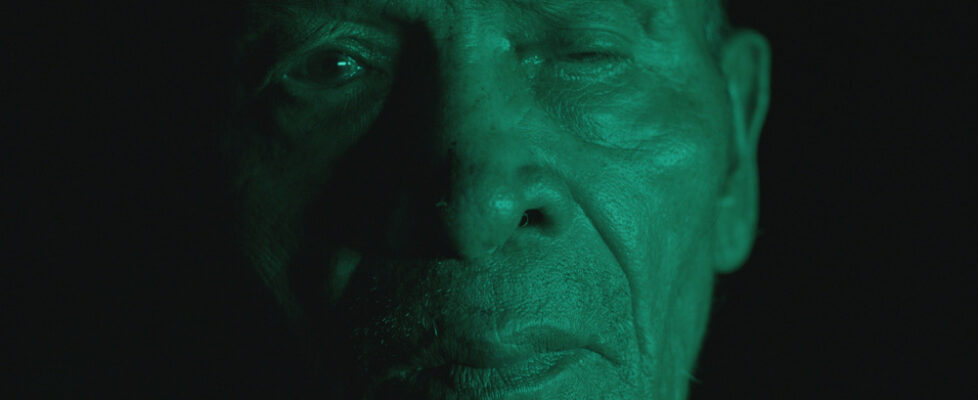
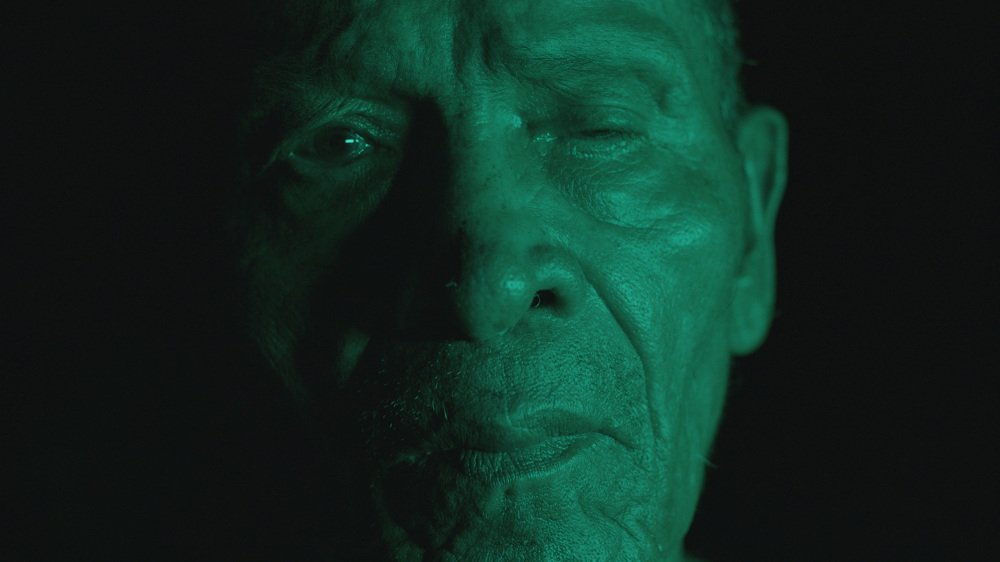
While
some people can control their empires while riding a limo (as it was
shown in David Cronenberg’s Cosmopolis), for others the limo
ride is a once-in-a-lifetime type of event. Okay, maybe not just
once, there are occasions when renting a limo seems appropriate: a
wedding, a graduation, retirement or some other sort of celebration,
an important family event or a night of extensive clubbing and
showing off. To each their own pleasure, I guess.
Saulé
Bliuvaité’s short documentary titled Limousine that
has just premiered at the national short competition of Vilnius
International Film Festival – Kino Pavasaris is an attempt to catch
a spirit of limo-riding in a compact, 15-minute format. But actually,
it deals with the expectations, those from the participants and those
from the viewers.
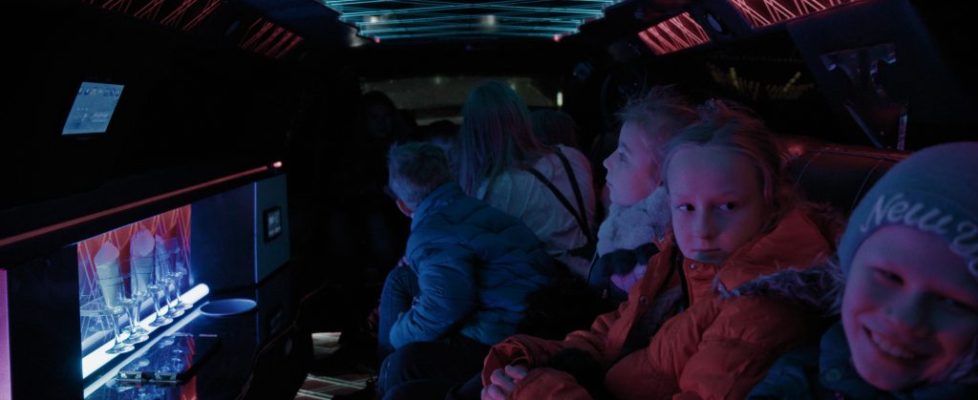
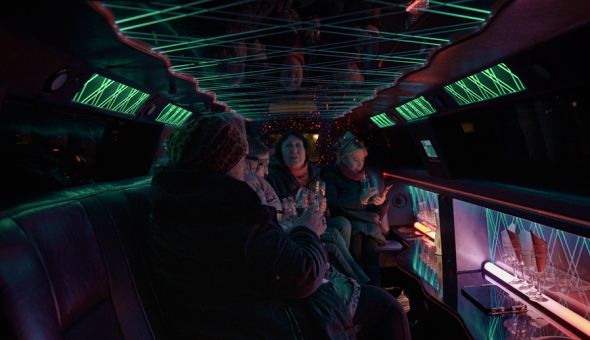
It is always the same limo, but the groups of people are different. There are teen girls, celebrating one girl’s 18th birthday. There are elderly ladies, probably enjoying the ride for the first time in their lives. There is a group of deaf young people communicating in sign language. There is a group of clubbers anxious to show off. There is a large, possibly extended family with kids of different ages. The sparkling wine is always cool, the light show is on and the choice of music is wide enough.
But it
feels that something is missing nevertheless, leaving much of the
passengers’ expectations unfulfilled. Simply put, apart from the
drinks, the light show, the music and the instant sense of luxury,
all their actions and conversations could be performed on the back
seat of a regular taxi.
It is
hard to say whether that was Bliuvaité’s original premise, or it
is a realization she came to while filming. Some things are certain,
though. Firstly, Limousine is a technically accomplished film
that has to deal with the same cramped space over and over again, but
is never boring thanks to Vytautas Plukas’ brilliant camerawork and
Iveta Macevičiuté’s sound design that points our attention to the
desired direction. And secondly, it simply catches the diffuse
feeling of nothing really happening while the expectations go wild.
Courtesy of Lithianian Shorts
Original title: Limuzinas Year: 2021 Runtime: 15’ Country: Lithuania Languages: Lithuanian, Lithuanian sign language Directed by: Saulé Bliuvaité Written by: Saulé Bliuvaité Cinematography by: Vytautas Plukas Editing by: Saulé Bliuvaité. Igné Narbutaité Music by: Ernestas Kaušylas Sound design by: Iveta Macevičiuté Colourist: Vytautas Plukas Produced by: Krisitina Ramanauskaité, Giedré Burokaité Production company: Magic Films Supported by: Lietuvos Kino Centras
Most people nowadays see hippies as relicts of the past, a heterogeneous group of idealistic people that experimented with some of the foundations of the society and only partly fulfilled their noble causes while having a good time before they marched into the adulthood and got lost in the Bermuda triangle of work, family and house. Through their victories and defeats, hippies taught the world a lesson of methods in waging non-violent battles and not giving up. Between the sexual revolution, fight for the recreational marijuana use, anti-war protests, urge to save the ecology and fight for racial equality, one particular aspect of hippies’ struggle for civil rights tends to get out of perspective: fight for the inclusion of people with disabilities into society.
Nicole Newnham and James Lebrecht decided to tell the story of that particular fight in their documentary Crip Camp: A Disability Revolution produced by Obamas’ production company Higher Ground, known for the Oscar-winning documentary American Factory, and distributed by Netflix. Crip Camp also runs in the Oscar nomination, so it found its place in our Award Ticker section.
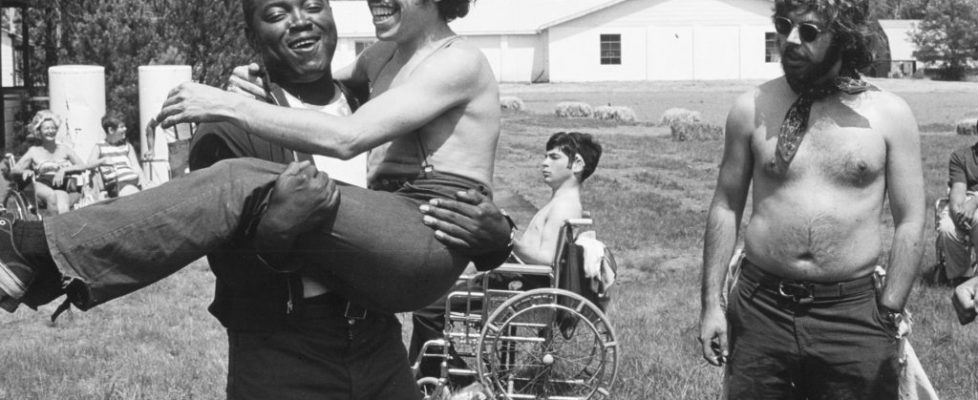
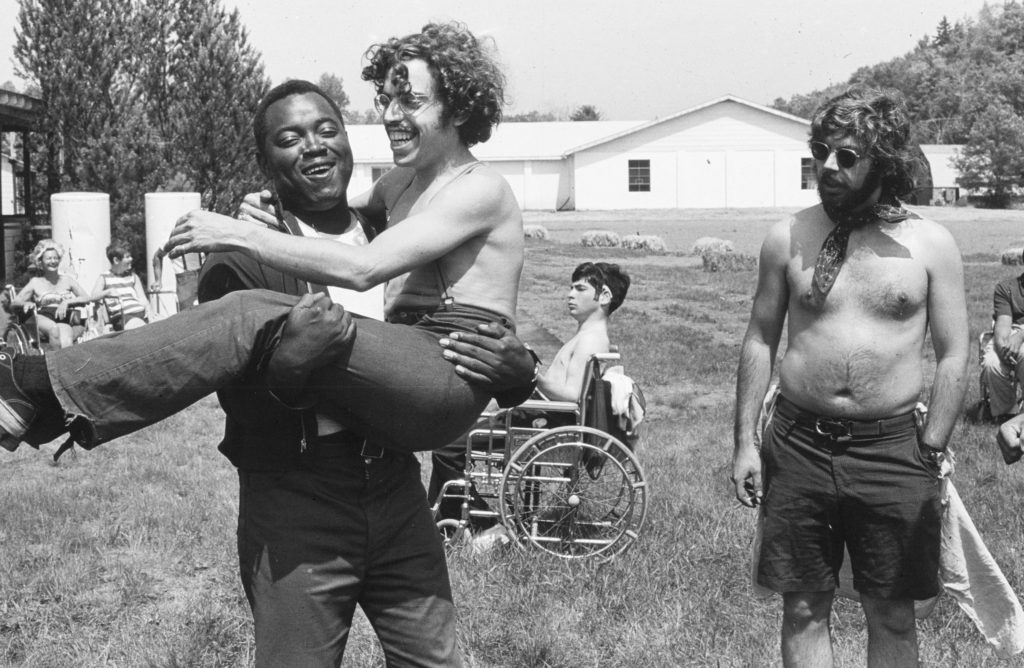
The titular camp was actually called ‘Camp Jened’, and it was located in the Catskills not far from the iconic Woodstock. ‘Camp Jened’ operated as a summer camp for young physically disabled people from the 50s till its demise due to the financial troubles in 1977. At first, it was a regular, structured summer camp, but the things changed when hippies took the leadership of it, making it a one-of-a-kind place where many of men and women felt accepted for what they were for the first time in their life.
As Lebrecht, serving as one of the co-writers and co-directors, as well as one of the principal subjects of the film, puts it, the role of the camp in the future fight for the civil rights for people with disabilities was immense and almost nobody knows about it. Crip Camp opens with the home footage from Jim’s childhood. We see him as a happy boy who does his best to overcome his spina bifida diagnosis. While growing up, he considered himself lucky to live at home and go to school (even on the “trial basis”), since kids like him usually got institutionalized early on. He liked his life, but he had no opportunity to see many kids like him. In the camp, he found himself “at home”: he met his first girlfriend there, he deepened his interest for music and he built up some sense of self-esteem that allowed him to go all the way to California to study the sound engineering.
Other
stories from the camp include people talking about their romantic and
sexual experiences (there was a clap outbreak once), the
open-mindedness of the place and the spirit of friendship and
comradery. One of the counsellors, Lionel Je’Woodyard, a Black man
from Alabama, draws the parallels between the treatment of the
disabled people world-wide and the treatment he suffered growing up
in the South. Other campers talk about their relationship with their
parents who tend to be over-protective, therefore constantly
reminding them that they are disabled.
The
camp part takes up only the first half of the film, since the
teenagers from the “Class of ‘71” grew up and went on with
their life. A lot of them moved to Berkeley, California, which was
the best place for life with disability in America at that time. The
revolution and the fight for inclusion, resulting first in the
Rehabilitation Act (1973) and finally in Americans with Disabilities
Act (1990), takes the second half of the film and it is connected to
the camp since the former alumni of the camp played significant parts
in the fight, especially in the culmination, the 504 Sit-In (1977).
In that part, Judith Heumann, the leader of several NGOs that fought
for the rights of the disabled people and also one of the former
campers, becomes our protagonist.
At first glance, it seems that Crip Camp: A Disability Revolution is just a notch better than a regular, inspirational TV-style documentary that combines the on-camera interviews with archival and home footage. The film is also based on such tried-and-tested techniques, perfectly welded together by the editors Andrew Gersh and Eileen Meyer, and it works pretty well on the small screen, while the special treat is there for the fans of the rock oldies like The Grateful Dead, Jefferson Airplane and others.
The
difference between Crip Camp (which is by no means
revolutionary in the department of the documentary filmmaking, and it
is a bit of a let-down) and a regular inspirational documentary is
the lack of manipulation and pulling the heart-strings in an obvious,
almost exploitative fashion. Crip Camp remains respectful to
its subjects by making its most emotional moments look earned. Also,
the way it blends a number of different topics and ideas in a
comprehensible whole is just sublime. The revolution is an ongoing
process.
Runtime: 106’ Country: USA Language: English Directed by: James Lebrecht, Nicole Newnham Written by: James Lebrecht, Nicole Newnham Cinematography by: Justin Schein Editing by: Andrew Gersh, Eileen Meyer Music by: Bear McCreary Music supervisor: Aminé Ramier Sound by: James Bloomfield-Misrach Visual effects by: Max Colt Chizhevsky Colourist: Brian Hutchings Produced by: Sara Bolder, James Lebrecht, Nicole Newnham Executive producers: Josh Brown, Howard Gertler, Barack Obama, Michelle Obama, Priya Swaminathan, Tonia Davis, Ben Braun, Matt Burke Production companies: Good Gravy Films, Higher Ground Productions Distribution by: Netflix
There
is no much difference between the personal, the artistic and the
political courage since all three are usually connected and
intertwined. Courage should not be confused with desperation and
stupidity, it is always based on a conscious decision to act with
some of the risk calculated into it. Life in tyranny is not that hard
after all, it is necessary for the individuals to shut down their
hearts and minds, but it is unbearable for those who refuse to do so.
A
documentary titled Courage, written and directed by
Aliaksey Paluyan, deals with all three mentioned types of courage by
closely following the trio of the actors of the underground Belarus
Free Theatre during the days around the August elections and the
protests that followed in Belarus. It has recently premiered at this
year’s edition of Berlinale (section Berlinale Special) and, due to
the hotness of the very topic and the, it is destined to go places in
the foreseeable future.
Let us
deal with some of the key terms here first. The recent history of
Belarus is pretty much a bloody one and it runs in cycles. The
country has been ruled by the dictator Alexander Lukashenko since the
mid-90s with a neo-Soviet ideology and the almost Stalinist iron
fist. His closest ally is Russia, although his relationship with
Putin is not that harmonious, but the reason for the support from the
Russian dictator is pretty prosaic: for Russia, Belarus functions as
a buffer towards the EU and NATO. The cyclic nature of life in
Belarus is marked by the elections that go on always based on the
same scenario: the opposition leaders (who are alive and present,
meaning neither kidnapped, exiled nor killed, which also tends to
happen) get close to the electoral victory, Lukashenko then rigs the
results blatantly, the protests ensue and they are crushed by the
police, regular and riot. There is not much available for the Western
countries to do: they can accept some of the political refugees or
put additional pressure on the régime with economic and political
sanctions, but no real intervention is a viable option.
The
second key term here is Belarus Free Theatre, an underground
institution that operates on secretive locations around Minsk, whose
founders and house directors Nikolai Khalezin and Natalia Kaliada
emigrated to London in the early 2000s and are directing the plays
via Skype from there. It is a political theatre that survives in deep
underground and under the constant threats from the authorities.
Courage is not the first documentary that thematizes it, Madeleine
Sackler’s Dangerous Acts Starring the Unstable Elements of
Belarus had a healthy festival and niche theatrical run after its
premiere in 2013.
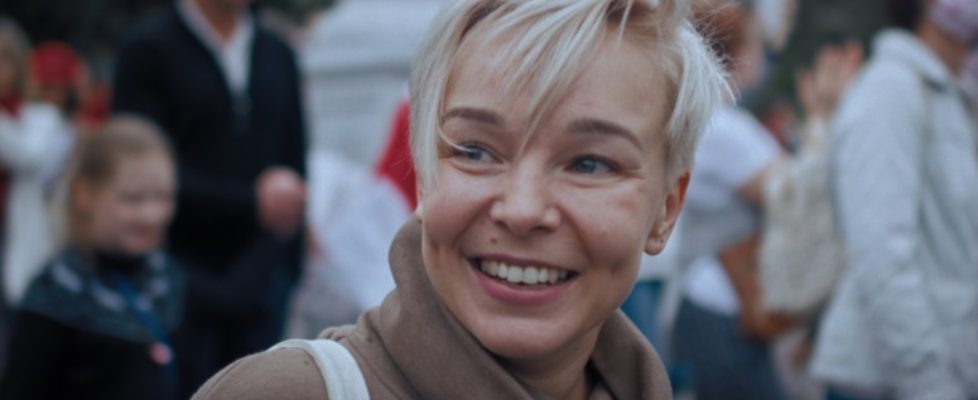
The three courageous protagonists of Courage are three actors: Pavel Haradnizky, Marina Yakubovich and Denis Tarasenka. We meet them as they are working on the play called Dogs of Europe under Khalezin’s direction. The election day is nearing and there is a sense of fraud coming their way. The three of them are in the different stages of life and therefore have different attitudes, priorities and dilemmas. Pavel is organized and dedicated to the non-violent activism. Marina is a mother of a toddler that takes much of her time. Denis is the oldest and the most cynical of the trio, which is understandable given that he cannot support himself by acting only, so he holds a day job in an auto repair shop. All three of them are bothered by differently formulated, but essentially the same things: whether the resistance is futile, if they should stay or they should go (they are “lucky” enough to have the connections to pass the borders to Poland or Ukraine), and if the hope is stronger than fear.
Then
there come the elections and the fraud, people gather on the streets
for peaceful protests, the police and the feared OMON special forces
intervene, people are being put under arrest and tortured in prisons
and detention centres. None of our protagonists were that unfortunate
to get locked up, but some of the BFT members were. There is a sense
of pressure and urgency, not unlike as what we saw in Maidan-themed
documentaries, Evgeny Afineevsky’s Winter On Fire
and Sergei Loznitsa’s Maidan,
but the sense of
uncertainty is highlighted by the fact that the outcome is still
unknown, at
least on the “real” political scale.
There are moments that are quite strong, though, like those when the parents of the arrested protesters that gather in front of the prison to try to find out what happened to their loved ones and where were they transferred or the instinctive, humane reactions of the young regular police officers who actually do not like their job and are uncomfortable beating up their fellow citizens. Paluyan had the privilege to be on the spot of the action and emotion and he seizes that opportunity. But Courage resonates best at the more quiet, intimate moments, like those Pavel and Marina share with their spouses and Denis with his boss, a disillusioned 55-year-old veteran of the Afghan war and former member of OMON.
Courage is a foreboding film, especially at the very ending; an excerpt from the re-staged play Discover Love thematizes the events from the late 90s, when a businessman and an opposition leader where kidnapped and executed by the OMON. Things rarely change, but it is still worth fighting and courage is necessary.
Runtime: 90’ Country: Germany Languages: Russian, Belarusian Directed by: Aliaksei Paluyan Written by: Aliaksei Paluyan With: Marina Yakubovich, Pavel Haradnizky, Denis Tarasenka Nicolai Khalezin, Natalia Kaliada, Svetlana Sugako Cinematography by: Tanya Haurylchyk, Jesse Mazuch Editing by: Behrooz Karamizade Music by: Mark Marczyk, Marichka Marczyk Colourist: Edmond Laccon Produced by: Jörn Möllenkamp Production company: Living Pictures Production Sales by: Rise and Shine
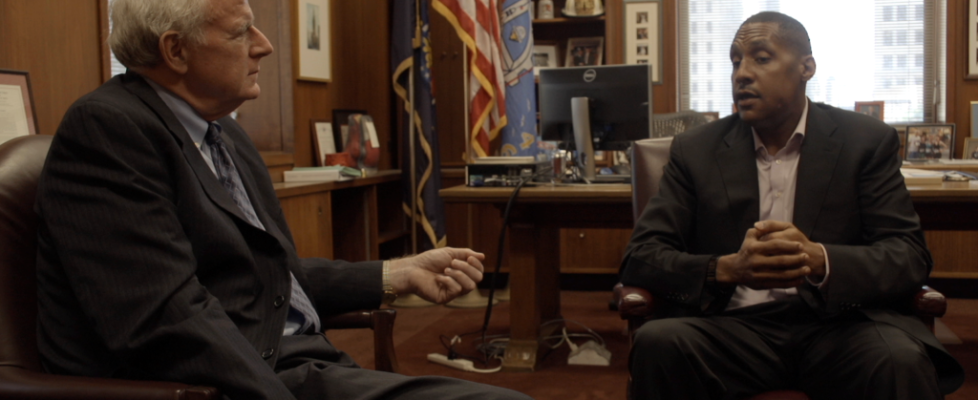
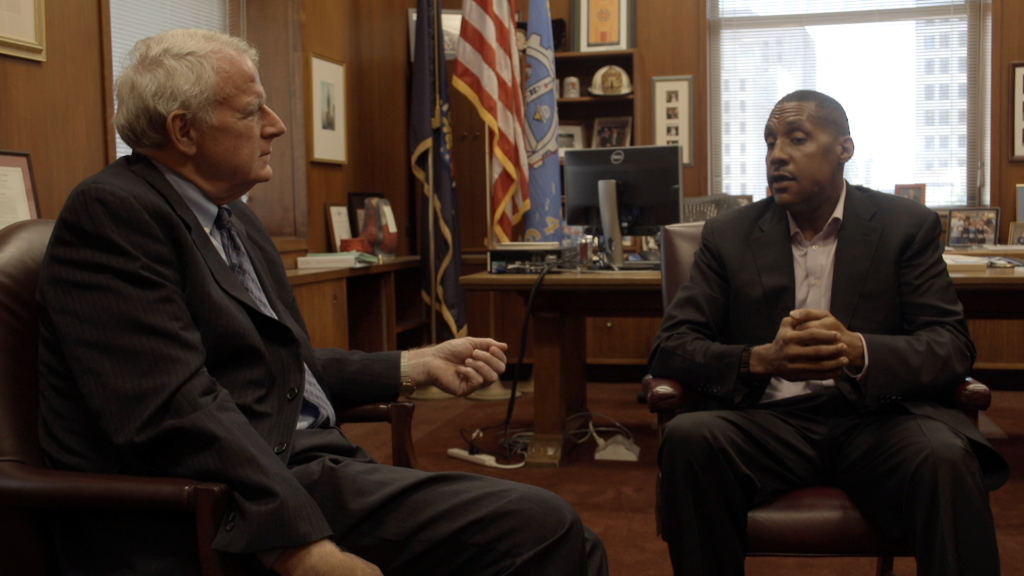
Brad Lichtenstein’s documentary does not bury the lede. There’s barely time for the obligatory drone shot – in this case of hometown Milwaulke – before Claude Motley is recounting how he got shot in the face. The law student and former Milwaulke resident was back in town for a class reunion, dropping a friend off at his house when a gun was tapped on the car window and when he tried to escape, Claude was shot. Despite this, he managed to drive to the hospital only to wake up shackled to the bed, presumed to be a perpetrator rather than a victim.
Gun crime and its consequences are the subject of When Claude Got Shot, a brilliantly wide-ranging and nuanced examination of a topic that all too often lives in black and white simplicities. Lichtenstein’s approach is to go wherever the story takes him and this story has more than a few twists and turns in its journey. Dead center is, of course, Claude himself: an aspiring member of the black middle class, a husband and father. His wife is a high powered lawyer, who brooks no nonsense, telling the camera: ‘Claude doesn’t need me to freak out, he needs me to handle this.’ The immediate consequences are obvious as Claude undertakes a number of surgeries with many more on the horizon. He also has to deal with the psychological ramifications as he finds driving around the neighborhood triggering in a very literal way.
The plot thickens when the perpetrator himself is shot while trying to carjack another victim. It turns out the shooter is a juvenile, 15 year old Nathan King. None of the most obvious ‘causes of crime’ boxes get ticked. The boy is from a two-adult household, is relatively middle class and goes to a good school. Now he’s possibly going to be in a wheelchair for the rest of his life as well as facing charges for shooting Claude. Initially this takes place in children’s court before a series of breaches of his custody agreement see him transferred to the adult system.
The strength of the documentary is the way it manages to widen the scope of its interest to decompose Nathan and his mother, Claude’s friends and family, as well as Victoria – the nurse who now must live with having shot Nathan – and her husband, without losing focus. It’s like watching the ripples of this single traumatic event spreading without ever weakening. Claude feels an obvious conflict in how he wants some kind of justice and closure but at the same time feels himself reluctantly empathizing with Nathan and the life he has lived up until this point. Claude’s own background is not too far away from Nathan’s: ‘I was teammates with murderers.’ And all this is happening while Claude also has to deal with terrifying medical costs, failed insurance claims, his own legal career going awry and the emotional fallout that threatens his close relationships.
Brad Lichtenstein has created a deeply humane portrait of a tragic event, the consequences of which are both deep and far reaching. He achieves a panorama of the fallout using every document at his disposal, from crime scene photographs and security footage to fly on the wall observation and intimate interviews. There’s also a sense of how the police and the courts deal with the situation. It’s fascinating to see a police camera recording of Victoria being told about the status of Nathan after he has been shot. The type of film and the angle takes on a sense of guilt even though she is being interviewed as a victim. In a way this is the subtle power of the film in a nutshell: a crime splashes everyone with guilt, trauma and a yearning sense of the irreversibility of time. As one of Claude’s daughters says when asked what she has learned from the events: ‘The world is not a good place.’
Country: USA Language: English Year: 2021 Runtime: 94′ Director: Brad Lichtenstein Producers: Brad Lichtenstein, Steven Cantor, Jamie Schutz Executive Producers: Ted Chung, Leslie Fields Cruz, Geralyn Dreyfous, Sally Jo Fifer, Lois Vossen Co-Producer: Santana Coleman Director of Photography: Colin Sytsma Editor: Michelle Chang
To many, history is just one damned thing after another to some. To Stephen Dedalus in Ulysses, ‘it’s a nightmare from which I’m trying to awake.’ At the moment, it feels like a tape that’s being fast forwarded on a loop. So much so that I’ll admit when I saw the title for Sonia Kennebeck’s new film, I really had to think hard about who Reality Winner was, mixing her up with Chelsea Manning. The information overload, the 24 hour news cycle and just the sheer mass of stuff that seems to have happened over the last five years threatens to crush you.
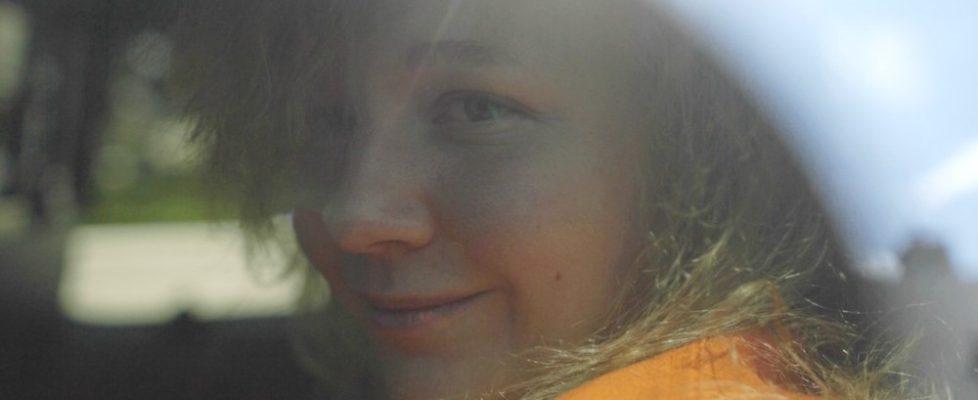
And for this United States Vs Reality Winner is a very necessary and worthwhile film. Just to be clear, Reality Winner was a 25 year old outside contractor for the NSA. She was arrested for leaking a classified report to the Intercept which detailed Russian interference in the 2016 election. In the media, the scandal of the interference and the attack on American democracy was quickly overtaken by the jokes about her name and then the smear campaign against her character. Painted as a radical who hated America, jottings from her journal and messages to her sister were selectively used to reinforce this image. Despite this, the now public report had a series of consequences, not least of which was ensuring that the 2020 election was safeguarded from interference.
Using tapes of the FBIs initial conversation with Winner as well as access to her family and experts in the field, Kennebeck’s film is a forcefully constructed argument and a reclaiming of a character from the public space. Reality comes across as an exceptionally intelligent and committed individual who did the right thing. It also succeeds in condemning a society that brands whistleblowing as criminal and especially when it uses a law as draconian as the Espionage Act to handle internal dissent. What is the most disturbing aspect is the way The Intercept apparently facilitated Winner’s arrest by handing over the document and the envelope it came in to the authorities ‘for verification’. The breezy way editor Betsy Reed claims that she would’ve been caught anyway doesn’t exactly instil confidence in an outlet which actively encourages whistleblowing.
Despite the stalwart work of Winner’s mother, sister and step father, Reality remains in prison – though she is due for release later this year. Once more the pandemic proves to be a stick in the spokes of all things good. This film deserves to be in cinemas with Q&As and an activists campaign to accompany it. That said there’s nothing particularly innovative about the film. The reconstruction of her arrest is particularly unconvincing with the real audio accompanying blurry shakycam film. Winner’s own legal inability to participate in the film also means that her voice is largely missing except for indirect quotes read by an actress. Even here though we can appreciate Reality’s sly humour. Her description of prison: ‘Worse summer camp ever. No bears.’ Hopefully, we shall soon be able to hear her voice and the voices of those who appreciate the sacrifice she made for the good of her country.
History is made not only by what we record but how we record it. From Goya’s War Sketches to the mobile phone footage of George Floyd’s murder, the medium can – to quote Marshall McLuhan – be the message. It can also get you arrested. That was the case for high school student Niya Kenny who whipped out her phone – along with two other classmates – to capture School Resource Officer Ben Fields as he flipped a fellow student Shakara to the ground in what quickly became a viral exposé of police violence and brutality, disproportionately aimed at young black girls. Shakara and Niya were both arrested for the crime of ‘disturbing school’, an actual crime which sees police officers attached to schools in order to impose discipline.
Garrett Zevgetis’ second feature documentary attempts at once a deep dive into the incident and an attempt to encompass the broader historical context and the aftermath. The context is literally unearthed in the landscape of South Carolina and the swamps which geographer Janae Davis explores. ‘South Carolina is thick,’ she states as she wades through a swamp to an island where slaves took refuge. ‘It has layers.’ In getting to those layers, Zevgetis interviews the experts and sociologists who also provide wider context, but he also focuses on the participants: Niya, Shakara and Ben Fields, providing them all with a space to have their say. Fields stands by his actions. He was using appropriate force in a difficult situation, and he views himself as the victim, losing his job for doing his job. (A title will later inform us he is now gainfully employed training officers in use of force.) A particularly effective moment is an almost forensic replaying of the incident via the three different angles and confronting Fields with his actions.
A further confrontation takes place when Vivian Anderson, an activist who relocates from New York to fight for the girls, sits down with him and tries to express her point of view about a white officer throwing a black girl across a schoolroom. There’s something of the Reality TV vibe here. A hoped for epiphany, a moment of connection, however, paradoxically, it is the film’s attempts to bring people together which only proves how distant and divided America truly is. Fields obviously dislikes any notion that he is a racist – he had a black girlfriend! – so much so he wants another conversation with Vivian to put his point across. But the insuperable gap is between the discussion of systemic racism and personal experience of racism. If you work in an institutionally racist role, then it hardly matters whether you are personally racist or not. There is no sense that Fields feels sorry for Shakara or Niya – both of whom withdrew from school – and Shakara particularly suffered as the national conversation quickly shifted onto blaming the student for the incident.
Technically, the film is slick though not particularly imaginative. The onscreen graphics and drone shots combine with the talking heads and the meetings to persuasively make the argument. However, this argument has outpaced the filmmakers. Since the incident in 2015, there has been an increasing accumulation of evidence – mostly taken from cell phones – showing police violence against people of colour and the Black Lives Matter movement (which is included in the film) has gained huge momentum. The two-steps-forward-one-step-back conclusion we are left with in Spring Valley shows that as many places seek to get rid of police from their schools, it is still the biggest growth area in American law enforcement. Zevgetis’ film struggles to encompass these contrary movements, but it is to its credit that it includes both.
Watching as a European, personally I feel the sight of police in school looks, well, fascistic. The respect for order and discipline which it invokes – over creativity, originality and dissent – would be discomfiting in an authoritarian regime: it’s nauseating in a country that holds itself up to be a beacon of liberty. One telling moment comes early on when Niya explains how when she knew Fields was on duty she told her classmates to get their phones out. For all the talk of restraint and protocols, this indicates that the kids of this school didn’t see the policeman’s actions as an anomaly, but as a distinct likelihood. As Frazey Ford sings, the kids are having none of it.
Sometimes the whole film has to be watched to understand what it is actually about. Miranda Pennell’s short documentary Strange Object, which premiered recently at Berlinale Shorts, is deliberately constructed that way so the viewer has to walk the same route of exploration as the filmmaker did previously, in order to understand the filmmaker’s thoughts on the road of discovery.
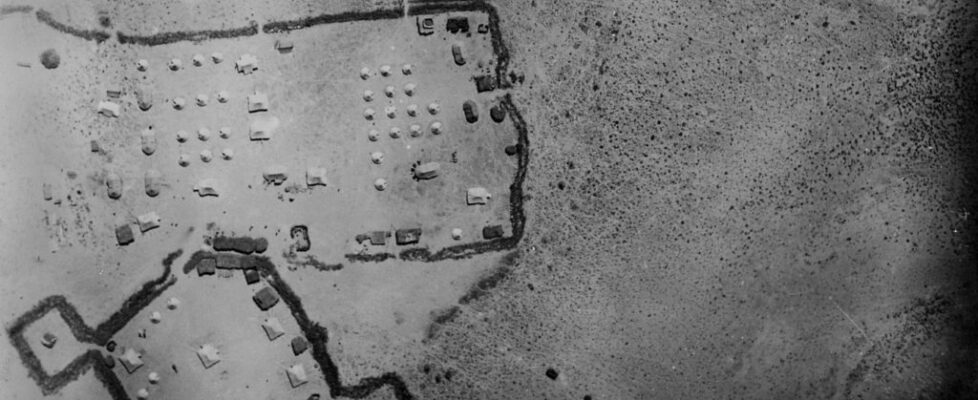
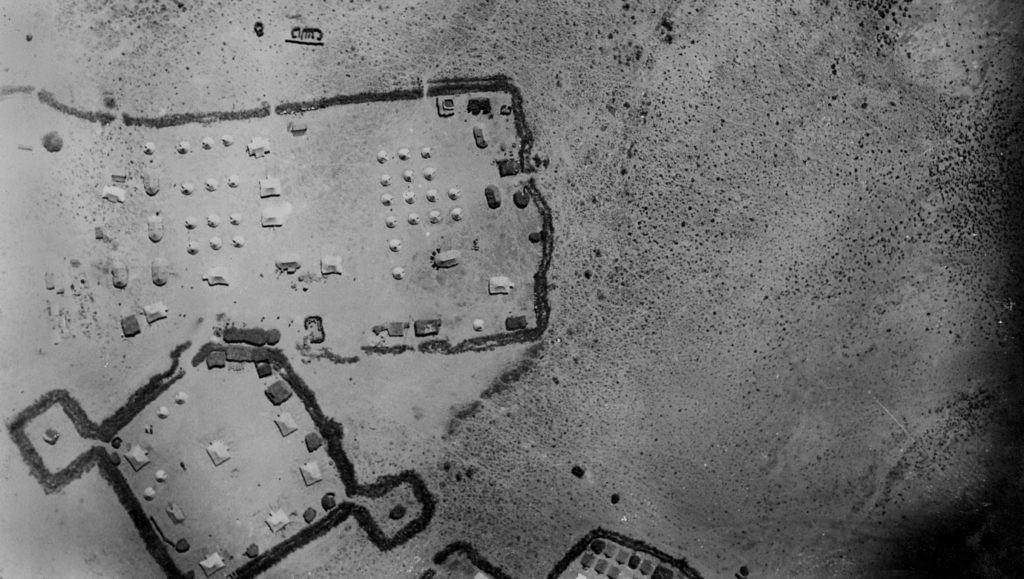
It all starts with a red leather-bound photo album with photos taken by the Z Unit in 1920, in a strange and foreign land somewhere in the British Empire. The photos kept in that album document a desert landscape that could be from another planet, and also some men-made stone structures – probably a type of settlement. The holes in the ground, however, signal that something violent happened there, and, as the pages are being turned, we get sucked into a story of the colonial conquest, terror, destruction and history-writing.
Everything in Pennell’s film comes from different sources. The photos from the album were taken by the Z Unit of Royal Air Force stationed in nowadays Somalia and the album itself was compiled in Berbera, British Somaliland in 1920. It is kept at The National Archives in London. The quotes used for narration are taken from a 1923 book called “The Mad Mullah of Somaliland” by Douglas Jardine, secretary of administration in the same colonial territory that was in office from 1916 to 1921. The mad mullah of the title is actually an anti-colonial resistance leader Mohamed Abdullah Hassan.
The key thing, however, is the sound and its brilliant design. The sounds samples come from an open source, but they are arranged masterfully to create the atmosphere of different actions. Some of them are clearly “set” in the archive, as we here page-turning, footsteps, doors opening, re-typing and murmur. The others, focused on the sounds of the nature, accompany the photos and add one more level to them. As the film progresses and the story about the photos and what is on them gets clearer, the sounds in the film’s soundscape get more abstract.
In the end, the strange object of the title is explained and is not that strange at all. That is unfortunate for our civilization built on destruction and our history that elevated imagination and prejudice to the level of science, but at the same time it is kind of fortunate for Miranda Pennell’s film.
Runtime: 15’ 10’’ Country: UK Language: English Directed by: Miranda Pennell Written by: Miranda Pennell Narrated by: Miranda Pennell Editing by: Miranda Pennell Sound by: Miranda Pennell Produced by: Miranda Pennell
Straight up cop movies are not easy to find on the lists of Berlinale competition titles. There are some notable exceptions, with José Padilha’s highly controversial title Elite Squad (2007) winning the Golden Bear award in 2008, as the most striking example. It seems that the Berlinale veteran Alonso Ruizpalacios who already has two Silver Bears in his pocket (his 2014 title Güeros was awarded as the best debut feature, while his 2018 based on true events heist thriller Museum scoped the best script award) lays his complete hand of cards on the table with A Cop Movie just with its title, but we are in for a surprise here. Awards-wise, the end result is another Silver Bear, this time for the outstanding artistic contribution (Yibran Asuad’s editing), while the Netflix distribution deal will secure the film’s exposure to a wider audience in the months to come.
The film opens to a female police officer’s voice-over narration set against a reconstructed sequence that covers one of the “adventures” of her job. Teresa once successfully delivered a baby albeit having no medical training and was celebrated as a hero by the family and neighbours of a woman she helped. That simple example raises many questions and shows some of the paradoxes of the Mexican society, such as where was the ambulance that was called, if Teresa’s intervention was legal at all, and what would have happened if something went wrong.
More delicate situations of a day to day cop routine in Mexico City, such as the lack of funding, the defiant attitude of the citizens from all the social classes, and the question of bribe among other things are exposed, as another officer, this time a guy called Montoya takes over the narration to present himself. In the next passage, it is revealed that Teresa and Montoya are not just partners in the squad car, but also in real life, which makes their story very film-friendly, especially in a full-on action sequence of chase through the hallways of a subway station, although not quite likely to happen in the real life.
The
real surprise comes next: “Teresa” and “Montoya” might not be
the real cops at all, but the characters for an upcoming movie, as we
learn that they are played by the actors Mónica Del Carmen and Raúl
Briones, respectively. The actors take over the film and their
immersive, method-style preparations for the roles, from the training
at the academy to actually patrolling the streets and facing the
general population while “playing the role” becomes its primary
content.
However, the social and psychological observations we get on the margins of the action are the real gem within this beautiful film. The key thing is the power and the attitude towards it. Different people have different motivations to join the force, from the family tradition and the genuine respect for the police work, to the existential reasons and even the pathological ones, such as to have a power and the ability to use and abuse it. The most striking contrast comes in the portrait of Raúl, who is a hippie, bohemian type of character and who has trouble playing the figure of authority.
Some
comparisons could be drawn to the works of other filmmakers, such as
Robert Greene’s plays on the audiences regarding the faction and
fiction. There is bit of Peter Nicks’ work (especially his 2017
title The Force) in A Cop Movie’s DNA, while the
parallels between it and Luke Lorentzen’s Midnight Family
are hard to avoid regarding the complicated context of the Mexican
society where the public services are systematically defunded. On the
other hand, A Cop Movie is quite an original and sincere film whose
imperfections (such as the missed opportunity to make a point once
the real Teresa and Montoya and the actors who play them appear
together in the same frame) make it even more genuine.
Technically, A Cop Movie is an ambitious work. The play with different styles and formats of footage shot by the newcomer Emiliano Villanueva are coded in a clever, not too obvious manner, while Asuad’s award-winning editing is a thing to marvel. Following Ruizpalacios’ vision and under his supervision, A Cop Movie is a one of a kind blend of diffusion and clarity and a must-see documentary.
Original title: Una película de polícias Year: 2021 Runtime: 107’ Country: Mexico Language: Spanish Directed by: Alonso Ruizpalacios Written by: Alonso Ruizpalacios, David Gaitán Cast: Mónica Del Carmen, Raúl Briones Cinematography by: Emiliano Villanueva Editing by: Yibran Asuad Sound design by: Javier Umpierrez Sound by: Isabel Muñoz Cota Production design by: Julieta Álvarez Icaza Costume design by: Ximena Barbachano de Agüero Make-up by: Itzel Peña García Colourist: Phaedra Robledo Assistant director: Pablo Pérez Lombardini Produced by: Daniela Alatorre, Elena Fortes Production companies: No Ficción, Cinema Maquina Distribution by: Netflix
From the colonial, Eurocentric and hegemonic point of view, the technology, the culture and everything considered to represent the way of life are being exported from the dominant civilization(s) to the less developed ones. The truth is, however, that the culture itself is more universal and travels more freely and fluidly, regardless of codes what “belongs” to which civilization. In the 80s, the Irish filmmaker Bob Quinn tried and managed to deconstruct the standard narrative by finding a connection between the North African and the Irish culture.
Quinn’s work Atlantean is the starting point of Bárbara Wagner’s and Benjamin de Burca’s eighth joined short film One Hundred Steps and is also referenced directly in it at one point, being the only part in analogue and in colour in otherwise digitally shot black and white film. One Hundred Steps had its world premiere at Berlinale Shorts.
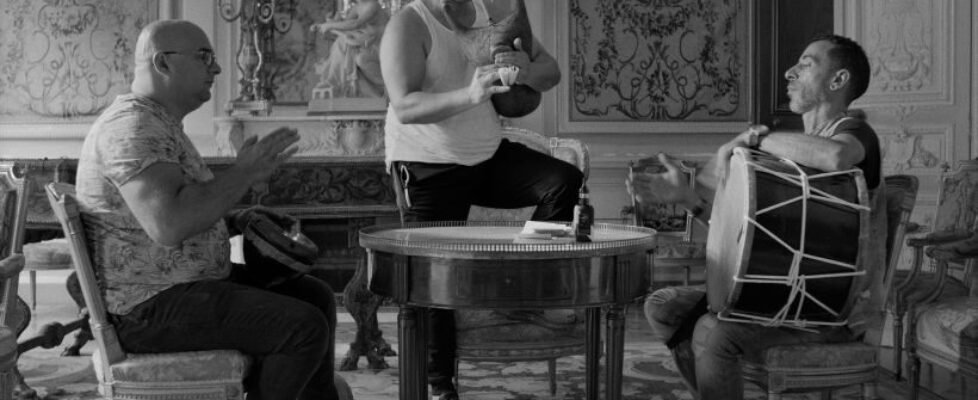
It consists of two mirrored parts, each set in a formerly privately owned luxurious property turned into a museum in two different countries. First of the two takes place in a countryside manor in the south of Ireland built by English barons who later rose to the status of earls. It starts as an old fiction feature, with a man and his daughter arriving late for the guided tour, even building a bit of tension when the young girl wanders off to do some sightseeing on her own. When the tour is over, the songs are being sang in Gaelic and the step-dance is being performed.
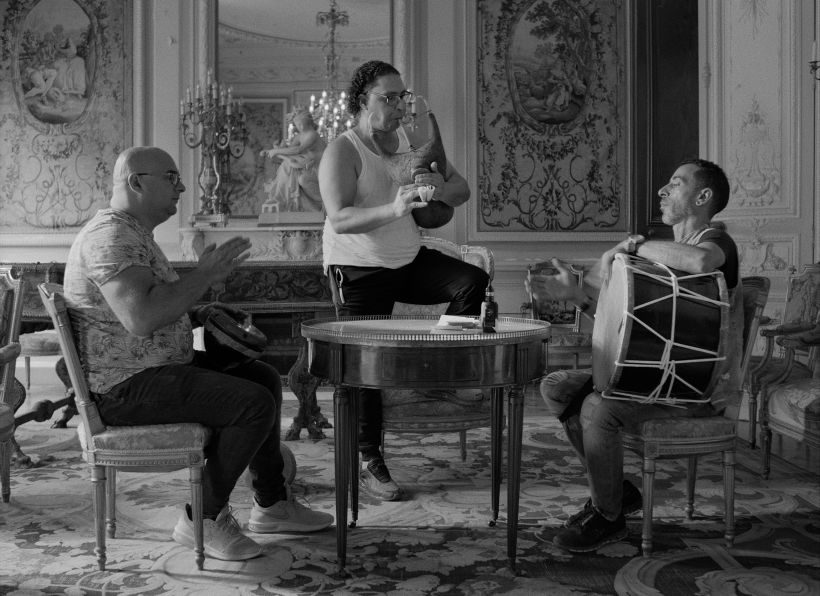
The
second part of the film takes us to the south of France, to
Marseilles and to a bourgeois urban palace in the centre of the city.
The mechanics of the plot is similar, a woman comes late to the
guided tour and the music, both instrumental and a capella ensues,
drawing the parallels between the different cultural heritages, from
the Arabic to the Occitan to the Celtic and eventually to modern
French and English.
Wagner and de Burca prove their point here in a seemingly effortless and highly elegant fashion, blurring the lines between the documentary and the fiction filmmaking in a proper artistic essay. The camerawork in the shades of grey handled by Pedro Sotero and Joana Luz is simply marvellous, especially during the perfectly controlled steadicam shots taking us from one “action” to another, while the precise editing Daniela De Lamare suits the purpose perfectly. Brilliantly exhibited, One Hundred Steps takes it point across easily.
Runtime: 31’ 17’’ Country: Germany, France Languages: English, Gaelic, French, Occitan, Arabic Directed by: Bárbara Wagner, Benjamin de Burca Written by: Bárbara Wagner, Benjamin de Burca, Pedro Sotero, Joana Luz, Daniela De Lamare Cinematography by: Pedro Sotero, Joana Luz Editing by: Daniela De Lamare Sound design by: Gábor Ripli Colourist: Sergi Sanchez Produced by: MichelBalagué, Bárbara Wagner, Benjamin de Burca Production companies: Volte, Volte Films Commissioned by: Manifesta 13 Marseilles, Visual Centre for Contemporary Art Carlow Supported by: Arts Council of Ireland, Bundesregierung für Kultur und Medien, Medienboard Berlin Brandenburg, V-A-C Foundation, Ammodo Sales by: Volte
Despotic political power is a projection of a domestic dictatorship. The family of the filmmaker Ana Elena Tejera lived in close relations to the dictatorship in Panama in the 80s, which was mirrored in the house of her grandparents. The relation between the two and the consequences for her grandmother, living in fear and trauma ever since her husband came back a changed man from the military training in Israel, are the subjects of Tejera’s short docu-fiction essay film A Love Song in Spanish that has just premiered at Berlinale Shorts.
Excerpts from two love songs appear briefly to break the routine of an elderly woman who still cannot find her freedom and sticks to daily routines of preparing meals, working in the garden and cleaning the house. That part of the film is shown in largely wordless dramatic reconstructions and re-imaginations. The scattered information that sometimes lacks more detailed context is, however, delivered either in voice-over narration or in the collages of the archival material in which, formally, everything is different, but essentially nothing has changed. Tejera highlights that in the film’s most striking shot of the contemporary army marching in front of the projection of the archival material of the military (march) training from the times of Noriega’s regime.
Regarding the main thesis and the connection between two types of dictatorship, A Love Song in Spanish is slightly less than the sum of its parts. It is clear that the filmmaker did a lot of research starting from the archival material like still photos she could find at her family’s house, but it also seems that some of her findings and insights ended up cut out from the film that simply does not hit its target the way it should, strength- and precision-wise.
Runtime: 23’ 38’’ Countries: Panama, France Language: Spanish Directed by: Ana Elena Tejera Written by: Ana Elena Tejera With: Yolanda Mathieu, Candido Ríos Cinematography by: Mateo Guzmán Editing by: Ana Elena Tejera Sound design by: Ana Elena Tejera, Juan Camilo Martínez Idárraga Sound by: Eléonore Mallo Graphic design by: Anhar Salem Colourist: Baptiste Evrard Produced by: François Bonnenfant Production companies: Le Fresnoy Studio national des arts contemporains, Mestizo Cinema Sales by: Le Fresnoy Studio national des arts contemporains