While
some people can control their empires while riding a limo (as it was
shown in David Cronenberg’s Cosmopolis), for others the limo
ride is a once-in-a-lifetime type of event. Okay, maybe not just
once, there are occasions when renting a limo seems appropriate: a
wedding, a graduation, retirement or some other sort of celebration,
an important family event or a night of extensive clubbing and
showing off. To each their own pleasure, I guess.
Saulé
Bliuvaité’s short documentary titled Limousine that
has just premiered at the national short competition of Vilnius
International Film Festival – Kino Pavasaris is an attempt to catch
a spirit of limo-riding in a compact, 15-minute format. But actually,
it deals with the expectations, those from the participants and those
from the viewers.
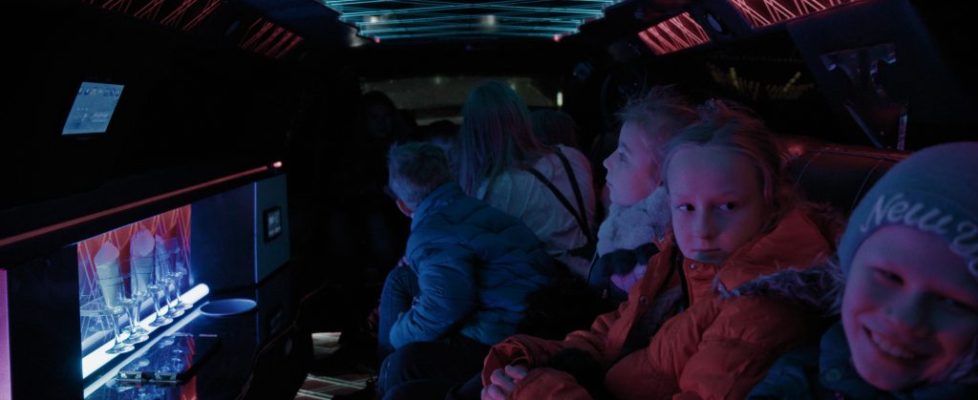
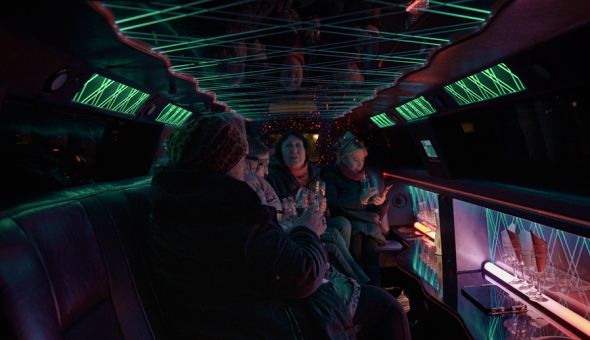
It is always the same limo, but the groups of people are different. There are teen girls, celebrating one girl’s 18th birthday. There are elderly ladies, probably enjoying the ride for the first time in their lives. There is a group of deaf young people communicating in sign language. There is a group of clubbers anxious to show off. There is a large, possibly extended family with kids of different ages. The sparkling wine is always cool, the light show is on and the choice of music is wide enough.
But it
feels that something is missing nevertheless, leaving much of the
passengers’ expectations unfulfilled. Simply put, apart from the
drinks, the light show, the music and the instant sense of luxury,
all their actions and conversations could be performed on the back
seat of a regular taxi.
It is
hard to say whether that was Bliuvaité’s original premise, or it
is a realization she came to while filming. Some things are certain,
though. Firstly, Limousine is a technically accomplished film
that has to deal with the same cramped space over and over again, but
is never boring thanks to Vytautas Plukas’ brilliant camerawork and
Iveta Macevičiuté’s sound design that points our attention to the
desired direction. And secondly, it simply catches the diffuse
feeling of nothing really happening while the expectations go wild.
Courtesy of Lithianian Shorts
Original title: Limuzinas Year: 2021 Runtime: 15’ Country: Lithuania Languages: Lithuanian, Lithuanian sign language Directed by: Saulé Bliuvaité Written by: Saulé Bliuvaité Cinematography by: Vytautas Plukas Editing by: Saulé Bliuvaité. Igné Narbutaité Music by: Ernestas Kaušylas Sound design by: Iveta Macevičiuté Colourist: Vytautas Plukas Produced by: Krisitina Ramanauskaité, Giedré Burokaité Production company: Magic Films Supported by: Lietuvos Kino Centras
Consumed is a debut short by Karen Lamond based on Sian Hughes’ short story Can You Eat the Wind, adapted to screenplay by the first time writer Simone Pereira Hind, known for her impressive career as a casting director. It is a great collaboration, and the film manages to simultaniously touch on a couple of tabooos: miscarriage, the impact it has on the psyche of a woman that goes through it, but also on another sensitive topic of wanting to have one’s own offspring, instead of taking the role of a guest parent. To skip on deepening on emotions in a clichéd way, Lamond seizes for finely dosed genre elements, too subtle to stray away from a full-blooded drama.
It is somehow still considered shamefull for a woman to admit she puts her own desire in front of given circumstances – rejecting the inherited parenthood is something almost monstrous. Even if the acceptance and love for the partner’s child is there, one is a guest in that projected family picture, in which a woman should be over the moon over the extra luggage. Fay (played by Shauna Macdonald) is perfectly fine with that construct until the moment she loses her unborn child. A routine check up shows that she didn’t exactly lose her pregnancy but that the baby’s heart stopped beating, and the procedure that follows is as cold as many that come from doctors that need to act and react fast, without getting personally involved with the emotional state of their patients.
The fetus needs to go, swiftly, at home, without a surgical procedure. ‘Flushed down a toilet’, according to Fay’s husband’s Tom (Emun Elliott) clumsy words. He is the one who will fail to grasp the failure of his own support, or the extent of his wife’s pain.
What Fay experiences is the situation uncountable women go through – the presumption that a miscarriage is somehow ‘normal’ and that it just ‘happens’. She is told to go on as usual and ‘try again’. Just like so to speak, going to buy another lottery ticket because next time ‘you might win’. Alone in her grief, she is left with another moral dilemma to solve, or rather – with a heart problem to cope with.
What will she do?
Consumed is a film about trauma that people reject to hear about. It is too ‘common’, because it ‘happens every day’. One should wipe their tears and continue like nothing happened. Fay refuses to do exactly that.
Simon Hawken’s camera is close to Fay. She is naked in her vulnerability, and accessible in sharing her hurt. Hawken dances around the story with a zest of a boxer that is about to win his title. He is literally in the story, alert, compationate, intimate, and Shauna Macdonald’s performance is dank, sincere and unforgettable.
Country: UK Language: English Year: 2020 Duration: 15′ Directed by: Karen Lamond Written by: Simone Pereira Hind Produced by: Penny Davies Executive Producers: Carolynne Sinclair Kidd, Holly Daniel, Sean Greenhorn Cinematographer: Simon Hawken Production Designer: Alice Cousins Editor: Gigi Cone Welsh Composer/ Sound Designer: Philip Pinsky Casting Director: Simone Pereira Hind Sound Recordist: Jonathon McLoone Gaffer: Stewart Torley Costume Designer: Kathryn Weaving Make Up Designer: Madeleine Drewell DIT: Christy Kail Vocals: Karen Matheson Colourist: Ben Mullen Online Editor: Gordon Miller PostproductionHouse: Serious Facilities Project Coordinator: Arlen Barke Cast: Shauna Macdonald, Emun Elliott, Carys Sinclair, Shonagh Price
It does not have to be a rape, harassment is enough for a woman to feel horrible. And when it comes to harassment, it does not have to come from a stereotypical creep. A majority of women have to deal with it on daily basis, suffering sexual or romantic advances from their co-workers, bosses, or simply men they encounter. It is rarely about sex and romance, it is about power and control.
Klementas
Leonas Davidavičius’ short film Swamp, based on the
novel Nekaltutis (vaguely translatable as Innocence)
by Laura Sintija Černiuskaité, deals with one such situation
between a blue collar middle-aged landlord and his younger single
mother tenant. It was released on the internet last year in order to
compete for the Lithuanian Film Awards (it was nominated in student
competition) and it is currently playing at Vilnius International
Film Festival – Kino Pavasaris.
We meet
the man (Dainius Gavenonis) as he gets ready to step out of his car
and enter the flat. On the way, he watches the woman (Indré
Patkauskaité) through the window while she dresses. Their relation,
business or personal, is still unclear when he enters the home. The
first thing he does is a small repair, so we assume that he might be
a handy man of sorts whom she called. Then he sits at the table,
tries to engage in conversation with her and insists that she sits
with him and have a glass of wine. She is reluctant, he is mildly
passive-aggressive, so she complies. One thing is certain: they know
each other well enough.
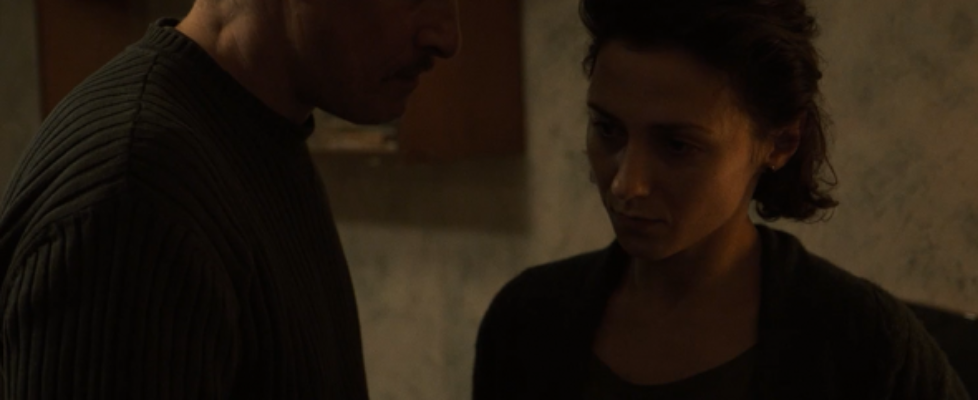
In the next sequence, it becomes clear that he is her landlord. The troubling thing is that he is a father figure of sorts to her son (Jonas Krivičius). Could the boy be an entry point of his advances towards her? Are his intentions really that sinister? Is he just an awkward ageing man whose desperation makes him keep going and ignoring the signals?
Filmed in a murky colour scheme, representing both of their states of mind and with a controlled hand-held camera that suggests the immediacy and the closeness with the characters, and employing reverse shots to shift our perspective, Swamp is a gentle and profound examination of a situation that is unpleasant for both of the adults involved. It deals with the emotional grey zone in an appropriate and compelling way.
Swamp was chosen as the Best Luthianian Film by the audience at Kino Pavasaris Film Festival.
Original title: Pelké Year: 2020 Runtime: 19’ 50’’ Country: Lithuania Language: Lithuanian Directed by: Klemenras Leonas Davidavičius Written by: Klementas Leonas Davidavičius Cast: Dainius Gavenonis, Indré Patkauskaité, Jonas Krivičius Cinematography by: Rokas Šydeikis Editing by: Klementas Leonas Davidavičius Soundtrack by: Alanas Gorinas Sound by: Kipras Čésna Production design by: Greta Vileikyté Costume design by: Ruta Lečaité Make-up by: Jurgita Globyté Colourist: Justinas Vencius Assistant director: Jonas Juškaitis Produced by: Justé Michalinaité Production companies: Lietuvos muzikos ir teatro akademija, ARTBOX laisvalikio klubas
There
is no much difference between the personal, the artistic and the
political courage since all three are usually connected and
intertwined. Courage should not be confused with desperation and
stupidity, it is always based on a conscious decision to act with
some of the risk calculated into it. Life in tyranny is not that hard
after all, it is necessary for the individuals to shut down their
hearts and minds, but it is unbearable for those who refuse to do so.
A
documentary titled Courage, written and directed by
Aliaksey Paluyan, deals with all three mentioned types of courage by
closely following the trio of the actors of the underground Belarus
Free Theatre during the days around the August elections and the
protests that followed in Belarus. It has recently premiered at this
year’s edition of Berlinale (section Berlinale Special) and, due to
the hotness of the very topic and the, it is destined to go places in
the foreseeable future.
Let us
deal with some of the key terms here first. The recent history of
Belarus is pretty much a bloody one and it runs in cycles. The
country has been ruled by the dictator Alexander Lukashenko since the
mid-90s with a neo-Soviet ideology and the almost Stalinist iron
fist. His closest ally is Russia, although his relationship with
Putin is not that harmonious, but the reason for the support from the
Russian dictator is pretty prosaic: for Russia, Belarus functions as
a buffer towards the EU and NATO. The cyclic nature of life in
Belarus is marked by the elections that go on always based on the
same scenario: the opposition leaders (who are alive and present,
meaning neither kidnapped, exiled nor killed, which also tends to
happen) get close to the electoral victory, Lukashenko then rigs the
results blatantly, the protests ensue and they are crushed by the
police, regular and riot. There is not much available for the Western
countries to do: they can accept some of the political refugees or
put additional pressure on the régime with economic and political
sanctions, but no real intervention is a viable option.
The
second key term here is Belarus Free Theatre, an underground
institution that operates on secretive locations around Minsk, whose
founders and house directors Nikolai Khalezin and Natalia Kaliada
emigrated to London in the early 2000s and are directing the plays
via Skype from there. It is a political theatre that survives in deep
underground and under the constant threats from the authorities.
Courage is not the first documentary that thematizes it, Madeleine
Sackler’s Dangerous Acts Starring the Unstable Elements of
Belarus had a healthy festival and niche theatrical run after its
premiere in 2013.
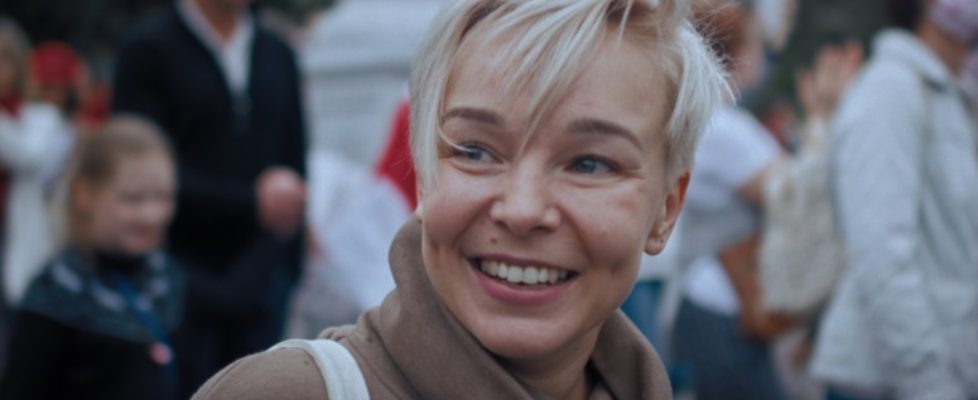
The three courageous protagonists of Courage are three actors: Pavel Haradnizky, Marina Yakubovich and Denis Tarasenka. We meet them as they are working on the play called Dogs of Europe under Khalezin’s direction. The election day is nearing and there is a sense of fraud coming their way. The three of them are in the different stages of life and therefore have different attitudes, priorities and dilemmas. Pavel is organized and dedicated to the non-violent activism. Marina is a mother of a toddler that takes much of her time. Denis is the oldest and the most cynical of the trio, which is understandable given that he cannot support himself by acting only, so he holds a day job in an auto repair shop. All three of them are bothered by differently formulated, but essentially the same things: whether the resistance is futile, if they should stay or they should go (they are “lucky” enough to have the connections to pass the borders to Poland or Ukraine), and if the hope is stronger than fear.
Then
there come the elections and the fraud, people gather on the streets
for peaceful protests, the police and the feared OMON special forces
intervene, people are being put under arrest and tortured in prisons
and detention centres. None of our protagonists were that unfortunate
to get locked up, but some of the BFT members were. There is a sense
of pressure and urgency, not unlike as what we saw in Maidan-themed
documentaries, Evgeny Afineevsky’s Winter On Fire
and Sergei Loznitsa’s Maidan,
but the sense of
uncertainty is highlighted by the fact that the outcome is still
unknown, at
least on the “real” political scale.
There are moments that are quite strong, though, like those when the parents of the arrested protesters that gather in front of the prison to try to find out what happened to their loved ones and where were they transferred or the instinctive, humane reactions of the young regular police officers who actually do not like their job and are uncomfortable beating up their fellow citizens. Paluyan had the privilege to be on the spot of the action and emotion and he seizes that opportunity. But Courage resonates best at the more quiet, intimate moments, like those Pavel and Marina share with their spouses and Denis with his boss, a disillusioned 55-year-old veteran of the Afghan war and former member of OMON.
Courage is a foreboding film, especially at the very ending; an excerpt from the re-staged play Discover Love thematizes the events from the late 90s, when a businessman and an opposition leader where kidnapped and executed by the OMON. Things rarely change, but it is still worth fighting and courage is necessary.
Runtime: 90’ Country: Germany Languages: Russian, Belarusian Directed by: Aliaksei Paluyan Written by: Aliaksei Paluyan With: Marina Yakubovich, Pavel Haradnizky, Denis Tarasenka Nicolai Khalezin, Natalia Kaliada, Svetlana Sugako Cinematography by: Tanya Haurylchyk, Jesse Mazuch Editing by: Behrooz Karamizade Music by: Mark Marczyk, Marichka Marczyk Colourist: Edmond Laccon Produced by: Jörn Möllenkamp Production company: Living Pictures Production Sales by: Rise and Shine
The
choice of the title Ieva for a Lithuanian short film
about a (female) robot prototype cannot be accidental: Ieva is Eve in
Lithuanian. Fortunately, this is the only Biblical reference in
otherwise quite a “scientific”, cold and precise short film by
the directing duo consisting of Vytautas Plukas and Domas Petronis.
Ieva deals with how a machine gets to know the world around it.
First
thing we see and hear is noise, both auditive and visual. Once it
goes quiet, the camera zeroes in on a face and upper part of the
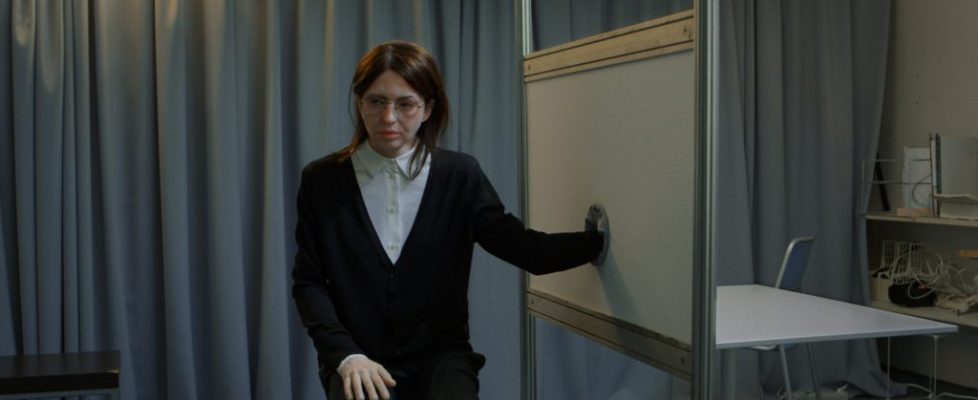
torso of a woman. She is conservatively dressed (imagine a school
teacher from some decades ago) and perfectly calm. The setting looks
like a hospital and she like somebody who waits for someone close to
her to wake up. When the camera moves away from her face and onto a
hand, quite robotic, tasked with trying to pick up different objects
through a hole, we realize that our quiet lady is actually a robot.
Later on she is tasked to observe and try to interact with the dogs
of different sizes, breeds and personalities to little success. In
the end, she is transported out of her “native” lab to a new
“home” in a shop window from where she continues observing the
world.
Working from Plukas’ austere, but precise script, Vytautas and Petronis are looking for an answer to the eternal science fiction gerne question: can androids gain experiences and forge their own identity and personality? The answer is too complicated to be spelled out in a single film regardless of its runtime. The good thing the directing duo does in Ieva is creating a cold, unpleasant atmosphere of a laboratory, making the viewers feel for the machine that, theoretically, cannot feel. The coldness and the rigidity, also reflected in the way the film was shot – by a camera from a fixed position, is broken only in the scene of Ieva’s transportation, which seems natural, dark and dirty, almost warm and analogue, before getting back to Ieva sitting in the window.
Ieva sees the noise. We see Ieva captured in one way or another. Is it life?
Country: Lithuania Language: Lithuanian Runtime: 14′ Year: 2021 Directed by: Vytautas Plukas, Domas Petronis Written by: Vytautas Plukas Cinematography by: Vytautas Plukas Editing by: Vytautas Plukas Music by: Agné Matulevičiuté Sound by: Iveta Macevičiuté Production design by: Sigita Jonaityté Stylist: Ruta Sakalauskaité Computer graphics by: Vytautas Kazlauskas Colourist: Vytautas Plukas Produced by: Domas Petronis, Vytautas Plukas, Dagné Vildžiunaité Production company: Lietuvos muzikos ir teatro akademija (LMTA)
Police work is usually anything like what we see on cop shows. Interrogation is usually not a battle of wits, but a negotiation game between people who mostly know each other. Even the victims, not to mention witnesses, are often unwilling to cooperate, and since the police investigators cannot be omnipresent and offer help at any given moment, they end up stuck with the same criminals in the aftermath. And also, the job takes its toll…
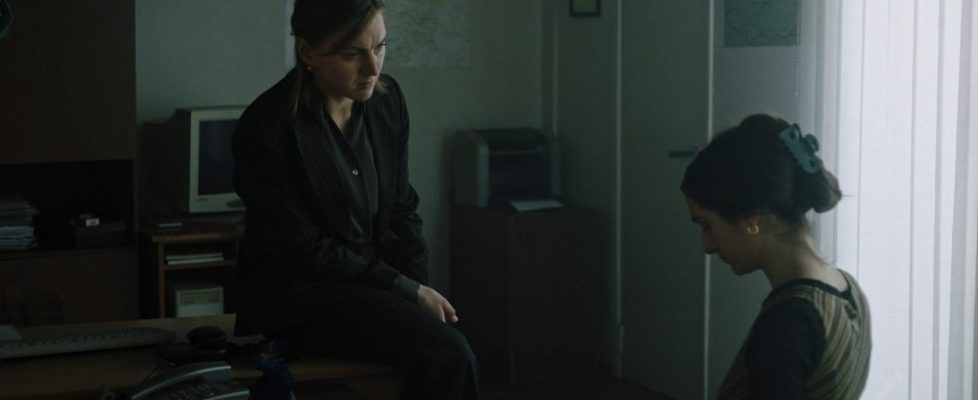
Two police interrogations conducted by the investigator named Aleksandra (Laima Aksinaité), one with a small-time criminal with prospects of a long career in the trade, Andrius (Karolis Kasperavičius), and one with a witness / victim of human trafficking, Viktorija (Augusté Ona Šimulynaité) are the subject of the Urté Sabutyté’s short film Interrogation that has just premiered at Vilnius International Film Festival – Kino Pavasaris.
The year is 1999 and Aleksandra has been summoned from Vilnius to an unnamed smaller town to investigate a case of human trafficking connected to the international prostitution ring. The content of her interrogations and even her findings is not what makes this short film stand out. She might not know Andrius in person from before, but Andrius knows who she is and knows enough about her life to try to derail her in order to withhold useful information. Viktorija knows her position and is also unwilling to cooperate. There is no triumph of justice here, just the sense of fatigue and detachment.
The reason why Interrogation stands out, apart from its perfect production design with its knowledge of the given period, is the elegance of its construction and execution. The film consists only of a few shots, one per scene, with the precise control of camera movement. The camera simply orbits around Aleksandra, follows her from the back as she walks down the hallways of the police station, turning the shots subjective when she’s asking questions and moving away to show us the rooms. Matched with some pleasantly restrained acting and with the sound design that registers everything from the hallway murmur to the unpleasant silence during the questioning, Interrogation is an absorbing film.
Original title: Apklausa Year: 2021 Runtime: 14’ 23’’ Country: Lithuania Language: Lithuanian Directed by: Urté Sabutyté Written by: Urté Sabutyté, Simonas Jaktonis Cast: Laima Aksianité, Karolis Kasperavičius, Augusté Ona Šimulynaité Cinematography by: Ugnius Tuleikis Editing by: Urté Sabutyté Sound design by: Kipras Dominas Production design by: Tadas Klimavičius Costume design by: Marija Garnak Make-up by: Fiona Dinh Thu Colourist: Justinas Vencius Assistant director: Urté Aškelovičiuté Produced by: Dagné Vildžiunaité Production companies: Just a Moment, Lietucos muzikos ir teatro akademija (LMTA) Supported by: Lietuvos kino centras, City of Kaunas, Kaunas Film Office
It’s around Christmas time somewhere in Scotland. The year is 1995, and the country is hit by the devastation of industry that left many people unemployed. That, and increased crime rates are topic N°1 on the local radio.
Absolutely nothing is left to coincidence in Owen Gower’s revenge drama Burn on Arrival that screened in the Scottish Competition of Glasgow Short Film Festival. Each step that the anti-hero Billy (James Harkness) takes, pushes him deeper into the abyss of crimes he is puppeteered into by an anonymous blackmailer. There is a strong compassion with the man who’s at the brink of a nervous breakdown until the chain of events revreses this sentiment.
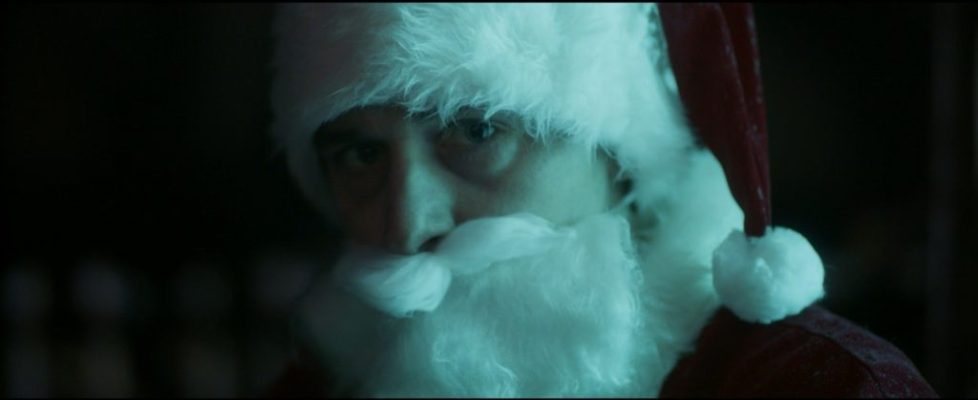
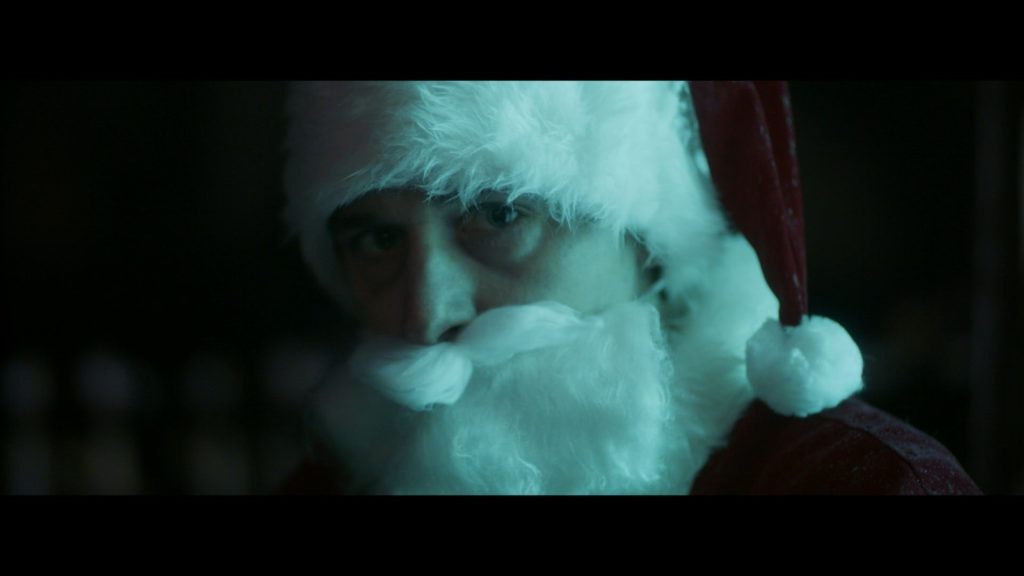
The film opens with Billy getting out of a cab in the middle of nowhere, dressed as Santa. He is led by instructions in a red envelope that also demands, he burns it upon reading. His first destination is a house in which people seem to know him, but he still mercilessly does what he has to do. From that moment on, nothing goes as smooth for the hitman. A car left to him by that particular someone with a plan won’t start, and he gets stranded in the area with Sara (riveting performance by Kate Dickie) who happens to find him there trying to start the engine – not quite accidentally as we will learn soon enough.
Burn On Arrival is set against the backdrop of the closure of Ravenscraig steelwork which has been described as a ‘national trauma’ 1. Bulding the story on the idea of trauma that needs to be dealt with even if it requires looking into one’s own misdeeds, Owen Gower sets his two main characters on a painful road of redemption, with completely different outcomes.
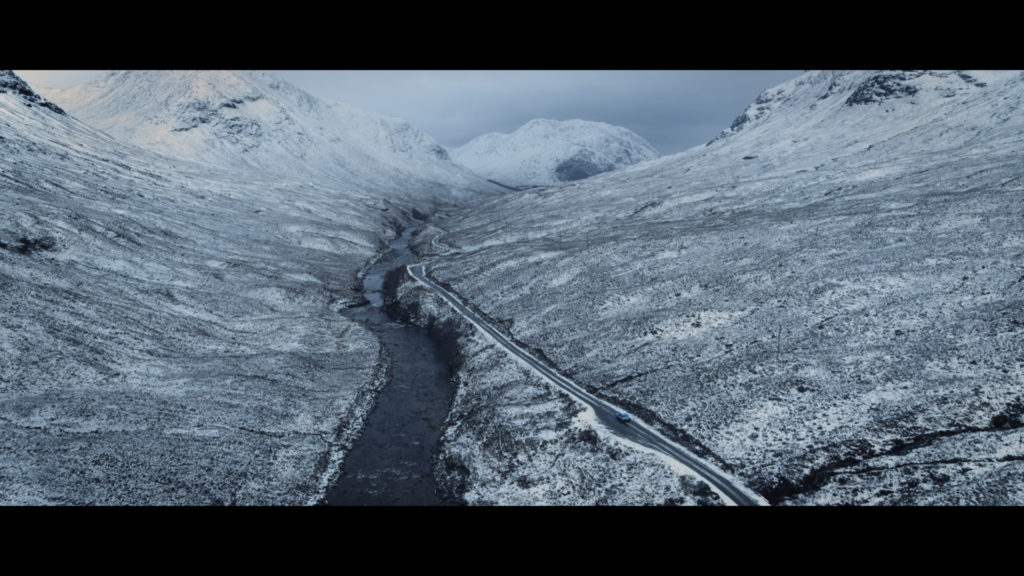
Set to the sinister score composed by Richard Canavan, the film plays with the steel blue coldness at night and blinding whitness of the snowy landscape in daylight, with Steve Cardno’s photography that expands the feeling of entrapment.
Soon enough, we will get suck into the reason for this blood bath that has something to do with an arson attack on the Steelworkers Benefits that claimed lives of seven people. The past and the now clash with a tremendous force in this clever social drama clad in genre’s costume.
What is the price of life, and the price of labor? And is there an adequate sum of money that can compensate for the loss of human life, or revenge for that matter?
James Harkness as Billy in Owen Gower’s ‘Burn On Arrival’. Courtesy of GSFF
*Director’s statement
Country: UK Year: 2020 Runtime: 19′ Directedby: Owen Gower Writtenby: Owen Gower, Amelia Lavington Cast: James Harkness, Kate Dickie, Stuart Curlett, John Stahl Producedby: Roisin Kelly, Sinead Kirwan, Mark Lacey ExecutiveProducer: Tibo Travers Production Designer: Gail Bowman Cinematographer: Steve Cardno Musicby: Richard Canavan Editor: Roddy Mcdonald ArtDirector: Aaron Close CostumeDesign: Linzi StClair Thompson MakeupDesign: Madeleine Drewell SoundRecordist: Alan Henry Re-recording Mixer/ Sound Designer: Enos Desjardins Foley Artist: Tapio Liukkonen Visual Effects: Andrew Donaldson Gaffer: Stuart Anderson Grip: Richi Holt
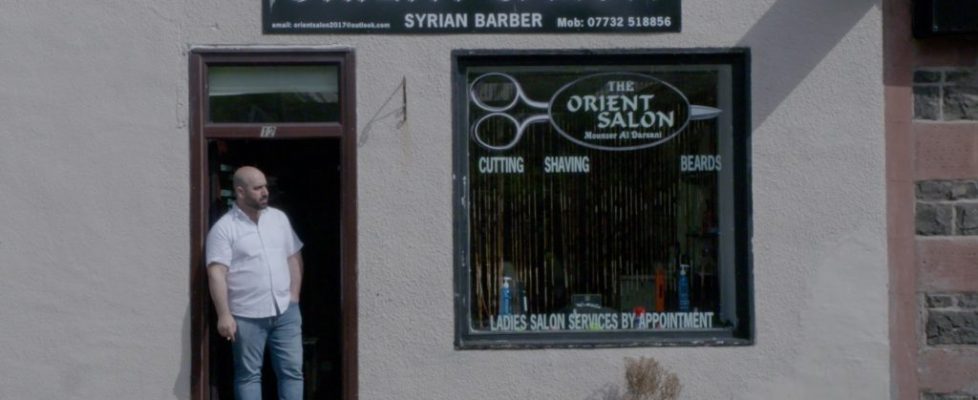
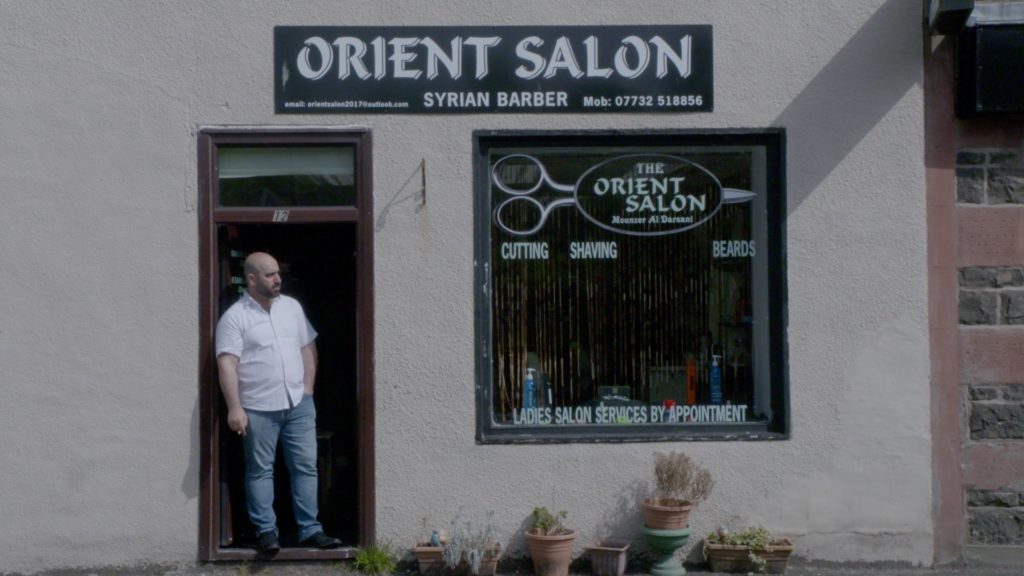
One wouldn’t expect to find a Syrian barber on such a tiny island as the Scottish Isle of Bute. With its 8000 inhabitants, surrounded by rough sea and whipped by strong winds, this isn’t a primary destination of refugees who seek to build a new life somewhere in the UK. And yet, there it is – “Orient Salon” owned by Mounzer Al Darsani, a man who left his hometown Al-Zabadani 5 years ago to escape the horrors of war.
Isle of Us is a fitting title for a film that shows a warm, welcoming islander community. Mounzer’s barbershop never runs out of customers, and the man is liked by kids and grown-ups alike. He has obviously lived to his father’s advice to “build a house wherever he goes” and find friends and his “second family” in whichever country he lands in. But nothing is as simple as it looks like. Life back home is constantly on Mounzer’s mind, and a wish to return once the situation normalizes. Another thought is constantly present in his head – a potential assimilation of his children, and with it the loss of Syrian identity.
When speaking about himself, Mounzer is restrained. The word refugee makes him feel like he is less, he says, adding that being a refugee has become something disgraceful. That sentence will echo in one’s mind for a very long time. The brutality of it. The incredible cynicism of our European democracies who are fortifying their borders with higher and higher walls.
Videotapes from Mounzer’s childhood have also found their way to Scotland, and they complete the man’s attempts to tell something about his past. Most of the recordings are of poor quality, but the atmosphere of a care-free past on the streets of Al-Zabadani can be felt and partially seen, like four women in summer dresses dancing on a town square, or children playing with their parents on the playground.
There is a feeling of a puzzle piece missing from the complete picture. Mounzer stays strangely distant, also in moments of more personal confessions. He doesn’t seem to feel at ease in front of the camera, so it’s mostly his customers doing all the talking.
Isle of Us is Laura Wadha’s NFTS (the National Film and Television School) graduation film. The film which world- premiered at Sheffield Doc/Fest and was nominated for an International Documentary Association Award, is screened in the Scottish Competition of Glasgow Short Film Festival.
Country: UK Language: Arabic, English Year: 2020 Runtime: 17′ Produced/ Written/ Directed by: Laura Wadha Cinematographer: Laura Wadha Sound Design: Ruth Knight Music by: Harry Brokensha Colourist: Michael Pearce Production Design: Priya Sidhu Production Coordinator: Beatriz Honorio
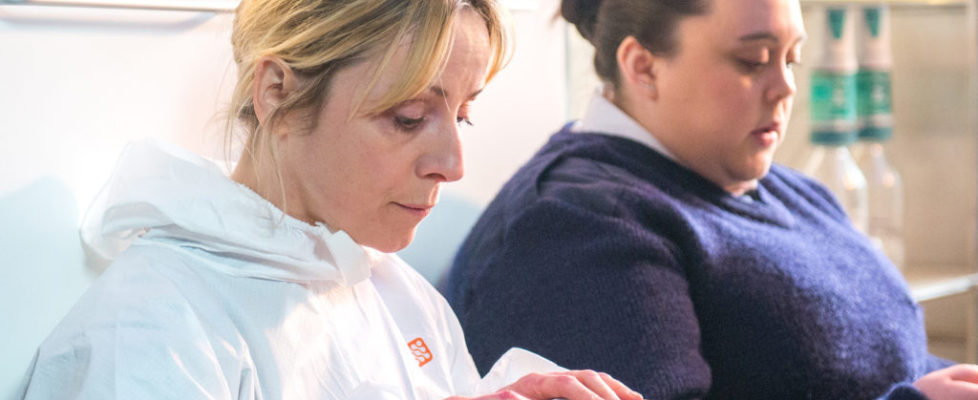
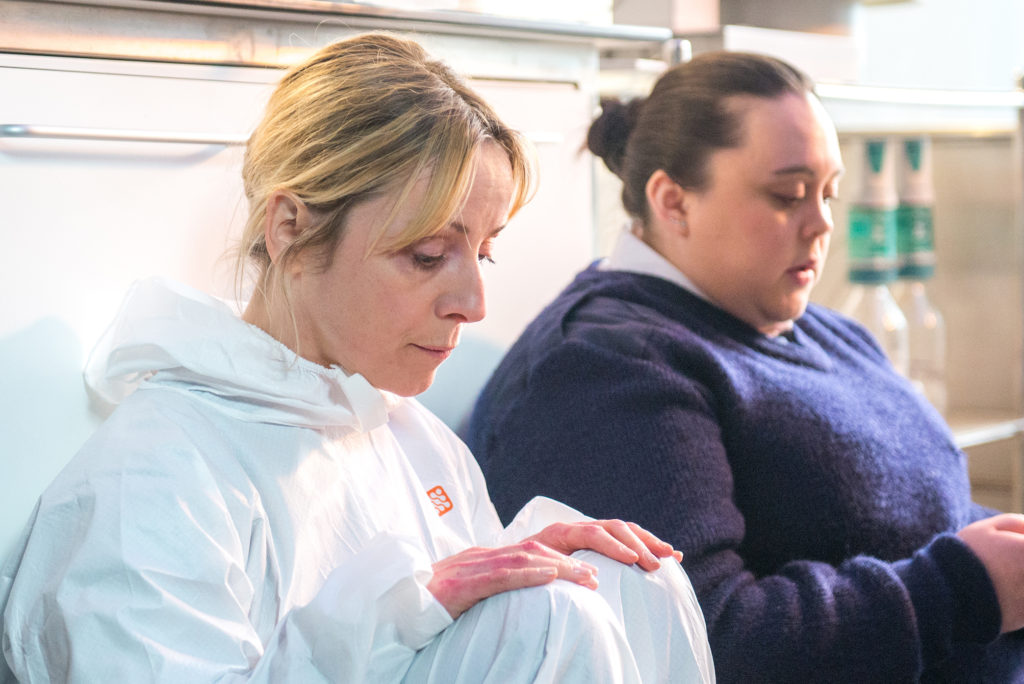
Claudie Blakley (Beth) and Sharon Rooney (Shauna) in Douglas King’s ‘Do No Harm’ (2020). Courtesy of GSFF
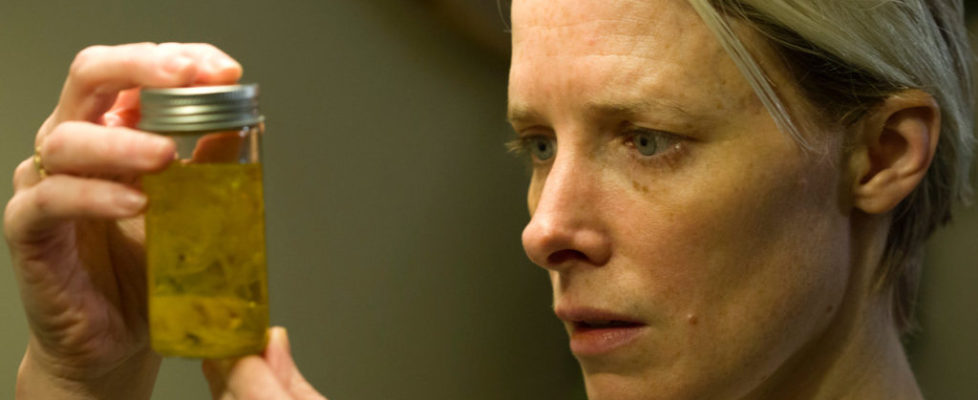
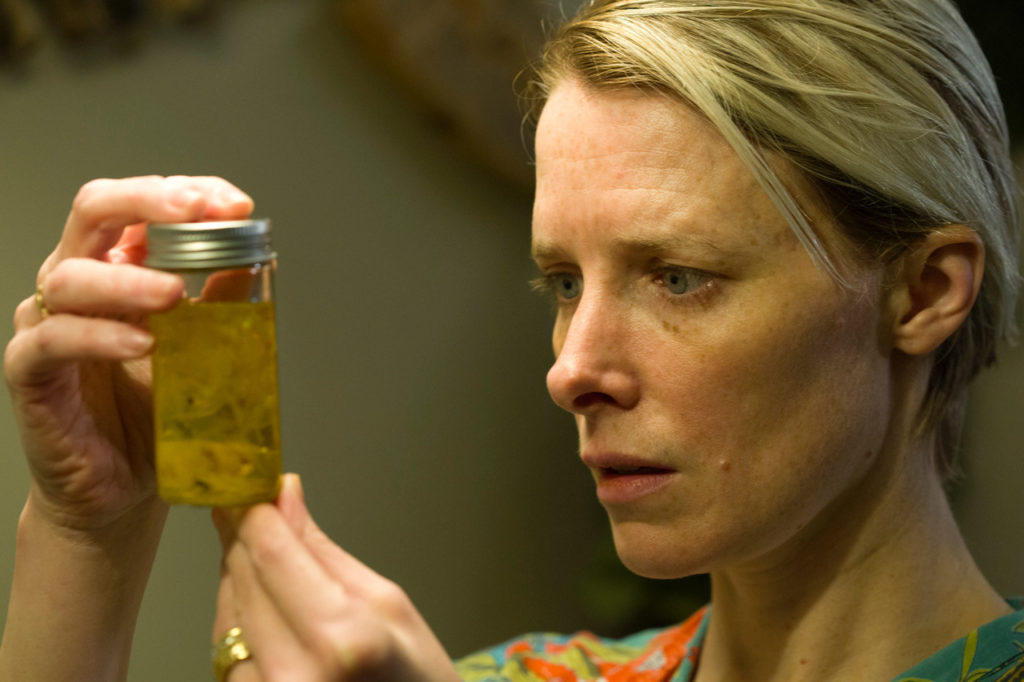
Leading scientist in the field of virology Dr. Beth Anderson (Claudie Blakley) lives with a secret that could jeopardize her career. She is namely suffering from Obsessive Compulsive Disorder which makes her paranoid about many things, among other – the “lethality” of a tomato-cheese sandwich whose date expired just the day before. In her mind, that particular sandwich contains the deadly virus she is dealing with in her high-tech lab, and she is feverishly working on a plan how to get hold of the damn thing before anyone sinks their teeth into it.
Douglas King’s sixth short Do No Harm is one of the total of three genre films screened in the Scottish competition of GSFF, and it will certainly do some travelling in the near future.
Penned by Rosy Barnes, the script is built on black humor, witty dialogues, and a weird type of action that true genre lovers will know to appreciate. Not over the top despite of the nature of its main character’s problem and the way it gets addressed, the film is surprising in its resteless approach to time and space. There is a bit of time loop to show Beth’s compulsive reactions to this new stresfull situation, and when the repetitive movements result in frenzy, they are wonderfully accompanied by the tension-building music composed by Alexandra Hamilton-Ayres.
When none of the plans to seize the sandwich bare fruit, Beth has to act in a rather extreme way – by breaking & entering at night. Do No Harm is an engrossing film with a powerful almost all-female cast. Along Claudie Blakley, excellent in her role as a security officer Shauna is Sharon Rooney.
Country: UK Language: English Year: 2020 Runtime: 15′ Directedby: Douglas King Writtenby: Rosy Barnes Producedby: Alysia Maciejowska Cast: Claudie Blakley, Sharon Rooney, Alison O’Donnell, Gilly Gilchrist, Daniel Campbell Director of Photography: Andrew O’Connor Editors: Martin Allison, Florian Nonnenmacher Production Designer: Nazia Mohammad Sound Recordist: Colin Mackay Gaffer: Leon Brehony, Daniel Filmer Musicby: Alexandra Hamilton-Ayres Music department: Joe Galuszka Art Director: Kieran Mcruden
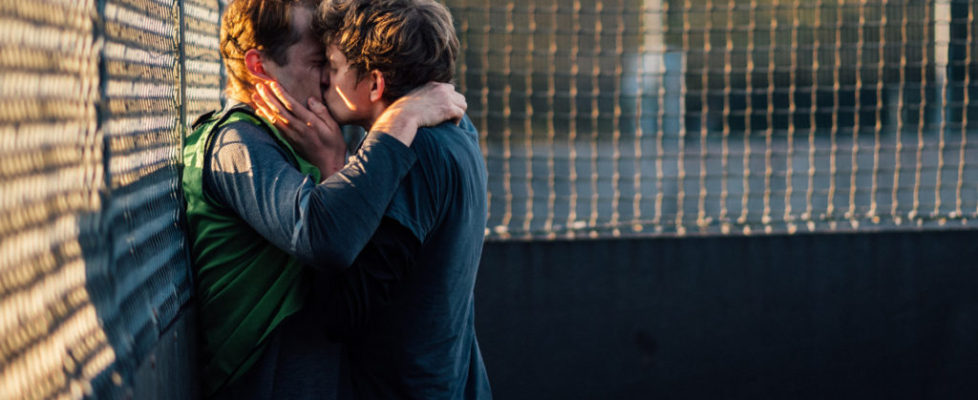
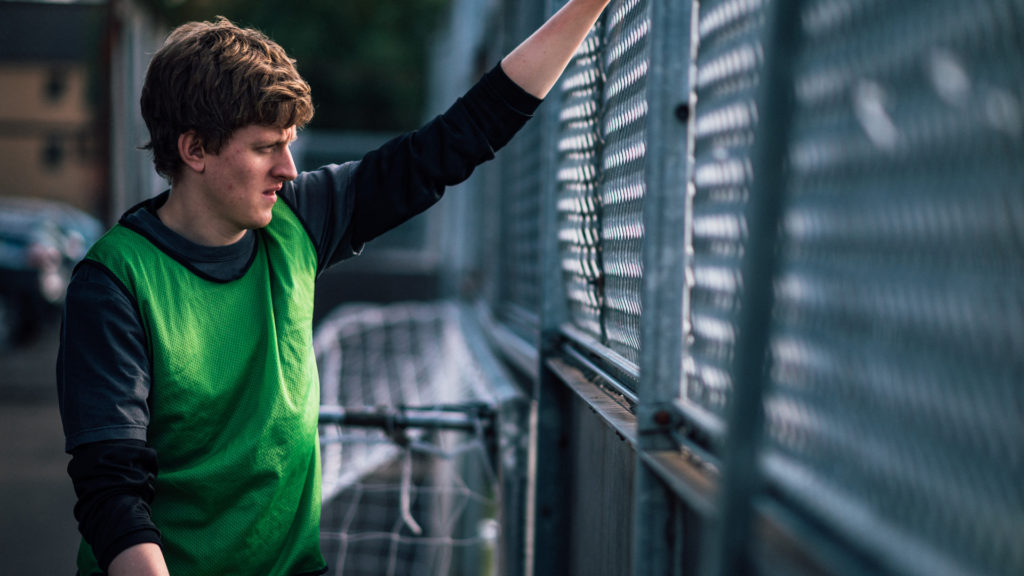
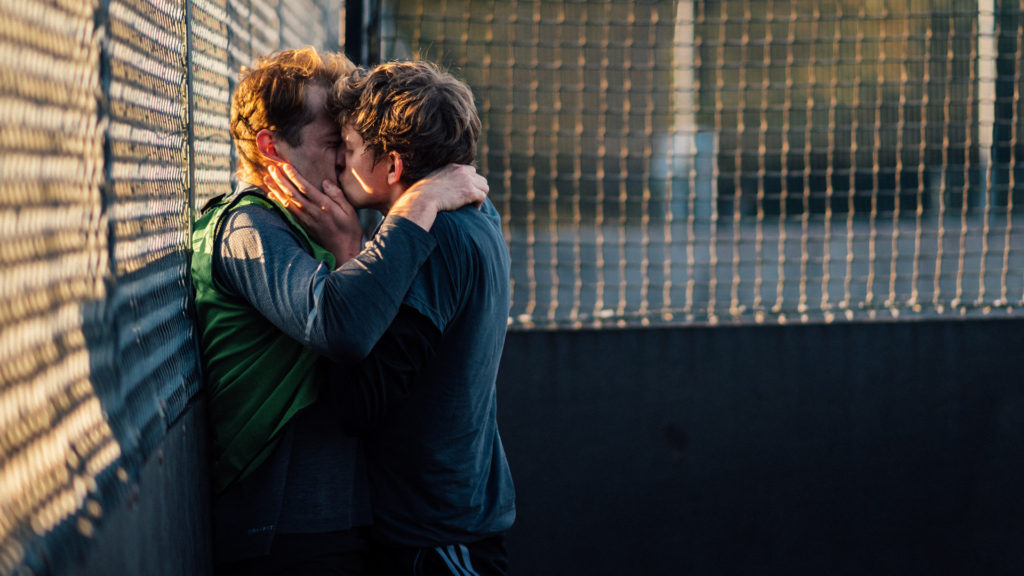
Theoretically, it shouldn’t be that difficult to live one’s own sexuality without having to hide anymore. Although it is slowly getting better with every day – at least in so called western countries, there are still places that remain stubbornly heteronormative and homophobe. Football, for instance is a manly sport that should be played by manly men who reek of testosterone and throw toilet jokes at each other. At the same time, pranks in showers or dressing rooms can get pretty intense when the same manly men simulate sexual practices on each other. Boys will be boys. Tiring as it is to look away and pretend to be fine with all of it, Angus (Lorn Macdonald of Brigderton) does just that until he can’t take it anymore.
Caitlin Black’s GSFF Scottish Competition entry 12th Man is a film that casts a glance behind the coulisses of pretense in the most popular sport in the world. Angus and his partner Charlie (Guy Hodgkinson) who is the captain of the team, can not display public affection, let alone have a proper relationship. Constantly under the radar of the football team coach and their peers, two young men pretend to be just like any of them – straight, “normal” and tough.
As in any costume play, there is a limit to acting – in this case for Angus who has little to lose.
Caitlin Black’s sophomore short 12th Man is based on the script by the newcomer Jack Gemmell whose insightful writing brings the plight of two lovers close to the viewer. It is true that we are not in clear about how far the relationship of the two men has gone, where it was when the dirt hit the fan, nor what has inititated a brief physical confrontation between Angus and an anonymous player who beat him up and threw abuse on him for being a gay. At the same time, all those things matter less than both the outcome of the story and the universal message it brings across. Keeping the mask of an average Joe will save your life, and staying truthful to your identity will save your soul.
Country: UK Language: English Runtime: 12′ Produced by: Jack Gemmell, Caitlin Black, Aidan O’Mara Directed by: Caitlin Black Written by: Jack Gemmell Executive Producer: Miguel Anjos Cinematographer: Sean Mcdonald Production Designer: Nathan Alliott Editor: Mark Fraser Costume Design: Michelle Mcauley, Siiri Korhonen Composer: Rory Cairnduff Cast: Lorn Macdonald, Guy Hodgkinson, Mark Mckirdy, Kal Walker, Ryaan Ali