Hello world!
Welcome to WordPress. This is your first post. Edit or delete it, then start writing!

Welcome to WordPress. This is your first post. Edit or delete it, then start writing!
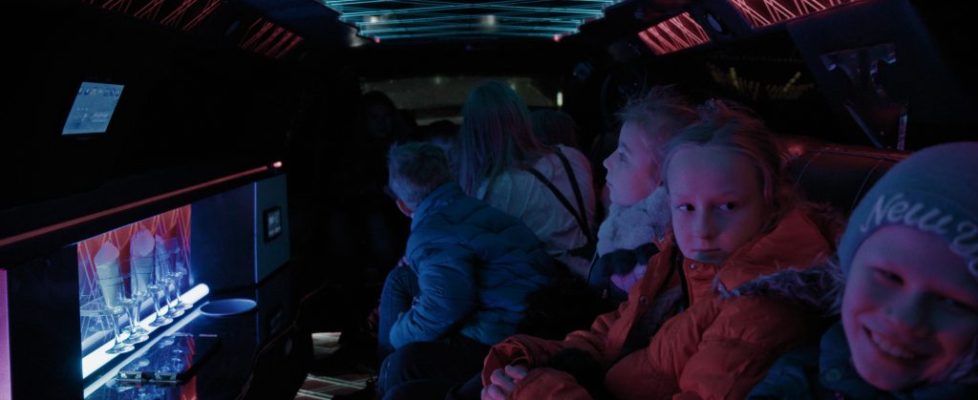
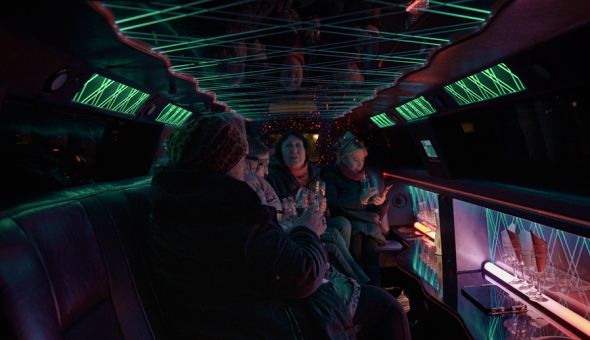
While some people can control their empires while riding a limo (as it was shown in David Cronenberg’s Cosmopolis), for others the limo ride is a once-in-a-lifetime type of event. Okay, maybe not just once, there are occasions when renting a limo seems appropriate: a wedding, a graduation, retirement or some other sort of celebration, an important family event or a night of extensive clubbing and showing off. To each their own pleasure, I guess.
Saulé Bliuvaité’s short documentary titled Limousine that has just premiered at the national short competition of Vilnius International Film Festival – Kino Pavasaris is an attempt to catch a spirit of limo-riding in a compact, 15-minute format. But actually, it deals with the expectations, those from the participants and those from the viewers.
It is always the same limo, but the groups of people are different. There are teen girls, celebrating one girl’s 18th birthday. There are elderly ladies, probably enjoying the ride for the first time in their lives. There is a group of deaf young people communicating in sign language. There is a group of clubbers anxious to show off. There is a large, possibly extended family with kids of different ages. The sparkling wine is always cool, the light show is on and the choice of music is wide enough.
But it feels that something is missing nevertheless, leaving much of the passengers’ expectations unfulfilled. Simply put, apart from the drinks, the light show, the music and the instant sense of luxury, all their actions and conversations could be performed on the back seat of a regular taxi.
It is hard to say whether that was Bliuvaité’s original premise, or it is a realization she came to while filming. Some things are certain, though. Firstly, Limousine is a technically accomplished film that has to deal with the same cramped space over and over again, but is never boring thanks to Vytautas Plukas’ brilliant camerawork and Iveta Macevičiuté’s sound design that points our attention to the desired direction. And secondly, it simply catches the diffuse feeling of nothing really happening while the expectations go wild.

Original title: Limuzinas
Year: 2021
Runtime: 15’
Country: Lithuania
Languages: Lithuanian, Lithuanian sign language
Directed by: Saulé Bliuvaité
Written by: Saulé Bliuvaité
Cinematography by: Vytautas Plukas
Editing by: Saulé Bliuvaité. Igné Narbutaité
Music by: Ernestas Kaušylas
Sound design by: Iveta Macevičiuté
Colourist: Vytautas Plukas
Produced by: Krisitina Ramanauskaité, Giedré Burokaité
Production company: Magic Films
Supported by: Lietuvos Kino Centras
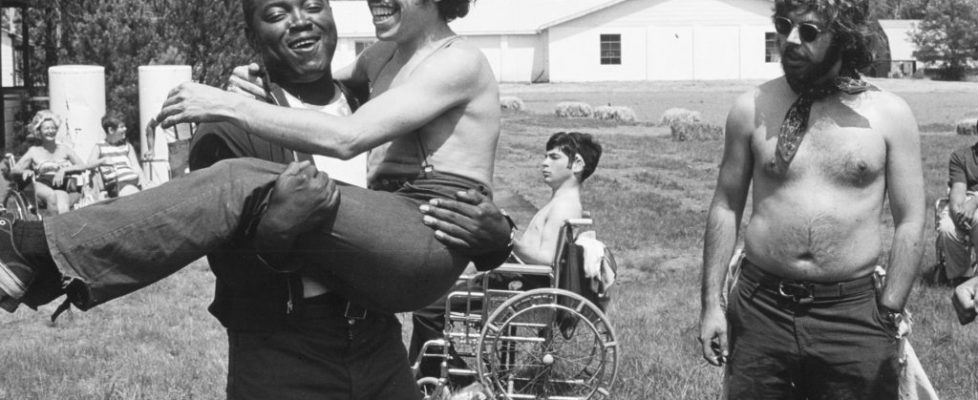
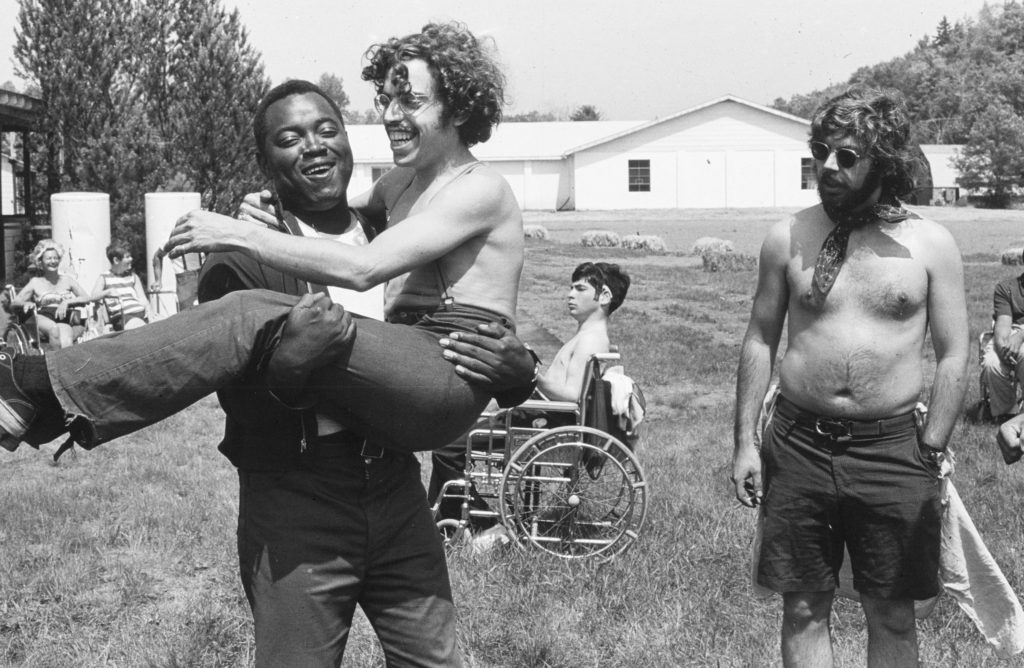
Most people nowadays see hippies as relicts of the past, a heterogeneous group of idealistic people that experimented with some of the foundations of the society and only partly fulfilled their noble causes while having a good time before they marched into the adulthood and got lost in the Bermuda triangle of work, family and house. Through their victories and defeats, hippies taught the world a lesson of methods in waging non-violent battles and not giving up. Between the sexual revolution, fight for the recreational marijuana use, anti-war protests, urge to save the ecology and fight for racial equality, one particular aspect of hippies’ struggle for civil rights tends to get out of perspective: fight for the inclusion of people with disabilities into society.
Nicole Newnham and James Lebrecht decided to tell the story of that particular fight in their documentary Crip Camp: A Disability Revolution produced by Obamas’ production company Higher Ground, known for the Oscar-winning documentary American Factory, and distributed by Netflix. Crip Camp also runs in the Oscar nomination, so it found its place in our Award Ticker section.
The titular camp was actually called ‘Camp Jened’, and it was located in the Catskills not far from the iconic Woodstock. ‘Camp Jened’ operated as a summer camp for young physically disabled people from the 50s till its demise due to the financial troubles in 1977. At first, it was a regular, structured summer camp, but the things changed when hippies took the leadership of it, making it a one-of-a-kind place where many of men and women felt accepted for what they were for the first time in their life.
As Lebrecht, serving as one of the co-writers and co-directors, as well as one of the principal subjects of the film, puts it, the role of the camp in the future fight for the civil rights for people with disabilities was immense and almost nobody knows about it. Crip Camp opens with the home footage from Jim’s childhood. We see him as a happy boy who does his best to overcome his spina bifida diagnosis. While growing up, he considered himself lucky to live at home and go to school (even on the “trial basis”), since kids like him usually got institutionalized early on. He liked his life, but he had no opportunity to see many kids like him. In the camp, he found himself “at home”: he met his first girlfriend there, he deepened his interest for music and he built up some sense of self-esteem that allowed him to go all the way to California to study the sound engineering.
Other stories from the camp include people talking about their romantic and sexual experiences (there was a clap outbreak once), the open-mindedness of the place and the spirit of friendship and comradery. One of the counsellors, Lionel Je’Woodyard, a Black man from Alabama, draws the parallels between the treatment of the disabled people world-wide and the treatment he suffered growing up in the South. Other campers talk about their relationship with their parents who tend to be over-protective, therefore constantly reminding them that they are disabled.
The camp part takes up only the first half of the film, since the teenagers from the “Class of ‘71” grew up and went on with their life. A lot of them moved to Berkeley, California, which was the best place for life with disability in America at that time. The revolution and the fight for inclusion, resulting first in the Rehabilitation Act (1973) and finally in Americans with Disabilities Act (1990), takes the second half of the film and it is connected to the camp since the former alumni of the camp played significant parts in the fight, especially in the culmination, the 504 Sit-In (1977). In that part, Judith Heumann, the leader of several NGOs that fought for the rights of the disabled people and also one of the former campers, becomes our protagonist.
At first glance, it seems that Crip Camp: A Disability Revolution is just a notch better than a regular, inspirational TV-style documentary that combines the on-camera interviews with archival and home footage. The film is also based on such tried-and-tested techniques, perfectly welded together by the editors Andrew Gersh and Eileen Meyer, and it works pretty well on the small screen, while the special treat is there for the fans of the rock oldies like The Grateful Dead, Jefferson Airplane and others.
The difference between Crip Camp (which is by no means revolutionary in the department of the documentary filmmaking, and it is a bit of a let-down) and a regular inspirational documentary is the lack of manipulation and pulling the heart-strings in an obvious, almost exploitative fashion. Crip Camp remains respectful to its subjects by making its most emotional moments look earned. Also, the way it blends a number of different topics and ideas in a comprehensible whole is just sublime. The revolution is an ongoing process.
Runtime: 106’
Country: USA
Language: English
Directed by: James Lebrecht, Nicole Newnham
Written by: James Lebrecht, Nicole Newnham
Cinematography by: Justin Schein
Editing by: Andrew Gersh, Eileen Meyer
Music by: Bear McCreary
Music supervisor: Aminé Ramier
Sound by: James Bloomfield-Misrach
Visual effects by: Max Colt Chizhevsky
Colourist: Brian Hutchings
Produced by: Sara Bolder, James Lebrecht, Nicole Newnham
Executive producers: Josh Brown, Howard Gertler, Barack Obama, Michelle Obama, Priya Swaminathan, Tonia Davis, Ben Braun, Matt Burke
Production companies: Good Gravy Films, Higher Ground Productions
Distribution by: Netflix
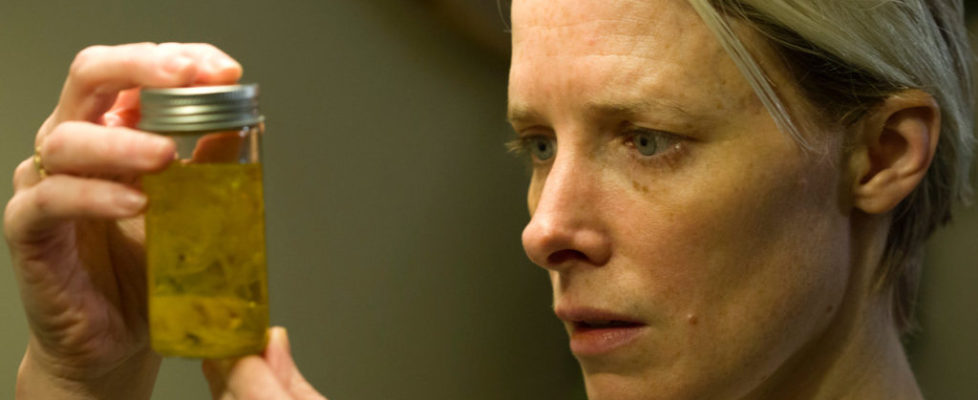
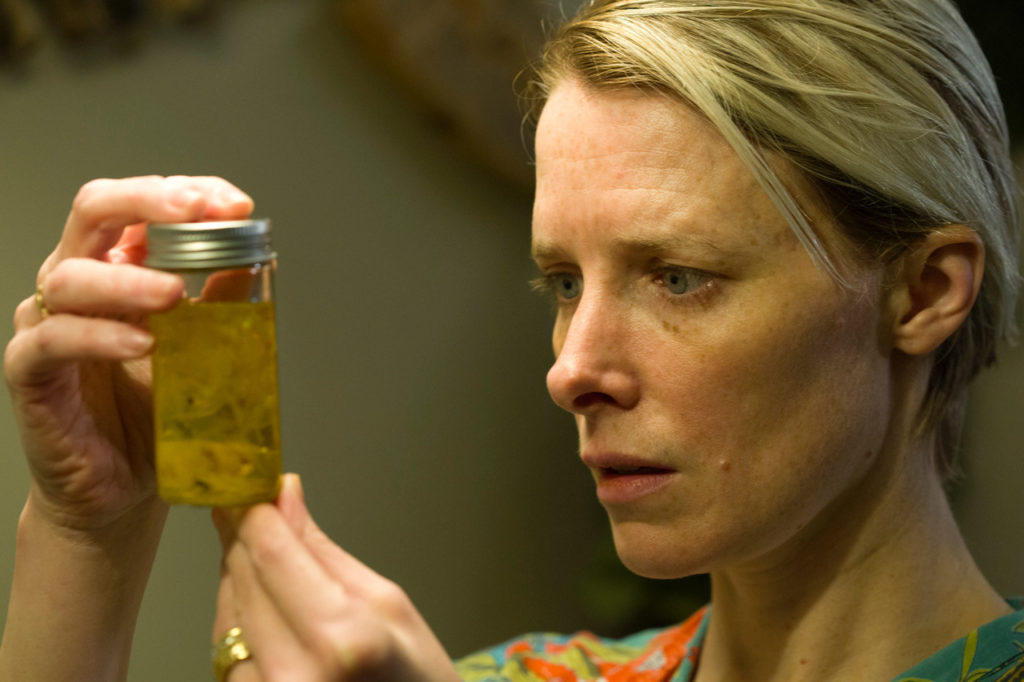
Consumed is a debut short by Karen Lamond based on Sian Hughes’ short story Can You Eat the Wind, adapted to screenplay by the first time writer Simone Pereira Hind, known for her impressive career as a casting director. It is a great collaboration, and the film manages to simultaniously touch on a couple of tabooos: miscarriage, the impact it has on the psyche of a woman that goes through it, but also on another sensitive topic of wanting to have one’s own offspring, instead of taking the role of a guest parent. To skip on deepening on emotions in a clichéd way, Lamond seizes for finely dosed genre elements, too subtle to stray away from a full-blooded drama.
It is somehow still considered shamefull for a woman to admit she puts her own desire in front of given circumstances – rejecting the inherited parenthood is something almost monstrous. Even if the acceptance and love for the partner’s child is there, one is a guest in that projected family picture, in which a woman should be over the moon over the extra luggage. Fay (played by Shauna Macdonald) is perfectly fine with that construct until the moment she loses her unborn child. A routine check up shows that she didn’t exactly lose her pregnancy but that the baby’s heart stopped beating, and the procedure that follows is as cold as many that come from doctors that need to act and react fast, without getting personally involved with the emotional state of their patients.

The fetus needs to go, swiftly, at home, without a surgical procedure. ‘Flushed down a toilet’, according to Fay’s husband’s Tom (Emun Elliott) clumsy words. He is the one who will fail to grasp the failure of his own support, or the extent of his wife’s pain.
What Fay experiences is the situation uncountable women go through – the presumption that a miscarriage is somehow ‘normal’ and that it just ‘happens’. She is told to go on as usual and ‘try again’. Just like so to speak, going to buy another lottery ticket because next time ‘you might win’. Alone in her grief, she is left with another moral dilemma to solve, or rather – with a heart problem to cope with.
What will she do?
Consumed is a film about trauma that people reject to hear about. It is too ‘common’, because it ‘happens every day’. One should wipe their tears and continue like nothing happened. Fay refuses to do exactly that.
Simon Hawken’s camera is close to Fay. She is naked in her vulnerability, and accessible in sharing her hurt. Hawken dances around the story with a zest of a boxer that is about to win his title. He is literally in the story, alert, compationate, intimate, and Shauna Macdonald’s performance is dank, sincere and unforgettable.
Country: UK
Language: English
Year: 2020
Duration: 15′
Directed by: Karen Lamond
Written by: Simone Pereira Hind
Produced by: Penny Davies
Executive Producers: Carolynne Sinclair Kidd, Holly Daniel, Sean Greenhorn
Cinematographer: Simon Hawken
Production Designer: Alice Cousins
Editor: Gigi Cone Welsh
Composer/ Sound Designer: Philip Pinsky
Casting Director: Simone Pereira Hind
Sound Recordist: Jonathon McLoone
Gaffer: Stewart Torley
Costume Designer: Kathryn Weaving
Make Up Designer: Madeleine Drewell
DIT: Christy Kail
Vocals: Karen Matheson
Colourist: Ben Mullen
Online Editor: Gordon Miller
Postproduction House: Serious Facilities
Project Coordinator: Arlen Barke
Cast: Shauna Macdonald, Emun Elliott, Carys Sinclair, Shonagh Price

It does not have to be a rape, harassment is enough for a woman to feel horrible. And when it comes to harassment, it does not have to come from a stereotypical creep. A majority of women have to deal with it on daily basis, suffering sexual or romantic advances from their co-workers, bosses, or simply men they encounter. It is rarely about sex and romance, it is about power and control.
Klementas Leonas Davidavičius’ short film Swamp, based on the novel Nekaltutis (vaguely translatable as Innocence) by Laura Sintija Černiuskaité, deals with one such situation between a blue collar middle-aged landlord and his younger single mother tenant. It was released on the internet last year in order to compete for the Lithuanian Film Awards (it was nominated in student competition) and it is currently playing at Vilnius International Film Festival – Kino Pavasaris.
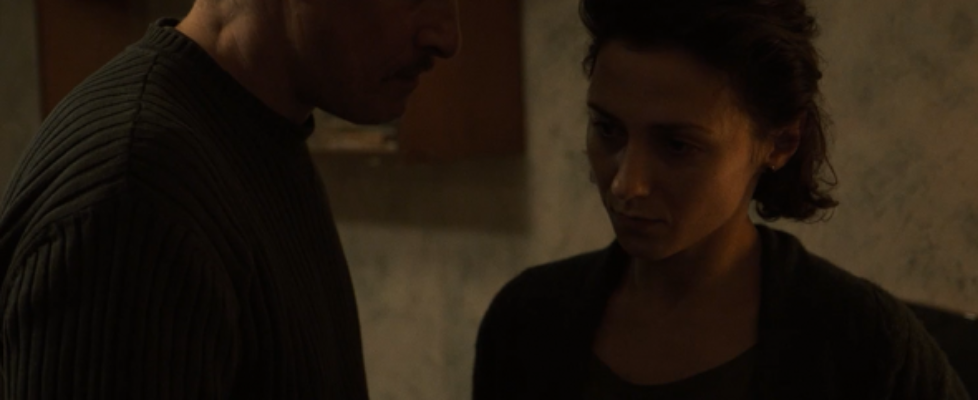
We meet the man (Dainius Gavenonis) as he gets ready to step out of his car and enter the flat. On the way, he watches the woman (Indré Patkauskaité) through the window while she dresses. Their relation, business or personal, is still unclear when he enters the home. The first thing he does is a small repair, so we assume that he might be a handy man of sorts whom she called. Then he sits at the table, tries to engage in conversation with her and insists that she sits with him and have a glass of wine. She is reluctant, he is mildly passive-aggressive, so she complies. One thing is certain: they know each other well enough.
In the next sequence, it becomes clear that he is her landlord. The troubling thing is that he is a father figure of sorts to her son (Jonas Krivičius). Could the boy be an entry point of his advances towards her? Are his intentions really that sinister? Is he just an awkward ageing man whose desperation makes him keep going and ignoring the signals?
Filmed in a murky colour scheme, representing both of their states of mind and with a controlled hand-held camera that suggests the immediacy and the closeness with the characters, and employing reverse shots to shift our perspective, Swamp is a gentle and profound examination of a situation that is unpleasant for both of the adults involved. It deals with the emotional grey zone in an appropriate and compelling way.
Swamp was chosen as the Best Luthianian Film by the audience at Kino Pavasaris Film Festival.
Original title: Pelké
Year: 2020
Runtime: 19’ 50’’
Country: Lithuania
Language: Lithuanian
Directed by: Klemenras Leonas Davidavičius
Written by: Klementas Leonas Davidavičius
Cast: Dainius Gavenonis, Indré Patkauskaité, Jonas Krivičius
Cinematography by: Rokas Šydeikis
Editing by: Klementas Leonas Davidavičius
Soundtrack by: Alanas Gorinas
Sound by: Kipras Čésna
Production design by: Greta Vileikyté
Costume design by: Ruta Lečaité
Make-up by: Jurgita Globyté
Colourist: Justinas Vencius
Assistant director: Jonas Juškaitis
Produced by: Justé Michalinaité
Production companies: Lietuvos muzikos ir teatro akademija, ARTBOX laisvalikio klubas

There is no much difference between the personal, the artistic and the political courage since all three are usually connected and intertwined. Courage should not be confused with desperation and stupidity, it is always based on a conscious decision to act with some of the risk calculated into it. Life in tyranny is not that hard after all, it is necessary for the individuals to shut down their hearts and minds, but it is unbearable for those who refuse to do so.
A documentary titled Courage, written and directed by Aliaksey Paluyan, deals with all three mentioned types of courage by closely following the trio of the actors of the underground Belarus Free Theatre during the days around the August elections and the protests that followed in Belarus. It has recently premiered at this year’s edition of Berlinale (section Berlinale Special) and, due to the hotness of the very topic and the, it is destined to go places in the foreseeable future.
Let us deal with some of the key terms here first. The recent history of Belarus is pretty much a bloody one and it runs in cycles. The country has been ruled by the dictator Alexander Lukashenko since the mid-90s with a neo-Soviet ideology and the almost Stalinist iron fist. His closest ally is Russia, although his relationship with Putin is not that harmonious, but the reason for the support from the Russian dictator is pretty prosaic: for Russia, Belarus functions as a buffer towards the EU and NATO. The cyclic nature of life in Belarus is marked by the elections that go on always based on the same scenario: the opposition leaders (who are alive and present, meaning neither kidnapped, exiled nor killed, which also tends to happen) get close to the electoral victory, Lukashenko then rigs the results blatantly, the protests ensue and they are crushed by the police, regular and riot. There is not much available for the Western countries to do: they can accept some of the political refugees or put additional pressure on the régime with economic and political sanctions, but no real intervention is a viable option.
The second key term here is Belarus Free Theatre, an underground institution that operates on secretive locations around Minsk, whose founders and house directors Nikolai Khalezin and Natalia Kaliada emigrated to London in the early 2000s and are directing the plays via Skype from there. It is a political theatre that survives in deep underground and under the constant threats from the authorities. Courage is not the first documentary that thematizes it, Madeleine Sackler’s Dangerous Acts Starring the Unstable Elements of Belarus had a healthy festival and niche theatrical run after its premiere in 2013.
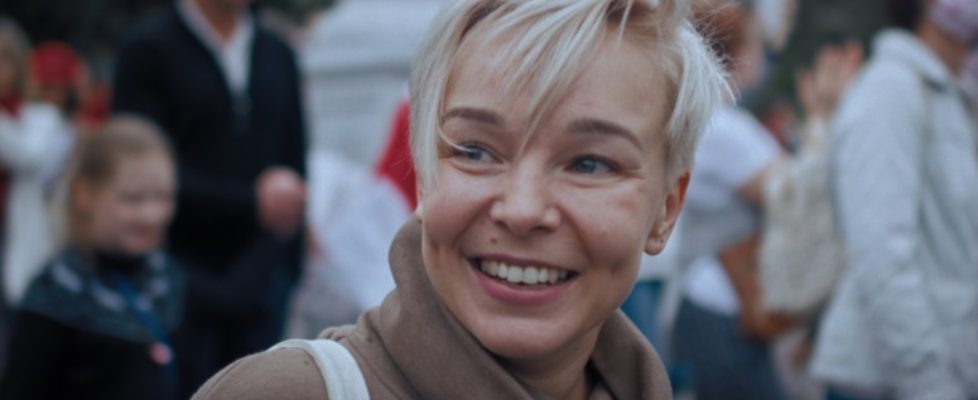
The three courageous protagonists of Courage are three actors: Pavel Haradnizky, Marina Yakubovich and Denis Tarasenka. We meet them as they are working on the play called Dogs of Europe under Khalezin’s direction. The election day is nearing and there is a sense of fraud coming their way. The three of them are in the different stages of life and therefore have different attitudes, priorities and dilemmas. Pavel is organized and dedicated to the non-violent activism. Marina is a mother of a toddler that takes much of her time. Denis is the oldest and the most cynical of the trio, which is understandable given that he cannot support himself by acting only, so he holds a day job in an auto repair shop. All three of them are bothered by differently formulated, but essentially the same things: whether the resistance is futile, if they should stay or they should go (they are “lucky” enough to have the connections to pass the borders to Poland or Ukraine), and if the hope is stronger than fear.
Then there come the elections and the fraud, people gather on the streets for peaceful protests, the police and the feared OMON special forces intervene, people are being put under arrest and tortured in prisons and detention centres. None of our protagonists were that unfortunate to get locked up, but some of the BFT members were. There is a sense of pressure and urgency, not unlike as what we saw in Maidan-themed documentaries, Evgeny Afineevsky’s Winter On Fire and Sergei Loznitsa’s Maidan, but the sense of uncertainty is highlighted by the fact that the outcome is still unknown, at least on the “real” political scale.
There are moments that are quite strong, though, like those when the parents of the arrested protesters that gather in front of the prison to try to find out what happened to their loved ones and where were they transferred or the instinctive, humane reactions of the young regular police officers who actually do not like their job and are uncomfortable beating up their fellow citizens. Paluyan had the privilege to be on the spot of the action and emotion and he seizes that opportunity. But Courage resonates best at the more quiet, intimate moments, like those Pavel and Marina share with their spouses and Denis with his boss, a disillusioned 55-year-old veteran of the Afghan war and former member of OMON.
Courage is a foreboding film, especially at the very ending; an excerpt from the re-staged play Discover Love thematizes the events from the late 90s, when a businessman and an opposition leader where kidnapped and executed by the OMON. Things rarely change, but it is still worth fighting and courage is necessary.
Runtime: 90’
Country: Germany
Languages: Russian, Belarusian
Directed by: Aliaksei Paluyan
Written by: Aliaksei Paluyan
With: Marina Yakubovich, Pavel Haradnizky, Denis Tarasenka Nicolai Khalezin, Natalia Kaliada, Svetlana Sugako
Cinematography by: Tanya Haurylchyk, Jesse Mazuch
Editing by: Behrooz Karamizade
Music by: Mark Marczyk, Marichka Marczyk
Colourist: Edmond Laccon
Produced by: Jörn Möllenkamp
Production company: Living Pictures Production
Sales by: Rise and Shine
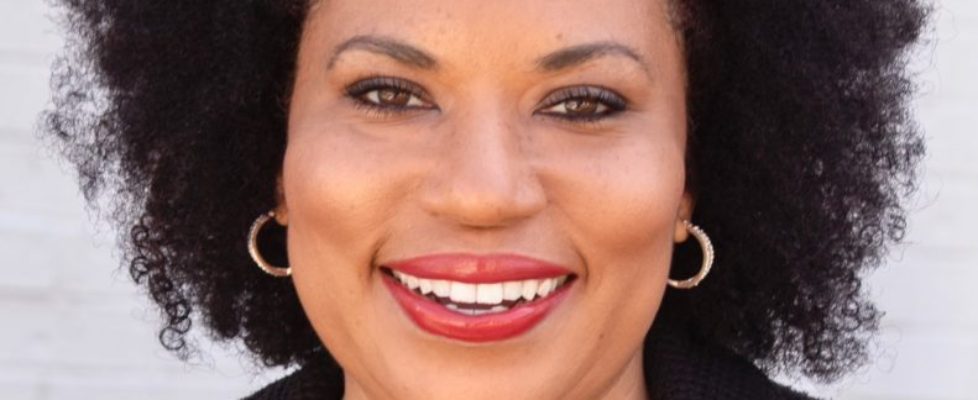
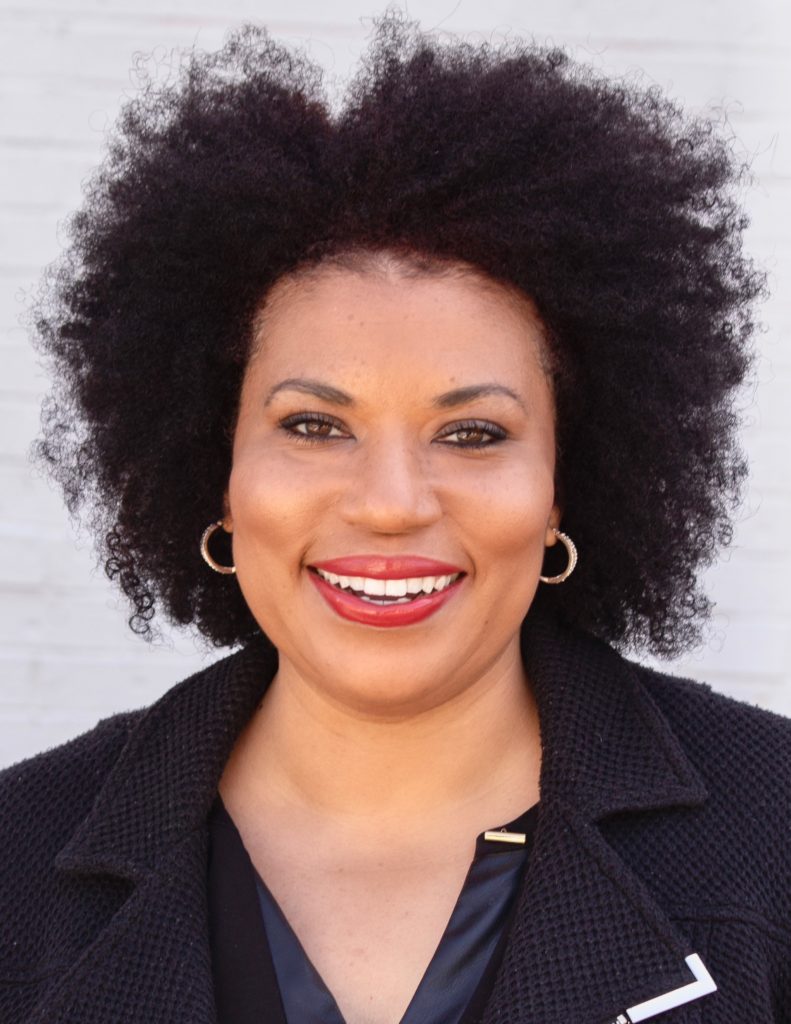
American Documentary (AmDoc) the parent organization of the PBS documentary series POV, announced the addition of Opal H. Bennett as Co-Producer for POV, the longest independent documentary showcase on television.
Bennett’s new role will build off of her work as the producer of POV Shorts, the public television series dedicated to short-form nonfiction films. As POV Shorts enters its fourth season, Bennett’s curatorial and programmatic work has been met with widespread acclaim. The third season recently won “Best Short Form Series” at the 36th Annual IDA Awards after being nominated for the same award the year before. Continuing in her role with POV Shorts, Bennett’s new, expanded position will also include production work on POV’s flagship series.
Bennett comes with extensive programming experience, and was most recently the Director of Filmmaker Development and Shorts Programmer for DOC NYC and Senior Programmer at Athena Film Festival. She was formerly on the programming teams at Nantucket, Aspen ShortsFest and Montclair Film Festival and has served on numerous festival juries, including for SXSW. Bennett will continue to consult for the March on Washington Film Festival.
She joins current POV Co-Producer Nicole Tsien, Associate Producer Sophie Harari, Production Coordinator Nicky Cook, Executive Producer Chris White, and outgoing Executive Producer Justine Nagan on the POV features production team.
“Opal is a bright leader in the independent documentary community, and brings a creative and collaborative curatorial voice to her work at AmDoc/POV” said POV executive producer | American Documentary executive director Justine Nagan. “We are thrilled to expand her role with POV and excited to see where the team takes the series in its next chapter.”
“I’ve been a fan of POV for many years, and joining the team last year was, in many ways, a homecoming. I’m so honored to be stepping into this expanded role in the series. I’ve been fortunate to come up through the ranks of some remarkable organizations and I look forward to growing my contributions to AmDoc | POV’s stellar mission,” said Bennett.
About Opal H. Bennett, POV Co-Producer
Opal H. Bennett has been a curator since 2014, when she joined the Programming team at Montclair Film Festival. She is currently on the programming teams for Athena Film Festival and DOC NYC, and is a Programming Consultant for The March on Washington Film Festival. In January 2020, Opal became the Shorts Producer for POV, and in July 2020, she was tapped to become the Director of Filmmaker Development, a newly-created position at DOC NYC. She has previously worked for Tribeca and Nantucket Film Festivals and for Aspen ShortsFest. Opal is also on the selection committee for shorts at Cinema Eye Honors. She has served on juries for SXSW, IndieMemphis, NewFest, Leuven ShortsFest, New Orleans, Cleveland and Seattle International Film Festivals among others. She has also participated on selection committees for documentary programming and grants. A Columbia Law School graduate, Opal also holds a MSc media studies from the London School of Economics, and received her B.A. from New York University.
About POV
Produced by American Documentary, POV is the longest-running independent documentary showcase on American television. Since 1988, POV has presented films on PBS that capture the full spectrum of the human experience, with a long commitment to centering women and people of color in front of, and behind, the camera. It’s on POV where American television audiences were introduced to groundbreaking works like Tongues Untied, The Act of Killing and American Promise and innovative filmmakers including Jonathan Demme, Nanfu Wang, and Laura Poitras. In 2018, POV Shorts launched as one of the first PBS series dedicated to bold and timely short-form documentaries.
Over a generation, POV has championed accessibility and innovation in nonfiction storytelling. POV Engage works with educators, community organizations and PBS stations to present hundreds of free screenings every year, inspiring dialogue around today’s most pressing social issues. The series’ interactive arm, POV Spark, creates and advances experiential forms of storytelling and programming, redefining U.S. public media to be more inclusive of emerging technologies and interactive makers.
POV films and projects have won 42 Emmy Awards, 26 George Foster Peabody Awards, 15 Alfred I. duPont-Columbia University Awards, three Academy Awards and the first-ever George Polk Documentary Film Award. Learn more at pbs.org/pov and follow @povdocs on Twitter, Instagram, and Facebook.
About American Documentary
American Documentary, Inc. (AmDoc) is a multimedia company dedicated to creating, identifying and presenting contemporary stories that express opinions and perspectives rarely featured in mainstream media outlets. AmDoc is a catalyst for public culture, developing collaborative strategic engagement activities around socially relevant content on television, online and in community settings. These activities are designed to trigger action, from dialogue and feedback to educational opportunities and community participation.
Major funding for POV is provided by PBS, The John D. and Catherine T. MacArthur Foundation, The Wyncote Foundation, Reva & David Logan Foundation, Open Society Foundations and the National Endowment for the Arts. Additional funding comes from Acton Family Giving, Nancy Blachman and David desJardins, Bertha Foundation, The Hollywood Foreign Press Association’s Charitable Trust, Park Foundation, Sage Foundation, New York State Council on the Arts, New York City Department of Cultural Affairs in partnership with the City Council, Chris and Nancy Plaut, Abby Pucker, Ann Tenenbaum and Thomas H. Lee and public television viewers. POV is presented by a consortium of public television stations, including KQED San Francisco, WGBH Boston and THIRTEEN in association with WNET.ORG.
*The official press release. Copyright © 2021 The 2050 Group,
When I worked in an arts institution, a colleague asked me, “What does ‘festival experience’ mean?” At the time, I thought the question was daft. Surely, working in a building that houses such experiences would mean knowing that experience – something uniquely felt, but, at the same time, tied to a shared environment or atmosphere. But don’t it always seem to go that you don’t know what you’ve got till it’s gone?
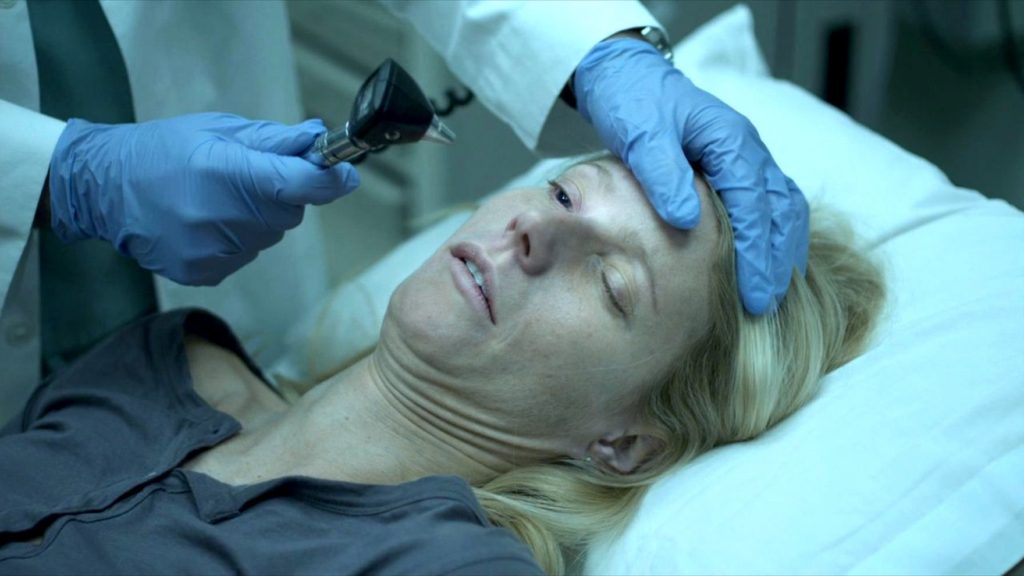
Over the past year, I have written and edited the words ‘pandemic’, ‘coronavirus’ and ‘Covid’ in film writing more times than I could ever have imagined, even if I were writing constantly on Steven Soderbergh’s Contagion (2011). And even as the pandemic ends, it will be in the wake of an epidemic, and so there is, if nothing else, longevity in our new-found film critical normal. But, for all of the acknowledgements of not seeing films in their full aspect ratios (no matter how good your home set-up, few have top/bottom and side masking and full CinemaScope), and for not hearing the score or design in 7.1, how many critics have really considered the effects of the pandemic on our craft as well as our industry?
Artist, programmer, and researcher Abby Sun recently put it in her simply titled article, Criticism, for Woche der Kritik, “[T]he phenomenon of festivals and their seismic re-ordering of the systems that produce and disseminate films remain underexamined.” Sun continues, “Festivals aren’t merely reacting to social conditions, they are often the primary creators of them. If we start to seriously consider the art workers who populate the festival circuit’s selection committees, organize its print traffic and delivery, throw its parties, and produce its private meeting spaces within film criticism, the recursive effects that individual agents exert on festivals and thus the wider industry becomes clear.”
This last fortnight, I tried to ‘attend’ two virtual film festivals and found it almost impossible. There is no ‘festival experience’ in my apartment. Just an unmade bed, a broken chair, and a half-eaten bowl of porridge. And, honestly, if I can’t manage to watch more than a handful of films from each festival’s programme, how on earth do I imagine I would find the energy or time to further interrogate the systems that produce this lacklustre event and non-existent atmosphere, which even if I screenshot and Insta constantly (with fancy filters and gifs) is in no way shared? I am tired of festivals. I can’t even imagine how the people who run them must feel.
So, I joined (relatively) new audio-chat app Clubhouse (launched 2020) and listened in as Sun, joined in conversation by Jemma Desai, Kevin B. Lee, Vadim Rizov, and others, sparked by the ideas in her call-to-action-article, talked about reviewing and reporting, and engaging in/with the industry at large. A lot of very brilliant things were said. The few that most struck me and stuck with me were around the notion of criticism as in service of disruption, authenticity, transparency, and accountability.
Among the many earnest and piercing examples given (and please excuse my brevity here in attributing what were far more in depth and articulate words spoken), Desai talked about having testimony edited as if it were a draft article (by a major UK publication), and about how so many people who may even want to talk about the issues, never translate that into wanting to do anything to challenge or change them. I don’t just believe Desai; I know it to be true. And I’ve already said as much: I am tired of festivals.
It was, for me, when Lee talked about his past experience as a mentor for the Berlinale Talent Press, that I really understood what Sun meant about the social conditions and systems that produce the culture and industry in which we, as artists, writers, thinkers, hopefuls, live and die by. Lee said that, this year, he and the other mentors had had enough of their limited and limiting role as “glorified copy editors”. As Berlinale Talent Press alumni, I am relieved to hear this. I still regret that I didn’t demand more of my mentor. They told me to take an adjective out. I learned a little. Not nearly enough. To enter this industry (writing/working in the English language, at least) is not just hard, it is downright stacked against anyone who doesn’t fit the now unfit mould. I have never cared about having the most reviews published, or being the most industry-adored, or having the most pull quotes (after a decade as a working critic, I happily have none). But what I do care about is the quality of criticism. Like, I really care. About what it is, what it strives for, and how we, if we identify as critics, engage with, stretch, challenge, undo, and further the knotty thing that is engaging with, reflecting upon, and responding to an audio-visual work of moving image art. But I attended the Talent Press and, despite meeting illustrious editors and attending more parties than usual, it did nothing for my craft, and the only thing it did for my career was by way of introduction to the lovely and very clever José Sarmiento Hinojosa (Co-director at desistfilm), a fellow participant on the course.
Lee also talked about the “turn towards authenticity”, which, to me, sounds like a return to form – why and when did critics stop being subjective in their writing? I suppose, if one can separate themselves from the industry around them, then the medium and the message might as well be just as far out of reach. But films, like their content, don’t live in a cultural vacuum. Films are a part of a wider experience and when critics don’t engage with the fuller picture, what is their so-called criticism in service of? There are many publications, online and in print, that don’t know the answer to this question. Many of them are reputable, many of them bolster the social media presence and, one therefore assumes, the inflated egos of the semantically barren.
But the reason critics don’t engage with the modes of production – for the most part, at least – is because there is no economic or status-led imperative to do so and, the greatest myth the film industry ever pulled was in convincing its aspirational gig-economy-led workforce that any other motivation doesn’t exist. That is to say that if the aim for most so-called critics is simply to get paid, or even just to get accredited, to get access to seeing films first, so that they can hot-take their firstness in the hopes of inspiring FOMO in other, slightly less well connected and accredited critics, well, why would we expect them to dish on the industry that granted them an email login to Shift72?
Desai, one of the voices we are most fortunate to have, but due to our treatment of her, don’t in any way deserve, said that “certain critics don’t get edited”. So much is certain. Forgetting even, for a moment, the factual errors, typos, and stupid hot takes, I can’t for the life of me understand why so many outlets publish so many words that so rarely say anything other than the repeated story of the film. The ability to recount narrative is not, so far as I am aware, the demonstration of a critical mind at work. And yet, this is what the landscape not only reveals, but revels in. Champions, celebrates, and, most damningly, commissions, time and again.
That which is missing is every bit as important as that which is present.
If we don’t look at and call for gaps to be filled, our history as well as our historiography is threatened. This is why Abby Sun’s Criticism is so important. And why Jemma Desai’s This Work isn’t For Us, and So Mayer’s A Nazi Word for a Nazi Thing are so important. They stand now as archive items for future time travelling researchers to discover and to say, with certainty, that someone called it (out).
In P.S. Burn This Letter Please (2020 – screened at BFI Flare), through the discovery of a private archive of letters from New York drag queens to radio DJ Reno Martin (the nom de plume for Hollywood talent agent Ed Limato when living in Los Angeles, in the 1950s), almost a dozen stories of resistance and personal, political existence are told. It is only one-way correspondence that the doc is able to offer. It is fragmented; there is more to each and every one of the stories told. And yet, it still tells those stories. Just as the New York drag scene and drag balls of the 1950s would be lost without personal testimony, so too would the film industry’s persistent exploitation of its workforce (its key audience) and social tent-pole holders (festivals) be lost without the curiosity, testimony, and research of Sun, Desai, Mayer, and others.
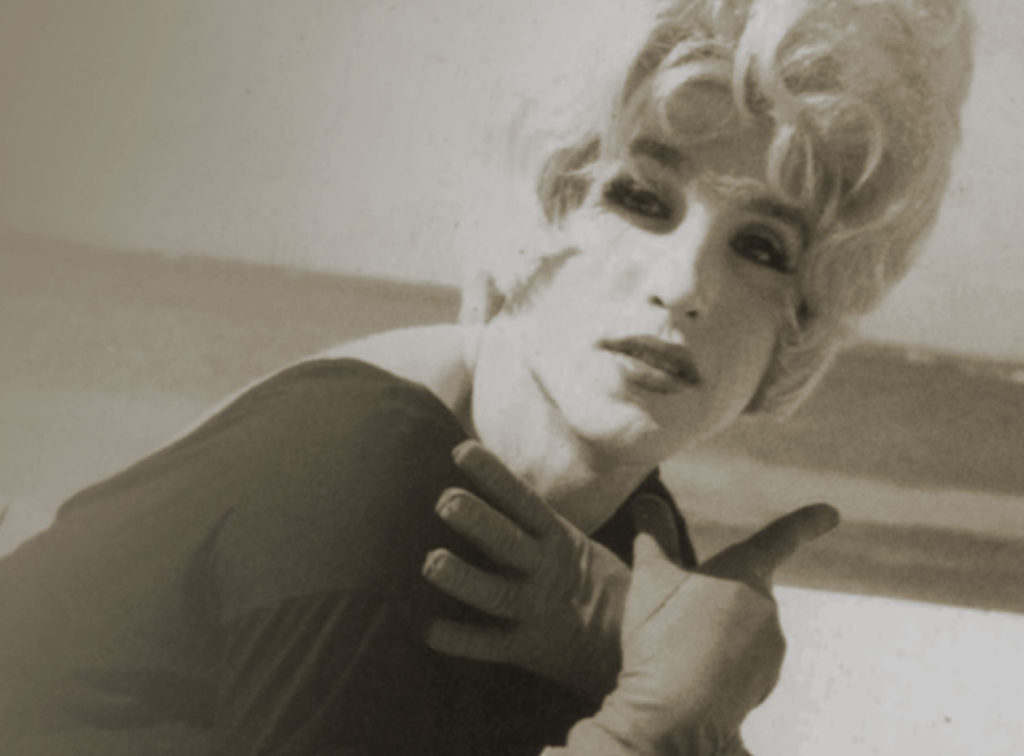
In my apartment, where my ‘festival experience’ should be, I sit holding my son’s hand as we watch Family Shorts 1 from the Glasgow Short Film Festival’s online programme. He giggles and shouts “Bear!” at the screen when Goldilocks and the Three Families of Bears (2020) comes on. We watch the Little Woolly Vision together, wondering why this strange white woman simply saunters into the houses of others and tests, tries, and takes what she wants, leaving destruction and despair in her wake. Perhaps she is the chairperson of the board for a film festival, and is explicating Sun’s descriptor, “As before COVID-19, film festivals are equally sites of inclusion and exclusion, of abundance and scarcity. In fact, they thrive off these paradoxes.” Goldilocks ‘visits’ the bears, but does she garner anything about their experience? And what does she learn and apply as she moves from one scene of exploitation to another? Or is it just an unmade bed, a broken chair, and a half-eaten bowl of porridge?
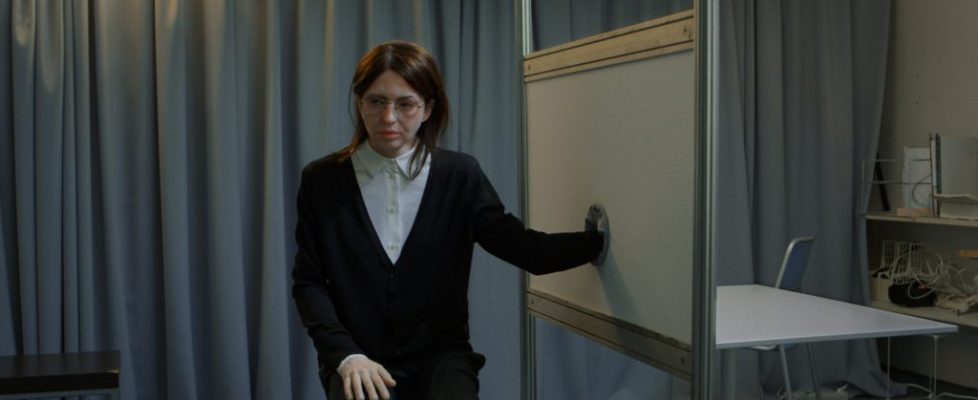

The choice of the title Ieva for a Lithuanian short film about a (female) robot prototype cannot be accidental: Ieva is Eve in Lithuanian. Fortunately, this is the only Biblical reference in otherwise quite a “scientific”, cold and precise short film by the directing duo consisting of Vytautas Plukas and Domas Petronis. Ieva deals with how a machine gets to know the world around it.
First thing we see and hear is noise, both auditive and visual. Once it goes quiet, the camera zeroes in on a face and upper part of the torso of a woman. She is conservatively dressed (imagine a school teacher from some decades ago) and perfectly calm. The setting looks like a hospital and she like somebody who waits for someone close to her to wake up. When the camera moves away from her face and onto a hand, quite robotic, tasked with trying to pick up different objects through a hole, we realize that our quiet lady is actually a robot. Later on she is tasked to observe and try to interact with the dogs of different sizes, breeds and personalities to little success. In the end, she is transported out of her “native” lab to a new “home” in a shop window from where she continues observing the world.
Working from Plukas’ austere, but precise script, Vytautas and Petronis are looking for an answer to the eternal science fiction gerne question: can androids gain experiences and forge their own identity and personality? The answer is too complicated to be spelled out in a single film regardless of its runtime. The good thing the directing duo does in Ieva is creating a cold, unpleasant atmosphere of a laboratory, making the viewers feel for the machine that, theoretically, cannot feel. The coldness and the rigidity, also reflected in the way the film was shot – by a camera from a fixed position, is broken only in the scene of Ieva’s transportation, which seems natural, dark and dirty, almost warm and analogue, before getting back to Ieva sitting in the window.
Ieva sees the noise. We see Ieva captured in one way or another. Is it life?
Country: Lithuania
Language: Lithuanian
Runtime: 14′
Year: 2021
Directed by: Vytautas Plukas, Domas Petronis
Written by: Vytautas Plukas
Cinematography by: Vytautas Plukas
Editing by: Vytautas Plukas
Music by: Agné Matulevičiuté
Sound by: Iveta Macevičiuté
Production design by: Sigita Jonaityté
Stylist: Ruta Sakalauskaité
Computer graphics by: Vytautas Kazlauskas
Colourist: Vytautas Plukas
Produced by: Domas Petronis, Vytautas Plukas, Dagné Vildžiunaité
Production company: Lietuvos muzikos ir teatro akademija (LMTA)

Police work is usually anything like what we see on cop shows. Interrogation is usually not a battle of wits, but a negotiation game between people who mostly know each other. Even the victims, not to mention witnesses, are often unwilling to cooperate, and since the police investigators cannot be omnipresent and offer help at any given moment, they end up stuck with the same criminals in the aftermath. And also, the job takes its toll…
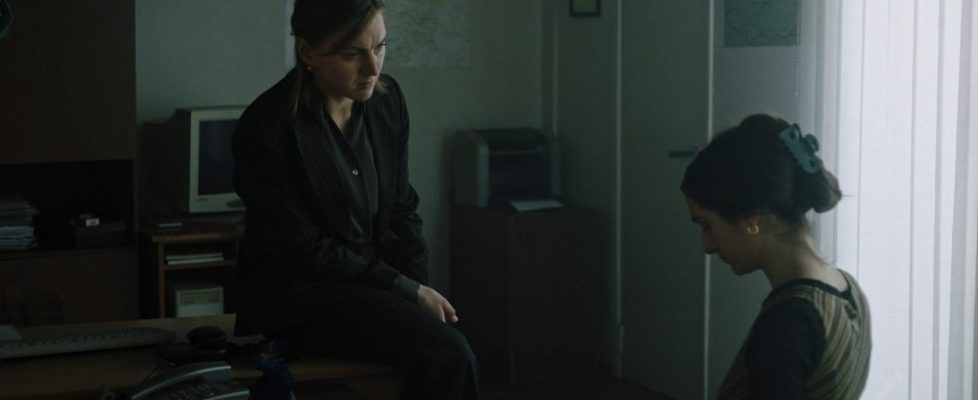
Two police interrogations conducted by the investigator named Aleksandra (Laima Aksinaité), one with a small-time criminal with prospects of a long career in the trade, Andrius (Karolis Kasperavičius), and one with a witness / victim of human trafficking, Viktorija (Augusté Ona Šimulynaité) are the subject of the Urté Sabutyté’s short film Interrogation that has just premiered at Vilnius International Film Festival – Kino Pavasaris.
The year is 1999 and Aleksandra has been summoned from Vilnius to an unnamed smaller town to investigate a case of human trafficking connected to the international prostitution ring. The content of her interrogations and even her findings is not what makes this short film stand out. She might not know Andrius in person from before, but Andrius knows who she is and knows enough about her life to try to derail her in order to withhold useful information. Viktorija knows her position and is also unwilling to cooperate. There is no triumph of justice here, just the sense of fatigue and detachment.
The reason why Interrogation stands out, apart from its perfect production design with its knowledge of the given period, is the elegance of its construction and execution. The film consists only of a few shots, one per scene, with the precise control of camera movement. The camera simply orbits around Aleksandra, follows her from the back as she walks down the hallways of the police station, turning the shots subjective when she’s asking questions and moving away to show us the rooms. Matched with some pleasantly restrained acting and with the sound design that registers everything from the hallway murmur to the unpleasant silence during the questioning, Interrogation is an absorbing film.
Original title: Apklausa
Year: 2021
Runtime: 14’ 23’’
Country: Lithuania
Language: Lithuanian
Directed by: Urté Sabutyté
Written by: Urté Sabutyté, Simonas Jaktonis
Cast: Laima Aksianité, Karolis Kasperavičius, Augusté Ona Šimulynaité
Cinematography by: Ugnius Tuleikis
Editing by: Urté Sabutyté
Sound design by: Kipras Dominas
Production design by: Tadas Klimavičius
Costume design by: Marija Garnak
Make-up by: Fiona Dinh Thu
Colourist: Justinas Vencius
Assistant director: Urté Aškelovičiuté
Produced by: Dagné Vildžiunaité
Production companies: Just a Moment, Lietucos muzikos ir teatro akademija (LMTA)
Supported by: Lietuvos kino centras, City of Kaunas, Kaunas Film Office


