It’s around Christmas time somewhere in Scotland. The year is 1995, and the country is hit by the devastation of industry that left many people unemployed. That, and increased crime rates are topic N°1 on the local radio.
Absolutely nothing is left to coincidence in Owen Gower’s revenge drama Burn on Arrival that screened in the Scottish Competition of Glasgow Short Film Festival. Each step that the anti-hero Billy (James Harkness) takes, pushes him deeper into the abyss of crimes he is puppeteered into by an anonymous blackmailer. There is a strong compassion with the man who’s at the brink of a nervous breakdown until the chain of events revreses this sentiment.
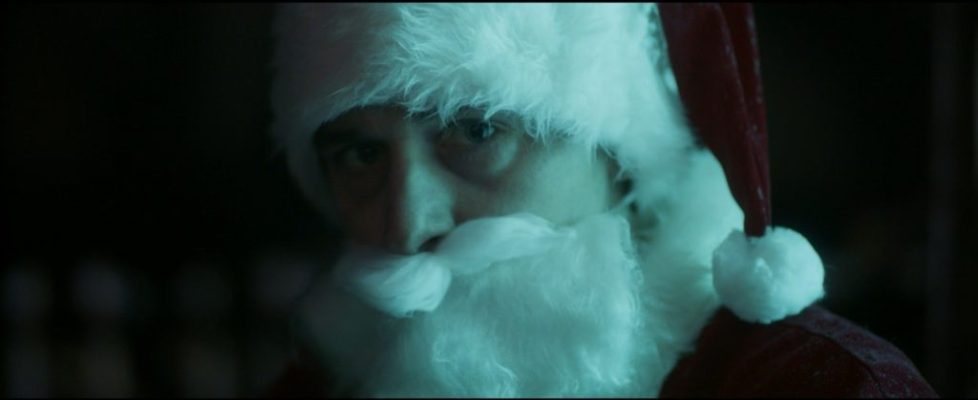
The film opens with Billy getting out of a cab in the middle of nowhere, dressed as Santa. He is led by instructions in a red envelope that also demands, he burns it upon reading. His first destination is a house in which people seem to know him, but he still mercilessly does what he has to do. From that moment on, nothing goes as smooth for the hitman. A car left to him by that particular someone with a plan won’t start, and he gets stranded in the area with Sara (riveting performance by Kate Dickie) who happens to find him there trying to start the engine – not quite accidentally as we will learn soon enough.
Burn On Arrival is set against the backdrop of the closure of Ravenscraig steelwork which has been described as a ‘national trauma’ 1. Bulding the story on the idea of trauma that needs to be dealt with even if it requires looking into one’s own misdeeds, Owen Gower sets his two main characters on a painful road of redemption, with completely different outcomes.
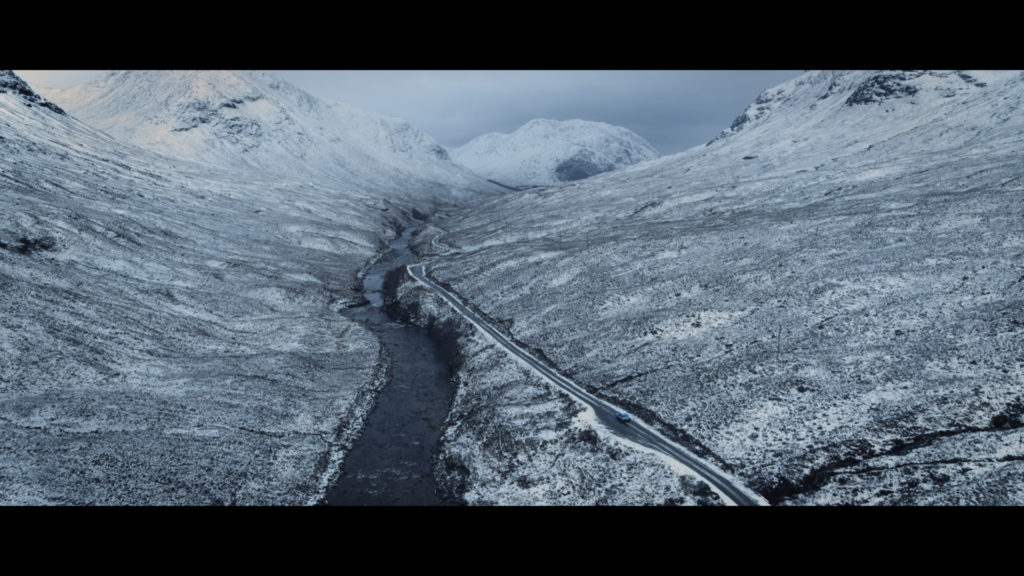
Set to the sinister score composed by Richard Canavan, the film plays with the steel blue coldness at night and blinding whitness of the snowy landscape in daylight, with Steve Cardno’s photography that expands the feeling of entrapment.
Soon enough, we will get suck into the reason for this blood bath that has something to do with an arson attack on the Steelworkers Benefits that claimed lives of seven people. The past and the now clash with a tremendous force in this clever social drama clad in genre’s costume.
What is the price of life, and the price of labor? And is there an adequate sum of money that can compensate for the loss of human life, or revenge for that matter?
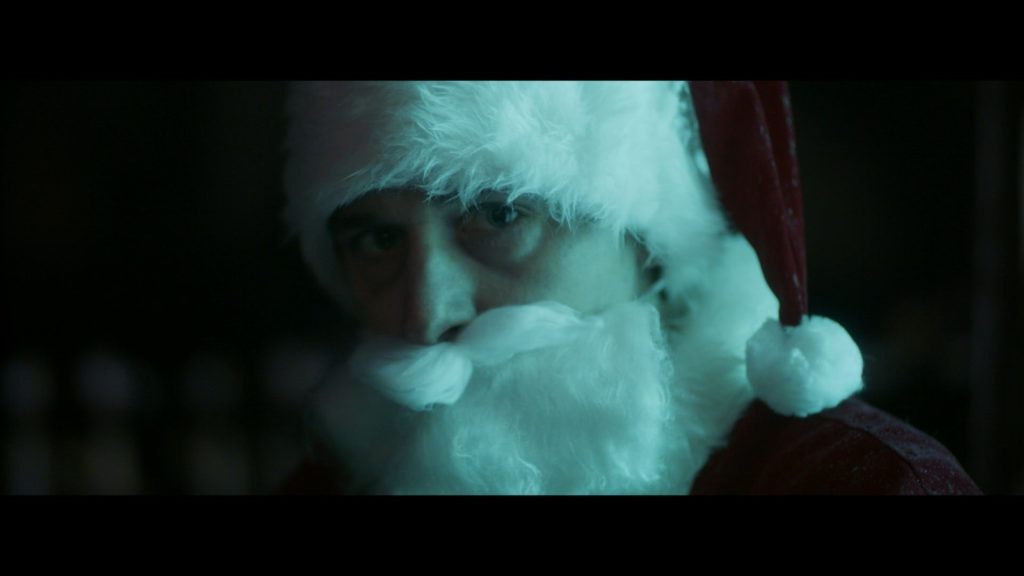
James Harkness as Billy in Owen Gower’s ‘Burn On Arrival’. Courtesy of GSFF
*Director’s statement
Country: UK Year: 2020 Runtime: 19′ Directedby: Owen Gower Writtenby: Owen Gower, Amelia Lavington Cast: James Harkness, Kate Dickie, Stuart Curlett, John Stahl Producedby: Roisin Kelly, Sinead Kirwan, Mark Lacey ExecutiveProducer: Tibo Travers Production Designer: Gail Bowman Cinematographer: Steve Cardno Musicby: Richard Canavan Editor: Roddy Mcdonald ArtDirector: Aaron Close CostumeDesign: Linzi StClair Thompson MakeupDesign: Madeleine Drewell SoundRecordist: Alan Henry Re-recording Mixer/ Sound Designer: Enos Desjardins Foley Artist: Tapio Liukkonen Visual Effects: Andrew Donaldson Gaffer: Stuart Anderson Grip: Richi Holt
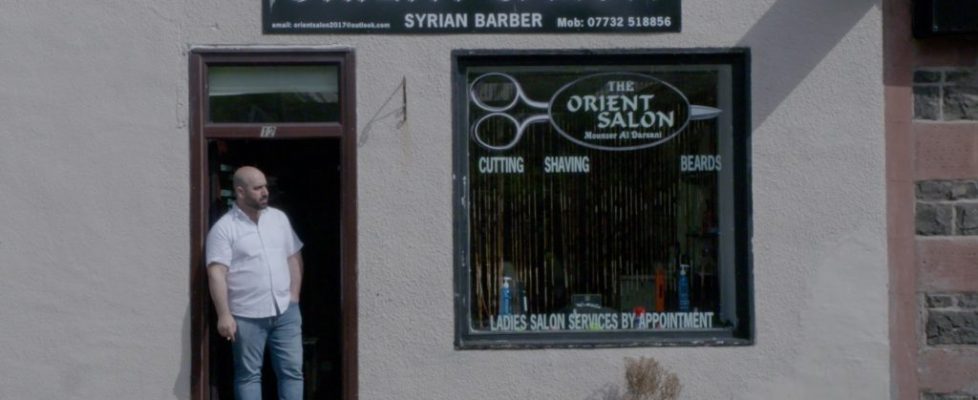
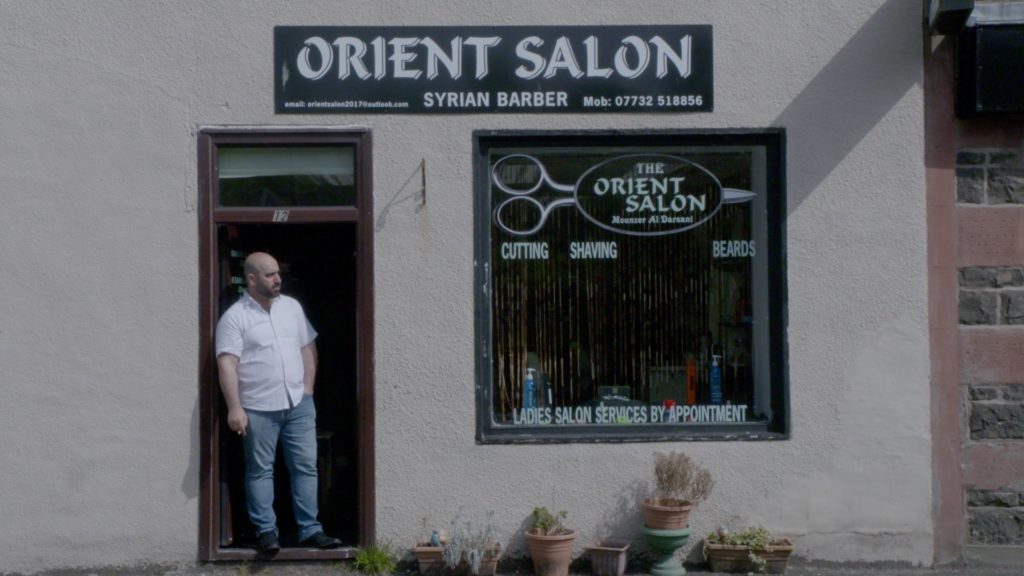
One wouldn’t expect to find a Syrian barber on such a tiny island as the Scottish Isle of Bute. With its 8000 inhabitants, surrounded by rough sea and whipped by strong winds, this isn’t a primary destination of refugees who seek to build a new life somewhere in the UK. And yet, there it is – “Orient Salon” owned by Mounzer Al Darsani, a man who left his hometown Al-Zabadani 5 years ago to escape the horrors of war.
Isle of Us is a fitting title for a film that shows a warm, welcoming islander community. Mounzer’s barbershop never runs out of customers, and the man is liked by kids and grown-ups alike. He has obviously lived to his father’s advice to “build a house wherever he goes” and find friends and his “second family” in whichever country he lands in. But nothing is as simple as it looks like. Life back home is constantly on Mounzer’s mind, and a wish to return once the situation normalizes. Another thought is constantly present in his head – a potential assimilation of his children, and with it the loss of Syrian identity.
When speaking about himself, Mounzer is restrained. The word refugee makes him feel like he is less, he says, adding that being a refugee has become something disgraceful. That sentence will echo in one’s mind for a very long time. The brutality of it. The incredible cynicism of our European democracies who are fortifying their borders with higher and higher walls.
Videotapes from Mounzer’s childhood have also found their way to Scotland, and they complete the man’s attempts to tell something about his past. Most of the recordings are of poor quality, but the atmosphere of a care-free past on the streets of Al-Zabadani can be felt and partially seen, like four women in summer dresses dancing on a town square, or children playing with their parents on the playground.
There is a feeling of a puzzle piece missing from the complete picture. Mounzer stays strangely distant, also in moments of more personal confessions. He doesn’t seem to feel at ease in front of the camera, so it’s mostly his customers doing all the talking.
Isle of Us is Laura Wadha’s NFTS (the National Film and Television School) graduation film. The film which world- premiered at Sheffield Doc/Fest and was nominated for an International Documentary Association Award, is screened in the Scottish Competition of Glasgow Short Film Festival.
Country: UK Language: Arabic, English Year: 2020 Runtime: 17′ Produced/ Written/ Directed by: Laura Wadha Cinematographer: Laura Wadha Sound Design: Ruth Knight Music by: Harry Brokensha Colourist: Michael Pearce Production Design: Priya Sidhu Production Coordinator: Beatriz Honorio
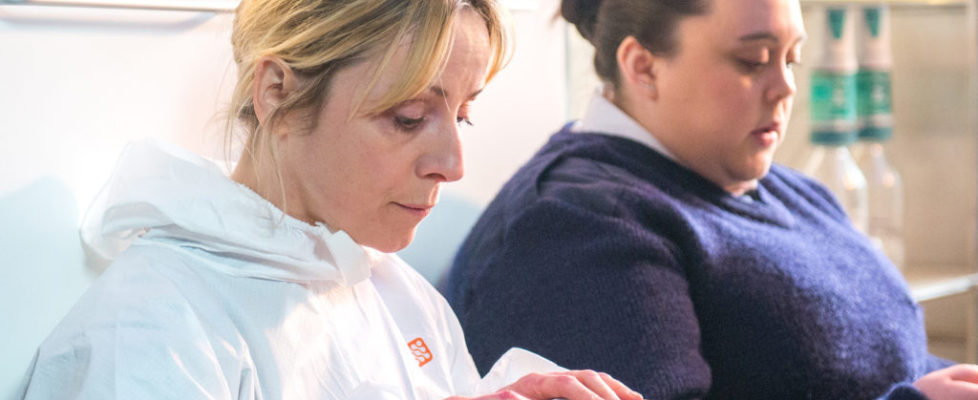
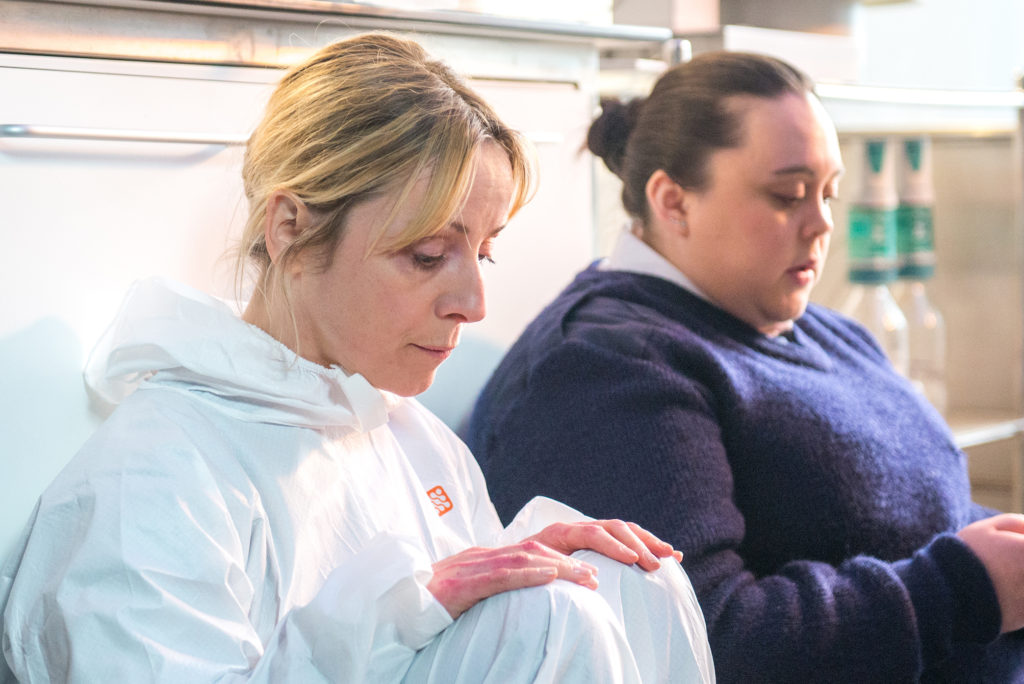
Claudie Blakley (Beth) and Sharon Rooney (Shauna) in Douglas King’s ‘Do No Harm’ (2020). Courtesy of GSFF
Leading scientist in the field of virology Dr. Beth Anderson (Claudie Blakley) lives with a secret that could jeopardize her career. She is namely suffering from Obsessive Compulsive Disorder which makes her paranoid about many things, among other – the “lethality” of a tomato-cheese sandwich whose date expired just the day before. In her mind, that particular sandwich contains the deadly virus she is dealing with in her high-tech lab, and she is feverishly working on a plan how to get hold of the damn thing before anyone sinks their teeth into it.
Douglas King’s sixth short Do No Harm is one of the total of three genre films screened in the Scottish competition of GSFF, and it will certainly do some travelling in the near future.
Penned by Rosy Barnes, the script is built on black humor, witty dialogues, and a weird type of action that true genre lovers will know to appreciate. Not over the top despite of the nature of its main character’s problem and the way it gets addressed, the film is surprising in its resteless approach to time and space. There is a bit of time loop to show Beth’s compulsive reactions to this new stresfull situation, and when the repetitive movements result in frenzy, they are wonderfully accompanied by the tension-building music composed by Alexandra Hamilton-Ayres.
When none of the plans to seize the sandwich bare fruit, Beth has to act in a rather extreme way – by breaking & entering at night. Do No Harm is an engrossing film with a powerful almost all-female cast. Along Claudie Blakley, excellent in her role as a security officer Shauna is Sharon Rooney.
Country: UK Language: English Year: 2020 Runtime: 15′ Directedby: Douglas King Writtenby: Rosy Barnes Producedby: Alysia Maciejowska Cast: Claudie Blakley, Sharon Rooney, Alison O’Donnell, Gilly Gilchrist, Daniel Campbell Director of Photography: Andrew O’Connor Editors: Martin Allison, Florian Nonnenmacher Production Designer: Nazia Mohammad Sound Recordist: Colin Mackay Gaffer: Leon Brehony, Daniel Filmer Musicby: Alexandra Hamilton-Ayres Music department: Joe Galuszka Art Director: Kieran Mcruden
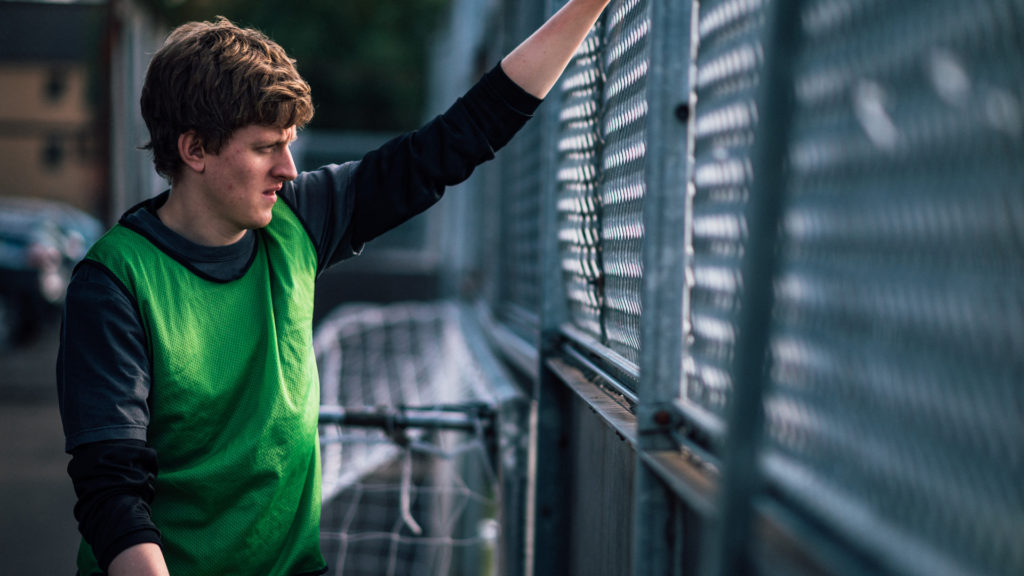
Theoretically, it shouldn’t be that difficult to live one’s own sexuality without having to hide anymore. Although it is slowly getting better with every day – at least in so called western countries, there are still places that remain stubbornly heteronormative and homophobe. Football, for instance is a manly sport that should be played by manly men who reek of testosterone and throw toilet jokes at each other. At the same time, pranks in showers or dressing rooms can get pretty intense when the same manly men simulate sexual practices on each other. Boys will be boys. Tiring as it is to look away and pretend to be fine with all of it, Angus (Lorn Macdonald of Brigderton) does just that until he can’t take it anymore.
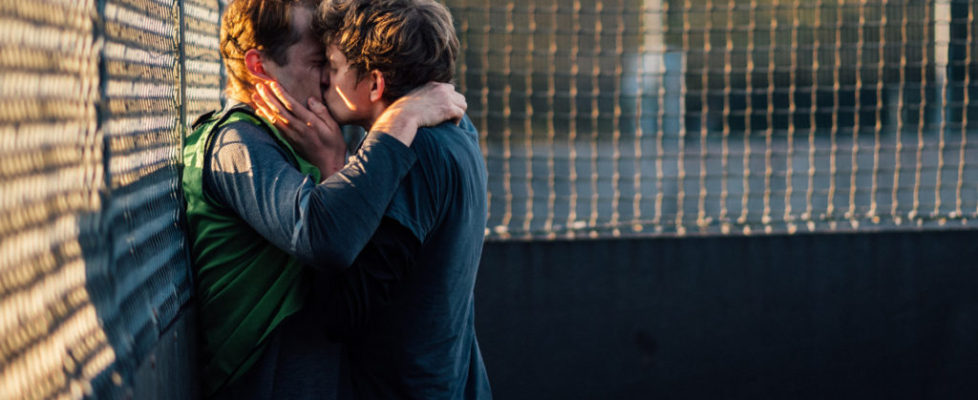
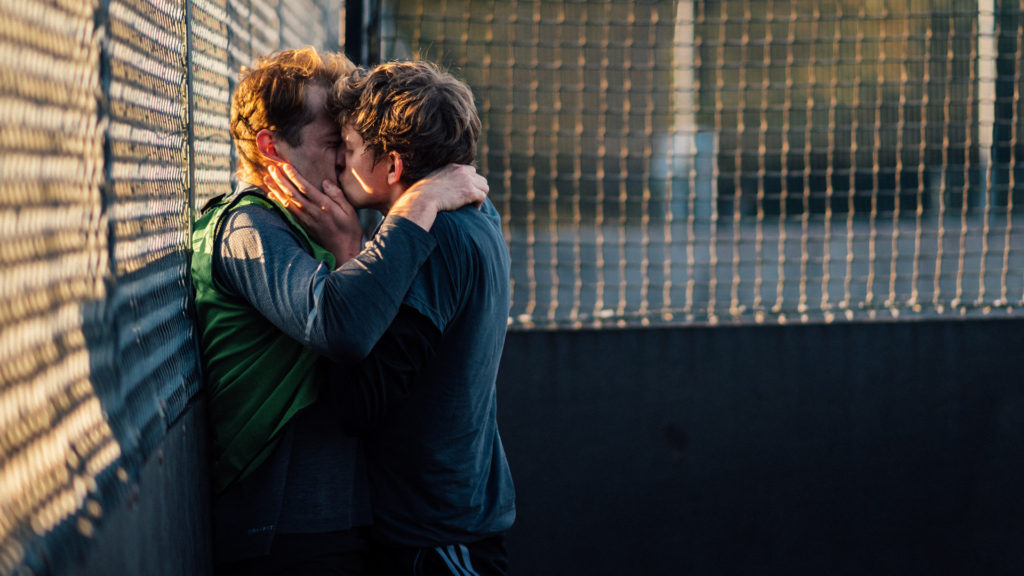
Caitlin Black’s GSFF Scottish Competition entry 12th Man is a film that casts a glance behind the coulisses of pretense in the most popular sport in the world. Angus and his partner Charlie (Guy Hodgkinson) who is the captain of the team, can not display public affection, let alone have a proper relationship. Constantly under the radar of the football team coach and their peers, two young men pretend to be just like any of them – straight, “normal” and tough.
As in any costume play, there is a limit to acting – in this case for Angus who has little to lose.
Caitlin Black’s sophomore short 12th Man is based on the script by the newcomer Jack Gemmell whose insightful writing brings the plight of two lovers close to the viewer. It is true that we are not in clear about how far the relationship of the two men has gone, where it was when the dirt hit the fan, nor what has inititated a brief physical confrontation between Angus and an anonymous player who beat him up and threw abuse on him for being a gay. At the same time, all those things matter less than both the outcome of the story and the universal message it brings across. Keeping the mask of an average Joe will save your life, and staying truthful to your identity will save your soul.
Country: UK Language: English Runtime: 12′ Produced by: Jack Gemmell, Caitlin Black, Aidan O’Mara Directed by: Caitlin Black Written by: Jack Gemmell Executive Producer: Miguel Anjos Cinematographer: Sean Mcdonald Production Designer: Nathan Alliott Editor: Mark Fraser Costume Design: Michelle Mcauley, Siiri Korhonen Composer: Rory Cairnduff Cast: Lorn Macdonald, Guy Hodgkinson, Mark Mckirdy, Kal Walker, Ryaan Ali
Many of us don’t know how it really looks like living a life without papers. The life conditioned by kindness or ruthlessness of others. We don’t know the fear of being caught and deported to the country we did everything to leave behind, not being able to pay the rent or to provide for food. Such life is led by multitude of illegals across the world, and in ‘Fortress Europe’ hardened by anti-immigrant laws and rising xenophobia, many people are forced to do whatever they can in order to survive, often being blackmailed into doing things that clash against their principles.
In her debut short Expensive Shit, based on the award-winning theatre production of the same name she wrote and directed, and which brought her a Fringe First Award in 2016, Adura Onashile illustrates how difficult it is for those without protective hand of higher authorities to say no to awful demands.
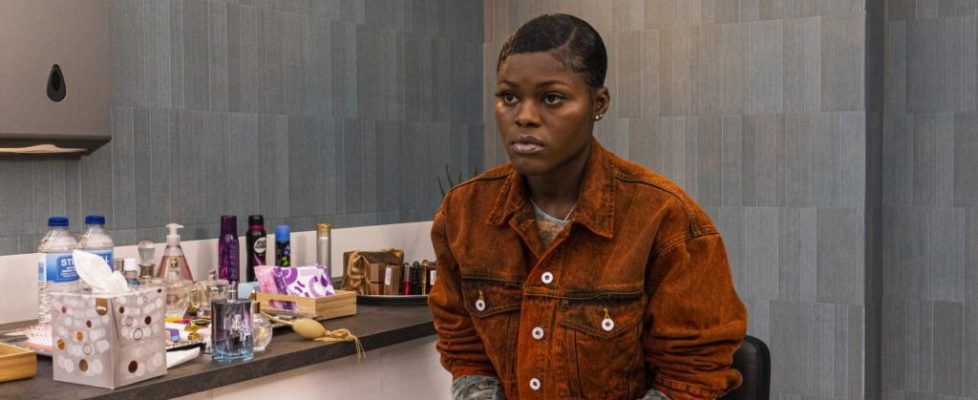
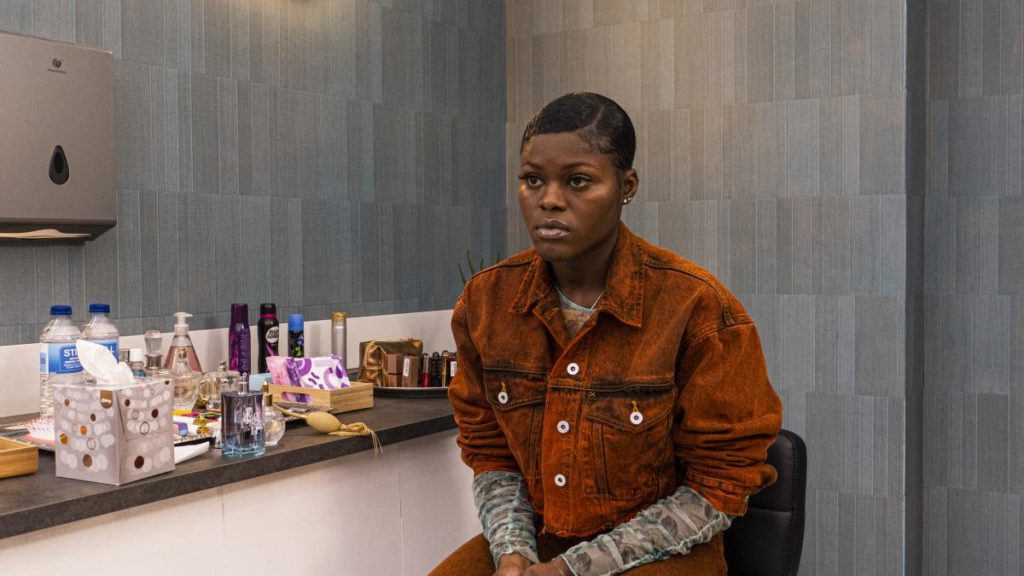
Tolu (Modupe Adeyeye), a Nigerian toilet attendant in a Glasgow-based nightclub is trying to earn some extra money by providing her customers with cosmetic products. She is helping young women to perfect their makeup during the short toilet breaks with expensive ‘shit’ at their disposal, right next to soap and fresh towels. Not many of women are ready to pay for that service, using lame excuses. Tolu is used to the highbrow attitude, but her desperation is growing bigger with every moment not only because she can’t get an extra pound or two, but because she’s aware of the foul game that’s going on in the club, and that’s she’s dragged into against her will.
A young manager is behind the toilet mirror with men who eye the women inside to decide which one should be chosen to be drugged and abused. Tolu, who was originally told something else (the men will be ‘just watching’) can’t cope with the heart-breaking consequences of her involvement in the process.
Adura Onashile isn’t going for a simple narrative that de-masks just one layer of hypocrisy. Her victims, although brutaly assaulted are not innocent of the hate crime, and the well oiled wheel of patriarchy gets exposed from its ugliest ‘perpetuum mobile’ side.
Country: UK Language: English Runtime: 15′ Produced by: Barry Crerar, Rosie Crerar Co-produced by: Ciara barry, Wendy Griffin Executive Producers: Paul Welsh, Claudia Yusef Written/ Directed by: Adura Onashile Cinematographer: Sarah Cunningham Editor: Stella Heath Keir Production Designer: Jamie Lapsley Hair & Makeup design: Kar Morgan Costume Design: Kirsty Halliday (I’ll Be Your Mirror) Music: Ré Olunuga Sound Designer: William Aikman Sound Mixer: Cammy Mercer Boom Operator: Aidan Mcdonach Focus Puller: Jonny Kerr Grip: Liam Wilson Gaffer: Steve Arthur Casting Director: Simone Pereira Hind Art Director: Gordon Rodgers Cast: Modupe Adeyeye, Kima Allan, Nebli Basani, John McLarnon, Ainsley Jordan, Shona Mchugh
It’s a paradise for people who long to be away from the so called civilization and find peace with themselves. Sometimes, it’s just the urge to connect with the like-minded, and not the escapism per se. The tiny Hebridean island of Erraid is a home for a chosen group of members who live in harmony with the nature. To enter the community as a resident is more difficult than to visit it as it requires certain sacrifice – one should become one with people and their practices and be ready to give and share. Everyone has their special role on the island, and sometimes those are shared: taking care of the chicken or the vegetables, for instance. Some inhabitants are in charge of baking, the others for chopping wood, and some for driving to the continental Scotland to get provisions for the whole community.
Robert Louis Stevenson loved Erraid, the island which inspired him to write The Merry Men (1881) and one chapter of his fictional adventure novel Kidnapped (1893). He allegedly stood on a wishing stone there on one of his trips, having only one wish – to become a writer. Whatever happened there between the writer and the stone will remain a secret, but the history of Erraid is connected to his family: Robert’s father Thomas was one of the two men who won the contract to build the ‘Nothern Lighthouse’ at Dubh Artach 15 miles of the coast of the island, where the dangerous rocks that took many lives lie.
The short documentary by Giulia Candussi has nothing to do with the Stevenson’s legacy. She is following a new candidate for the community Gill on her trial period to joing the chosen. As a middle aged woman who’s very open about her reasons to seek shelter on Erraid, she pateintly waits, hoping, everything will turn to the best. A devastating heartbreak brought her to the same place she already knew from before, and she is feverish with fear of not being embraced by the place and people who grew to her heart so much.
Aganist The Tide is a film that has a bright festival future. The sound design by Mike Struthers makes us sink into the depths of human insecurities, and at the same time into the unspoken secrets of the windy island that loves and hates its inhabitants.
Country: UK Language: English Production: Bridging the Gap, in association with Screen Scotland and Cloud Break Pictures Producedby: Julia Moon Directedby: Giulia Candussi Cinematographer: Giulia Candussi AdditionalCinematography: Luis Maurizzio Editor: Drew Gibson SoundRecordist: Luis Maurizzio AerialPhotography: Gordon Campbell Sound Design/ Mixer: Mike Struthers
Brad Lichtenstein’s documentary does not bury the lede. There’s barely time for the obligatory drone shot – in this case of hometown Milwaulke – before Claude Motley is recounting how he got shot in the face. The law student and former Milwaulke resident was back in town for a class reunion, dropping a friend off at his house when a gun was tapped on the car window and when he tried to escape, Claude was shot. Despite this, he managed to drive to the hospital only to wake up shackled to the bed, presumed to be a perpetrator rather than a victim.
Gun crime and its consequences are the subject of When Claude Got Shot, a brilliantly wide-ranging and nuanced examination of a topic that all too often lives in black and white simplicities. Lichtenstein’s approach is to go wherever the story takes him and this story has more than a few twists and turns in its journey. Dead center is, of course, Claude himself: an aspiring member of the black middle class, a husband and father. His wife is a high powered lawyer, who brooks no nonsense, telling the camera: ‘Claude doesn’t need me to freak out, he needs me to handle this.’ The immediate consequences are obvious as Claude undertakes a number of surgeries with many more on the horizon. He also has to deal with the psychological ramifications as he finds driving around the neighborhood triggering in a very literal way.
The plot thickens when the perpetrator himself is shot while trying to carjack another victim. It turns out the shooter is a juvenile, 15 year old Nathan King. None of the most obvious ‘causes of crime’ boxes get ticked. The boy is from a two-adult household, is relatively middle class and goes to a good school. Now he’s possibly going to be in a wheelchair for the rest of his life as well as facing charges for shooting Claude. Initially this takes place in children’s court before a series of breaches of his custody agreement see him transferred to the adult system.
The strength of the documentary is the way it manages to widen the scope of its interest to decompose Nathan and his mother, Claude’s friends and family, as well as Victoria – the nurse who now must live with having shot Nathan – and her husband, without losing focus. It’s like watching the ripples of this single traumatic event spreading without ever weakening. Claude feels an obvious conflict in how he wants some kind of justice and closure but at the same time feels himself reluctantly empathizing with Nathan and the life he has lived up until this point. Claude’s own background is not too far away from Nathan’s: ‘I was teammates with murderers.’ And all this is happening while Claude also has to deal with terrifying medical costs, failed insurance claims, his own legal career going awry and the emotional fallout that threatens his close relationships.
Brad Lichtenstein has created a deeply humane portrait of a tragic event, the consequences of which are both deep and far reaching. He achieves a panorama of the fallout using every document at his disposal, from crime scene photographs and security footage to fly on the wall observation and intimate interviews. There’s also a sense of how the police and the courts deal with the situation. It’s fascinating to see a police camera recording of Victoria being told about the status of Nathan after he has been shot. The type of film and the angle takes on a sense of guilt even though she is being interviewed as a victim. In a way this is the subtle power of the film in a nutshell: a crime splashes everyone with guilt, trauma and a yearning sense of the irreversibility of time. As one of Claude’s daughters says when asked what she has learned from the events: ‘The world is not a good place.’
Country: USA Language: English Year: 2021 Runtime: 94′ Director: Brad Lichtenstein Producers: Brad Lichtenstein, Steven Cantor, Jamie Schutz Executive Producers: Ted Chung, Leslie Fields Cruz, Geralyn Dreyfous, Sally Jo Fifer, Lois Vossen Co-Producer: Santana Coleman Director of Photography: Colin Sytsma Editor: Michelle Chang
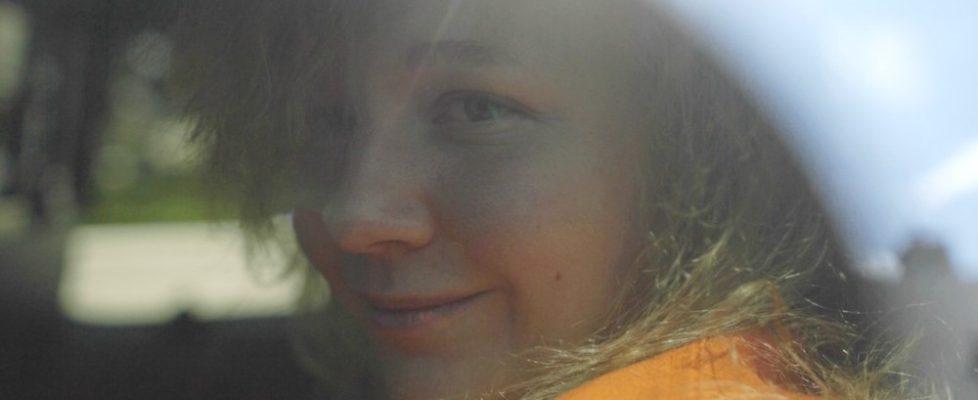
To many, history is just one damned thing after another to some. To Stephen Dedalus in Ulysses, ‘it’s a nightmare from which I’m trying to awake.’ At the moment, it feels like a tape that’s being fast forwarded on a loop. So much so that I’ll admit when I saw the title for Sonia Kennebeck’s new film, I really had to think hard about who Reality Winner was, mixing her up with Chelsea Manning. The information overload, the 24 hour news cycle and just the sheer mass of stuff that seems to have happened over the last five years threatens to crush you.
And for this United States Vs Reality Winner is a very necessary and worthwhile film. Just to be clear, Reality Winner was a 25 year old outside contractor for the NSA. She was arrested for leaking a classified report to the Intercept which detailed Russian interference in the 2016 election. In the media, the scandal of the interference and the attack on American democracy was quickly overtaken by the jokes about her name and then the smear campaign against her character. Painted as a radical who hated America, jottings from her journal and messages to her sister were selectively used to reinforce this image. Despite this, the now public report had a series of consequences, not least of which was ensuring that the 2020 election was safeguarded from interference.
Using tapes of the FBIs initial conversation with Winner as well as access to her family and experts in the field, Kennebeck’s film is a forcefully constructed argument and a reclaiming of a character from the public space. Reality comes across as an exceptionally intelligent and committed individual who did the right thing. It also succeeds in condemning a society that brands whistleblowing as criminal and especially when it uses a law as draconian as the Espionage Act to handle internal dissent. What is the most disturbing aspect is the way The Intercept apparently facilitated Winner’s arrest by handing over the document and the envelope it came in to the authorities ‘for verification’. The breezy way editor Betsy Reed claims that she would’ve been caught anyway doesn’t exactly instil confidence in an outlet which actively encourages whistleblowing.
Despite the stalwart work of Winner’s mother, sister and step father, Reality remains in prison – though she is due for release later this year. Once more the pandemic proves to be a stick in the spokes of all things good. This film deserves to be in cinemas with Q&As and an activists campaign to accompany it. That said there’s nothing particularly innovative about the film. The reconstruction of her arrest is particularly unconvincing with the real audio accompanying blurry shakycam film. Winner’s own legal inability to participate in the film also means that her voice is largely missing except for indirect quotes read by an actress. Even here though we can appreciate Reality’s sly humour. Her description of prison: ‘Worse summer camp ever. No bears.’ Hopefully, we shall soon be able to hear her voice and the voices of those who appreciate the sacrifice she made for the good of her country.
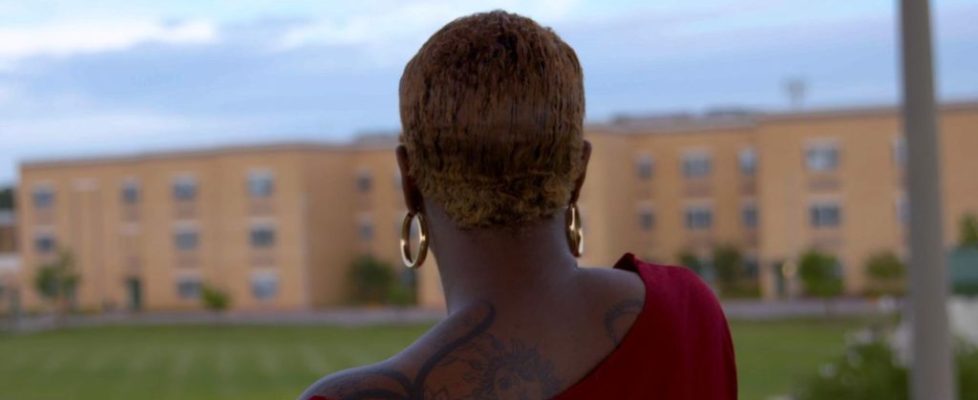
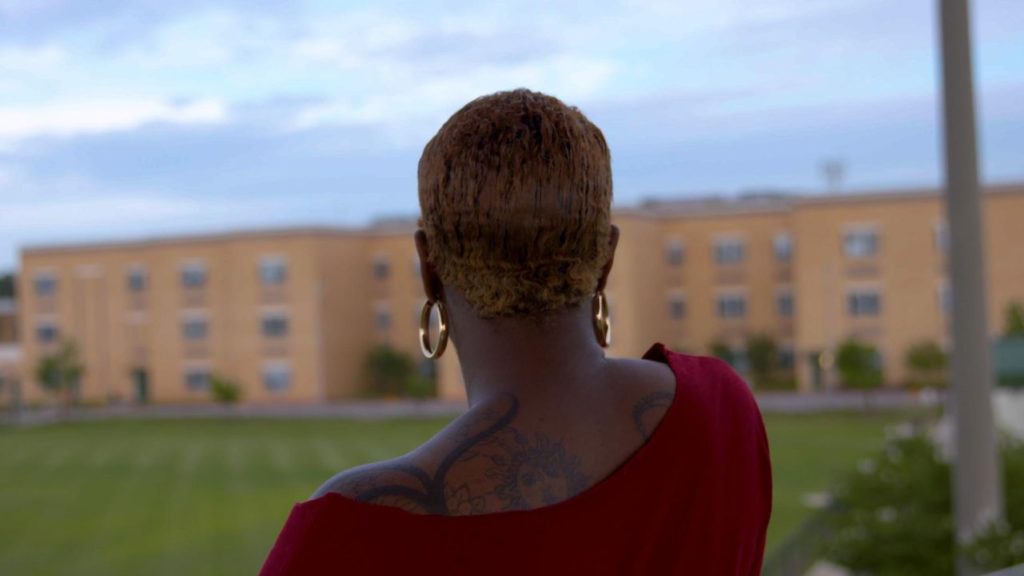
History is made not only by what we record but how we record it. From Goya’s War Sketches to the mobile phone footage of George Floyd’s murder, the medium can – to quote Marshall McLuhan – be the message. It can also get you arrested. That was the case for high school student Niya Kenny who whipped out her phone – along with two other classmates – to capture School Resource Officer Ben Fields as he flipped a fellow student Shakara to the ground in what quickly became a viral exposé of police violence and brutality, disproportionately aimed at young black girls. Shakara and Niya were both arrested for the crime of ‘disturbing school’, an actual crime which sees police officers attached to schools in order to impose discipline.
Garrett Zevgetis’ second feature documentary attempts at once a deep dive into the incident and an attempt to encompass the broader historical context and the aftermath. The context is literally unearthed in the landscape of South Carolina and the swamps which geographer Janae Davis explores. ‘South Carolina is thick,’ she states as she wades through a swamp to an island where slaves took refuge. ‘It has layers.’ In getting to those layers, Zevgetis interviews the experts and sociologists who also provide wider context, but he also focuses on the participants: Niya, Shakara and Ben Fields, providing them all with a space to have their say. Fields stands by his actions. He was using appropriate force in a difficult situation, and he views himself as the victim, losing his job for doing his job. (A title will later inform us he is now gainfully employed training officers in use of force.) A particularly effective moment is an almost forensic replaying of the incident via the three different angles and confronting Fields with his actions.
A further confrontation takes place when Vivian Anderson, an activist who relocates from New York to fight for the girls, sits down with him and tries to express her point of view about a white officer throwing a black girl across a schoolroom. There’s something of the Reality TV vibe here. A hoped for epiphany, a moment of connection, however, paradoxically, it is the film’s attempts to bring people together which only proves how distant and divided America truly is. Fields obviously dislikes any notion that he is a racist – he had a black girlfriend! – so much so he wants another conversation with Vivian to put his point across. But the insuperable gap is between the discussion of systemic racism and personal experience of racism. If you work in an institutionally racist role, then it hardly matters whether you are personally racist or not. There is no sense that Fields feels sorry for Shakara or Niya – both of whom withdrew from school – and Shakara particularly suffered as the national conversation quickly shifted onto blaming the student for the incident.
Technically, the film is slick though not particularly imaginative. The onscreen graphics and drone shots combine with the talking heads and the meetings to persuasively make the argument. However, this argument has outpaced the filmmakers. Since the incident in 2015, there has been an increasing accumulation of evidence – mostly taken from cell phones – showing police violence against people of colour and the Black Lives Matter movement (which is included in the film) has gained huge momentum. The two-steps-forward-one-step-back conclusion we are left with in Spring Valley shows that as many places seek to get rid of police from their schools, it is still the biggest growth area in American law enforcement. Zevgetis’ film struggles to encompass these contrary movements, but it is to its credit that it includes both.
Watching as a European, personally I feel the sight of police in school looks, well, fascistic. The respect for order and discipline which it invokes – over creativity, originality and dissent – would be discomfiting in an authoritarian regime: it’s nauseating in a country that holds itself up to be a beacon of liberty. One telling moment comes early on when Niya explains how when she knew Fields was on duty she told her classmates to get their phones out. For all the talk of restraint and protocols, this indicates that the kids of this school didn’t see the policeman’s actions as an anomaly, but as a distinct likelihood. As Frazey Ford sings, the kids are having none of it.
Between
2005 and 2019, Zulfikar Filandra filmed images, some with sound and
some without. This is about the only thing I can say with any real
certainty about Minotaur
– and even that, only because the film tells me so in its final
credits.
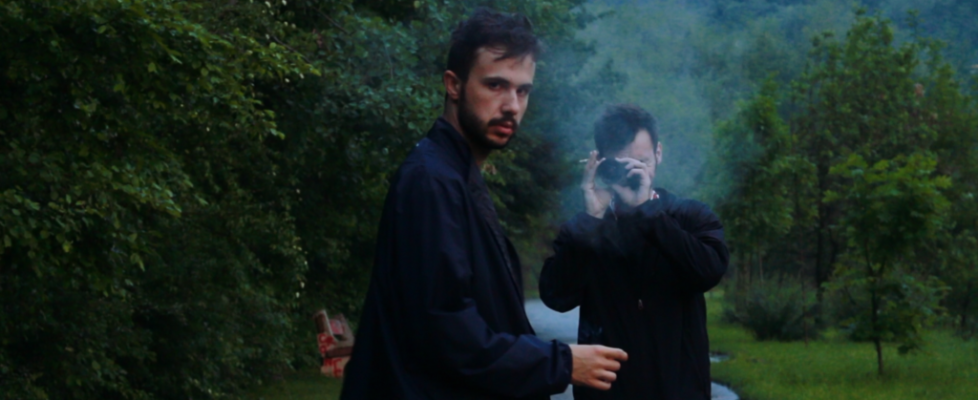
Minotauris a film which evacuates your possible knowledge of it. There are moments, places … but where, when, under what circumstance? It’s best not to read anything about this work before watching it. Best not to be projecting outsider-ideas about Bosnia, or about the maker’s biographical itinerary, or about the production’s connection with the experimental film community of Ireland – although, doubtless, there are traces of all this evident somewhere in its cascade of shots and sound-samples.
Is
it a film-diary in the manner of Jonas Mekas? Everyday ephemeral
moments, caught on the fly, moods, faces, gestures, landscapes, city
streets, weather. Often beautifully filmed, captured. Minotaur
can
be taken (and experienced) that way, but it’s more ambiguous.
The
ambiguity comes from the range of types of footage drawn upon. Shot
on various different technical formats (the screen size is constantly
ping-ponging from one aspect ratio to another), there would seem to
be many occasions and reasons why these images exist: as chronicle,
as tests, as scenes from fictions, as vacation fun-and-games. Things
stolen, and things staged. But where to place, how to determine the
difference? It’s impossible. No line can be drawn, no
categorisation can be meaningfully wielded.
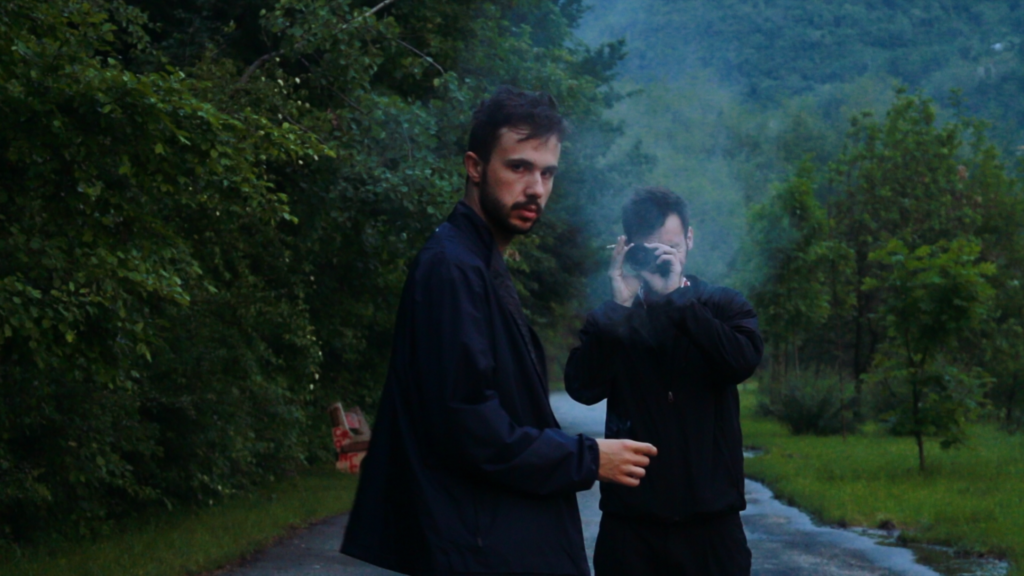
We
pose, we turn, we make a face, we compose a Selfie (Filandra films
himself in many shots). We are just standing in the middle of a road
when a friend snaps a picture of us. It’s all projection of one
kind or another, strenuous or casual. Always a skein of real and
imaginary, documentary and fiction. We form an image, and fall into
fiction, whether we like it or not. And we are also brute, brutal
evidence, whether we like it or not: our appearance at that split
second, what we were feeling as betrayed by our face muscles and our
posture, the clothes we were wearing, the shadow cast on us by the
sun.
This
lack of distinction between the types of material sometimes produces
a startling effect. What are those guns and cops and ominous trucks
we suddenly see? What’s this talk of imprisonment and escape? Eager
to read some national and social allegory into what passes before our
eyes and into our ears, we may have simply fallen into the ruined,
cast-off fragment of some exuberant movie-genre exercise. Who knows?
Grand fantasies need no historic trauma as an alibi to come into
existence in our minds, and in our works. They flow and die like the
wind, like emotions.
In the trailer that raised some money online to complete Minotaur, Filandra quickly listed his inspirations and influences. Mekas is there, for sure. But also the severe aesthetic eye and approach of Jean-Claude Rousseau; the emotion-drenched minimalism of Chantal Akerman; the iconoclasm of Jean-Luc Godard; and the phantasmagoric visions of Rouzbeh Rashidi (who collaborated closely on the film in terms of production, editing, sound, and now exhibition/distribution through his Experimental Film Society in Ireland). That covers a lot of possible options between the off-hand and the stylised, between nature and artifice.
It’s
not a story, and nor is it the kind of over-treated, hyper-stylised
audiovisual notebook that Khalik Allah has offered us in his recent
films. It’s not a wash of slow-mo and pumped-up poesis. The
documents, the traces come to us, often, in a fairly raw state. It’s
the selection of the cut, in and out, before and after, that matters.
Even
if taken as a pure diary, it’s mysterious. There is no chronology
of footage, no naming of “characters”, no clear tracing of
relationships. Those we see are … friends, lovers, enemies,
collaborators, strangers, who knows? There are glimpses of intimate
moments (before, after, under the bedsheets), a wedding here, a child
there, but no cohesive narrative of what-with-who, the coming and
going of any one person with any other …
In
mythology, the Minotaur roams the labyrinth, awaiting its human feast
to be delivered. Filandra-as-Minotaur hacks his own archive, arranges
it in a beguiling poetic order. Montage makes the form of Minotaur,
shapes it and spaces it.
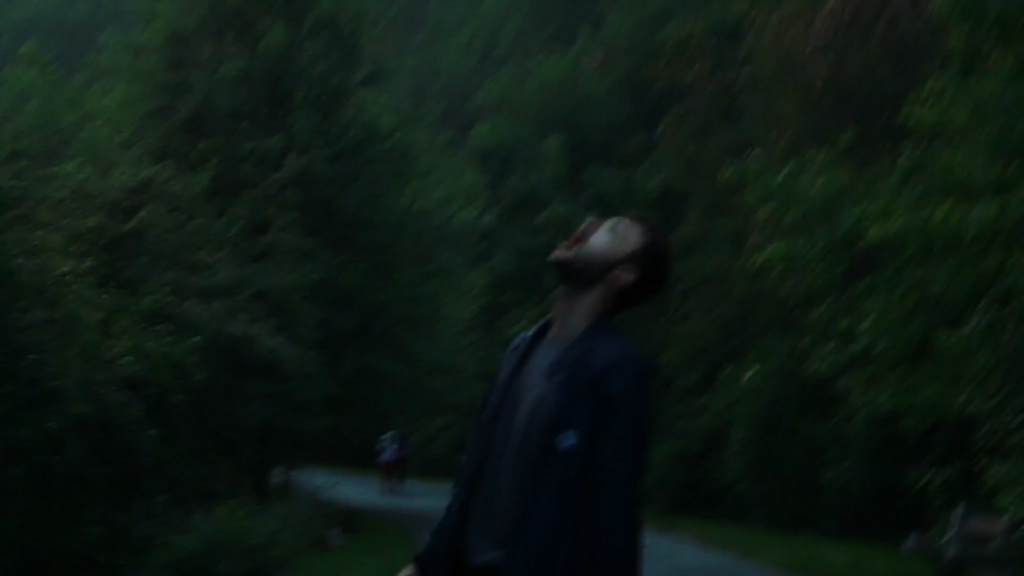
One
thread through the labyrinth is human gesture: from the “cool
moves” made as a dancing teenager in the opening home-movie
footage, to the many arabesques of hands and arms whether produced
consciously, semi-consciously or unconsciously …
What
Bob Dylan said, cryptically, about Daniel Lanois’ production of the
album Oh
Mercy
(1989) kept returning to my head as I watched Minotaur:
it’s “deserted, like the intervals of a city have disappeared”.
In filmic terms, this disappearance of intervals corresponds, in my
mind, to the collapsing of every distinction between casual footage
and mise
en scène,
between reportage and scenario. We have to take things directly, just
as they hit us, as how they make us wonder or dream. We have to
swiftly learn to stop worrying about naming or knowing or placing
things.
The
sound works in the same way, on a parallel but not wholly
synchronised track with the images. Snatches of music, atmosphere,
soundscapes: directly recorded or reconstituted, one rarely knows.
Musical associations that sound like they come from the 1980s or even
earlier, the first synth scores of Francis Lai in the ‘70s. Bits
off TV, radio, records. But patches of silence, too. Breathing
spaces.
In
that sense, Minotaur
is a city with
intervals. With gaps, pauses, markers. The rhythm never gets tiresome
or repetitive over its 64 minutes. It’s a river, we ride with it.
Your emotions are elicited, and you don’t entirely know why. It’s
a mystery of cinema. Filandra thinks of it as a film about youth, the
experience of youth in time, but that youth is embedded in all of us,
no matter how old we are.
Dylan
also said of Oh
Mercy:
“The lyrics try to tell you about someone whose body doesn’t
belong to him”. Even the most personal, direct, confessional cinema
takes the maker out of themselves. Projects them elsewhere. Zulfikar
Filandra has opened the passageways for his own dispersal; he stirs
up the ghosts (living or dead, doesn’t matter) of his past and
sends them on their way, without a name-tag, without a passport. They
stream past us, out of the screen, and we catch hold of some of them,
take them into our own labyrinth. It’s a séance well worth
attending.