Scroll down to content
ubiquarian
Responz
RSS
Menu
  • #21669 (no title)
  • #21675 (no title)
  • About
  • Blog
  • Contact
  • Create your website with blocks
  • home
  • home2
  • home3
  • Sample Page
Scroll down to content
a love song in spanish
2021-03-07

Review: A Love Song in Spanish (2021)

Bernhard / Berlinale, Documentaries, Festivals, Shorts Ana Elena Tejera, Berlinale Shorts / 0 Comments

Berlinale Shorts Competition

courtesy of Ana Elena Tejera

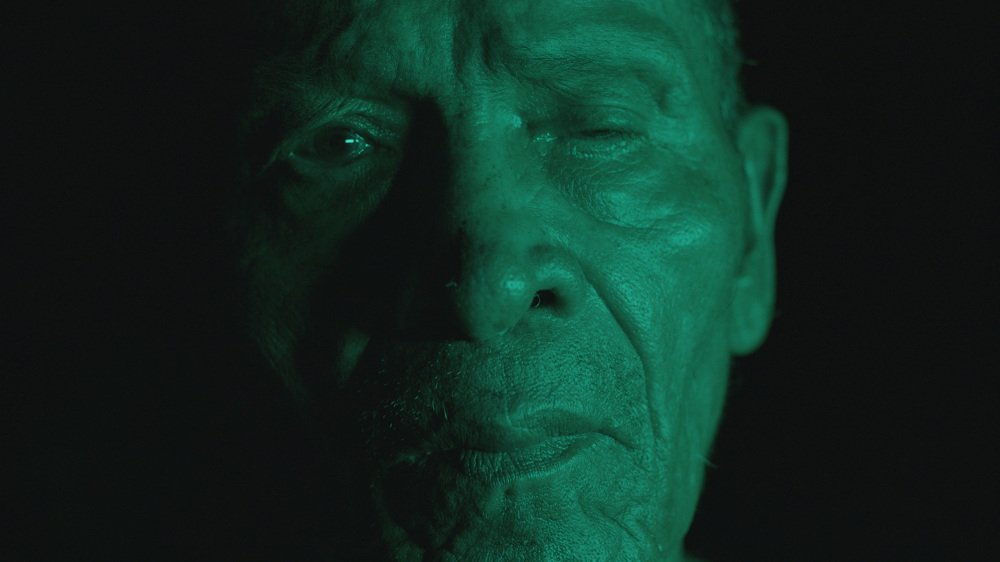
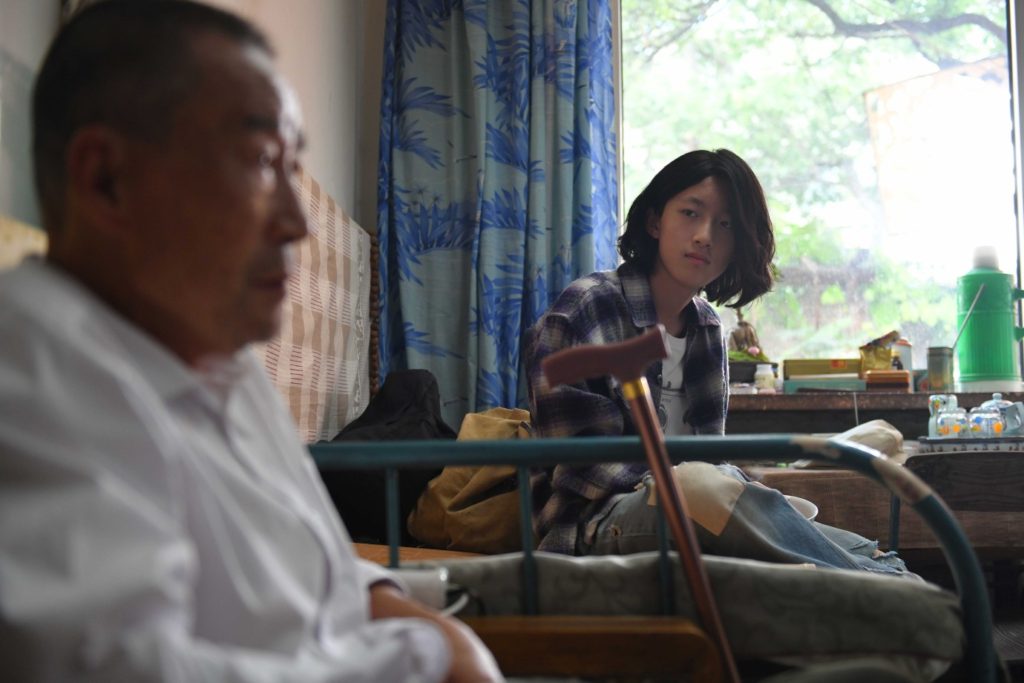
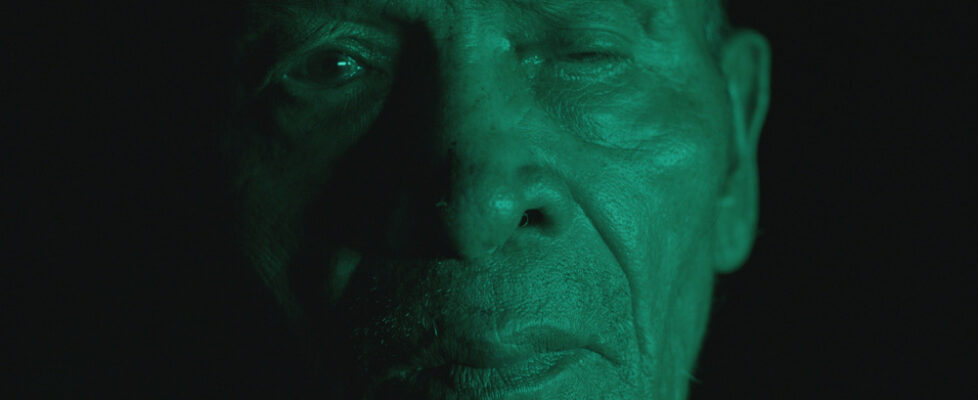
Despotic political power is a projection of a domestic dictatorship. The family of the filmmaker Ana Elena Tejera lived in close relations to the dictatorship in Panama in the 80s, which was mirrored in the house of her grandparents. The relation between the two and the consequences for her grandmother, living in fear and trauma ever since her husband came back a changed man from the military training in Israel, are the subjects of Tejera’s short docu-fiction essay film A Love Song in Spanish that has just premiered at Berlinale Shorts.

Excerpts from two love songs appear briefly to break the routine of an elderly woman who still cannot find her freedom and sticks to daily routines of preparing meals, working in the garden and cleaning the house. That part of the film is shown in largely wordless dramatic reconstructions and re-imaginations. The scattered information that sometimes lacks more detailed context is, however, delivered either in voice-over narration or in the collages of the archival material in which, formally, everything is different, but essentially nothing has changed. Tejera highlights that in the film’s most striking shot of the contemporary army marching in front of the projection of the archival material of the military (march) training from the times of Noriega’s regime.

Regarding the main thesis and the connection between two types of dictatorship, A Love Song in Spanish is slightly less than the sum of its parts. It is clear that the filmmaker did a lot of research starting from the archival material like still photos she could find at her family’s house, but it also seems that some of her findings and insights ended up cut out from the film that simply does not hit its target the way it should, strength- and precision-wise.


Runtime: 23’ 38’’
Countries: Panama, France
Language: Spanish
Directed by: Ana Elena Tejera
Written by: Ana Elena Tejera
With: Yolanda Mathieu, Candido Ríos
Cinematography by: Mateo Guzmán
Editing by: Ana Elena Tejera
Sound design by: Ana Elena Tejera, Juan Camilo Martínez Idárraga
Sound by: Eléonore Mallo
Graphic design by: Anhar Salem
Colourist: Baptiste Evrard
Produced by: François Bonnenfant
Production companies: Le Fresnoy Studio national des arts contemporains, Mestizo Cinema
Sales by: Le Fresnoy Studio national des arts contemporains
Lost_arrival_PolakvanBekkum
2021-03-06

Review: Lost on Arrival (2020)

Bernhard / Berlinale, Festivals, Shorts Berlinale Forum Expanded / 0 Comments

Berlinale
Forum Expanded

© PolakVanBekkum

We think they are invincible when we are kids. Strong, eternal, capable of solving any problem that comes along. Parents are supposed to chase the danger away, to stand by us and live forever, and when they turn old and vulnerable, that realization first hits us a shock-wave before we simply know that we have to discover our own super powers to reverse the roles and give them as much protection as we can.

In 2020, this task came with extra challenges which Lost On Arrival, a short drama directed by PolaVanBekkum doesn’t take as a backdrop of the narrative. The video calls between Ivar van Bekkum and his father Jan could have happened outside of the Covid-19 imposed restrictions for some simple reason like, the geographical distance, which actually also happens to be the case here.

There is nothing we can do about ageing, and if we are lucky, we get old at one point, but if there is a proof that life is unjust, it takes only a couple of minutes to extract it from the beginning of the conversation between father and son.

Jan’s dream was to return to Curacao upon retirement, a place that stole his heart long time ago, where he as a much younger man had lived and worked. All his life packed in boxes, and with a plane ticket in his pocket, he can’t whether remember that he was supposed to move to Curacao, nor that he owns a house there. Dementia had taken its toll.

Jan is also unaware that his Holland-based apartment doesn’t belong to him anymore, because he had sold it to his downstairs neighbor. Now, he is just a tenant until the end of the month.

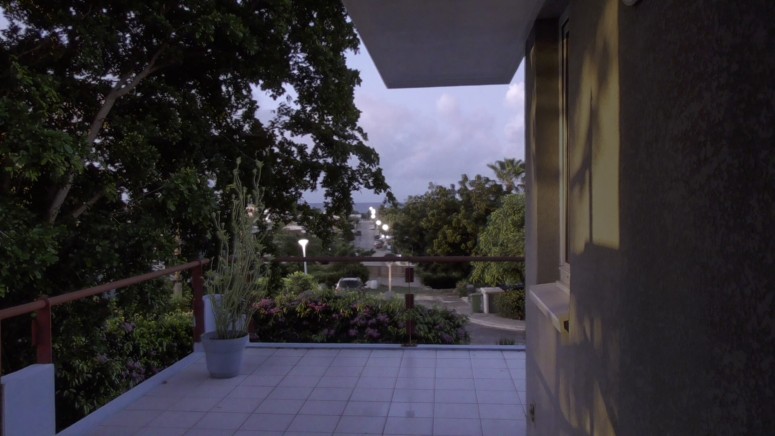
The directing duo PolakVanBekkum (Esther Polak and Ivar van Bekkum) whose collaboration goes back as far as 25 years, doesn’t expand on those situations and possibilities. The focus is put solely on conversations, leaving all questions as to what happens next unanswered. Multiple calls are edited into one dialogue, with static video view form a veranda which may or may not belong to father’s Curacao house. A dramatic sunset sky drops like a curtain over a calm city, with a loud orchestra of birds singing their little hymn to it.

Before coming to Berlinale, Lost on Arrival had its world premiere at IDFA.


Country: Netherlands
Language: Dutch
Year: 2020
Runtime: 8′
Directed/ Written by: PolakVanBekkum
Cinematography: PolakVanBekkum
Sound: Arno Peeters
Supported by: Mondriaan Foundation, Stokroos Foundation
Worldwide distribution by: LIMA
Distribution and promotion by: EYE Experimental

Rehearsal
2021-03-06

Review: Rehearsal (2021)

Bernhard / Berlinale, Cannes Film Festival, Festivals, Shorts Berlinale Shorts / 0 Comments

Berlinale Shorts Competition

© Cine9ja Entertainment Ltd.

Church is a business like no other, and to keep it going, one needs practice. How to squeeze out donations of people on the street? How to prove the existence of Satan and God’s healing powers? Is your emotional performance tear-jerking enough? A priest (Brutus Richard) in Michael Omonua’s wonderfully cynical short drama Rehearsal seems to have found the right method to get those skills perfected. The fake servant of God is a good performer who needs the right regruits to share his knowlegde with. Not accepting no as an answer for instance, when money is collected.

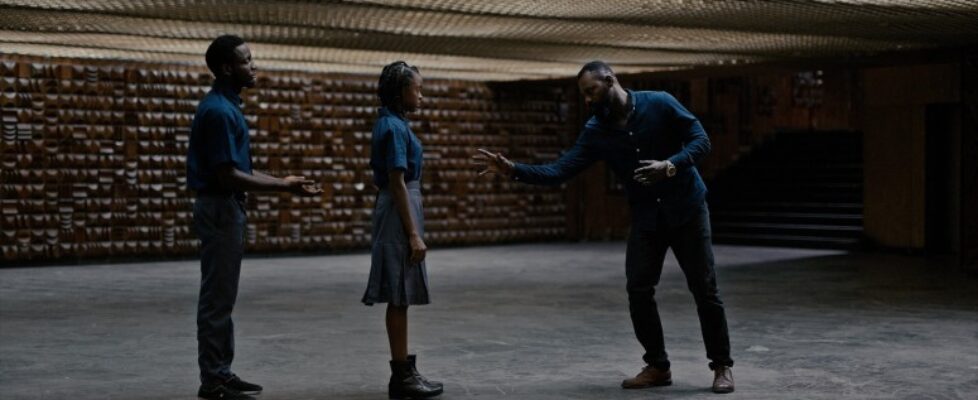
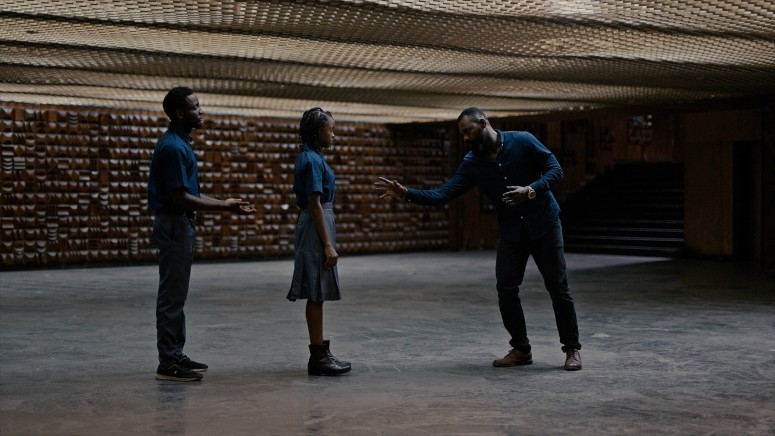
While prepping for Sunday sermon, the pastor is teaching the young members of his parish how to fall properly when the act of excorcism is performed on them. The angle, the pose, everything has to be rehearsed to the point of infailable believability. To keep the tills ringing, the proof of God’s existance has to be solid. Practicing their act in pairs, youngsters follow the priest’s precise instructions what to do. The corrupt church turns into a theatre stage, also involving a (clearly not disabled) man in the wheelchair who is supposed to be magically healed at the forthcoming sermon. He is criticized for his poor actings skills as his getting up from the wheelchair act is not satisfactory.

Ironically, to get there, you nee to get off the public transport at the National Theatre Station. Judging by the incredibly beautiful and rich in detail enterior design of the building, this might as well be the belly of an art institution, if not even the National Arts Theatre itself. In this spaceous terracotta dominated “stage”, cinematographer KC Obiajulu creates a visual magic of strong contasts with an accent on actors faces, without as much as coming close to them.

A one-on-one rehearsal with a girl (Rubu Akubueze) goes wrong as she re-lives her trauma from the past, but there is no time to be wasted. The show must be prepared. Another youngster steps on “the stage”, as a story-teller.

Inspired by the theatricality of church sermons, Michael Omonua explores them from a performative angle, comparing them to theatre plays that need to be regularly rehearsed. In this case, Sundays are the official premieres, each time offering some other form of entertainment.

Country: Nigeria
Language: English, Nigerian Pidgin
Runtime: 14′
Year: 2021
Produced by: Cine9ja Entertainment Ltd
Producer: Don Paul Umana
Written and Directed by: Michael Omonua
Cinematographer: KC Obiajulu
Sound Design: Lyabo Solanke
Editing: Michael Omonua
Cast: Ruby Akubueze, Brutus Richard, Amanda Oruh, Chimezie Imo
World Sales: Cine9ja Entertainment Ltd

ForLucio_IBCMovie
2021-03-06

Berlinale Review: For Lucio (2021)

Bernhard / Berlinale, Documentaries, Festivals Berlinale Special, Pietro Marcello / 0 Comments

Berlinale Special

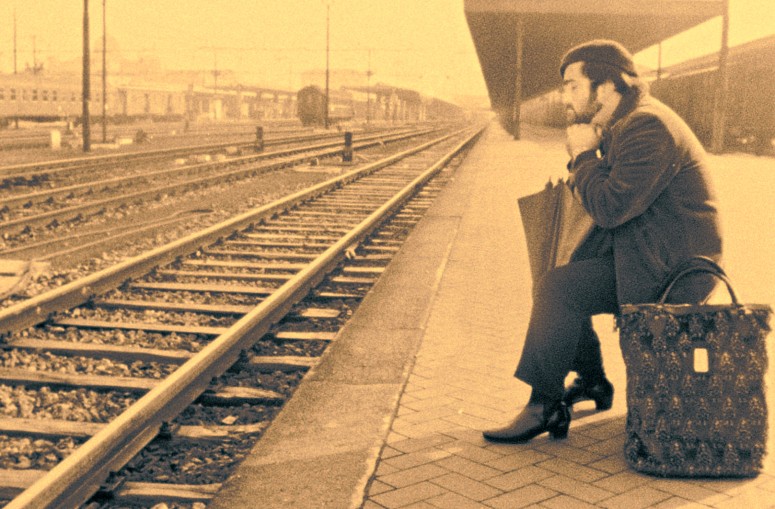
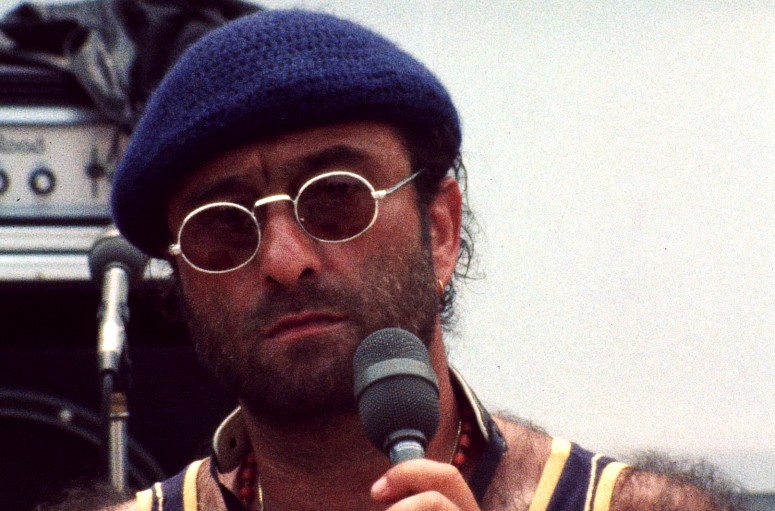
  • Lucio Dalla © Teche Rai
  • Lucio Dalla © Teche Rai

The life and artistic work of the Italian singer-songwriter Lucio Dalla would serve as a picture-perfect topic for a documentary made with festivals, national and international awards in mind. Born in war-time Bologna, Dalla was the immediate witness of the post-war shifts in lifestyle powered by the industrialization and urbanization that have hit his home town and the rest of the country. Those shifts and the social issues arising from them were the source of the inspiration for his songs and highly conceptual albums. On the personal life level, Dalla would also be interesting as a celebrity who spent all his life as a closeted gay man that did not dare to come out albeit witnessing the trends of liberalization regarding the stance the society takes towards gay people.

Fortunately, the director Pietro Marcello, fresh from the international success with his adaptation and re-contextualization of Jack London’s novel Martin Eden, had different things in mind. And he managed to frame the variety of interconnected topic and a very ambitious structure of his documentary For Lucio in a very compact format of just under 80 minutes of runtime. For Lucio premiered at Berlinale Special programme which is notorious for its love for the music- and arts-themed documentaries.

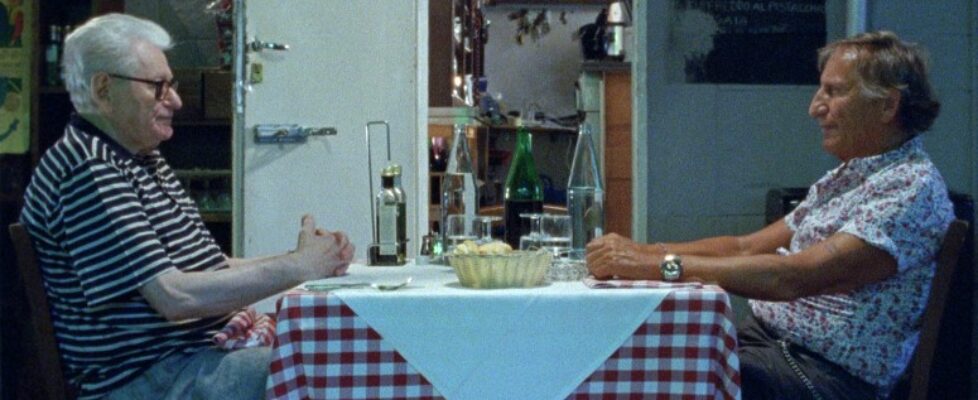
For Lucio mainly consists of different archival footage like newsreels and film clips that are more associated with Dalla’s music and inspiration for it, making a statement that Dalla was at his best when chronicling and commenting on the trends in the Italian society. However, the “talking head” part could not be avoided, but the trick of the script Marcello co-wrote with Marcello Anselmo is that it mainly provides the context of Dalla’s life and work and not some raw biographical information. In that aspect, there is less pressure on the main interviewee Umberto “Tobia” Righi, Dalla’s career-long manager and life-long friend, who can feel more free to touch the multiple topics regarding Dalla’s life and work. He talks about Dalla’s appearance that was quite the opposite of the beauty standards in an otherwise beauty-obsessed world of popular music, his decision of switching from jazz to pop music for the commercial reasons, his bon vivant lifestyle, his artistic collaboration with the poet Roberto Roversi and his unique, monumental and well-meaning presence on the scene and in the lives of his friends. The best trick in that department is, however, the twist Marcello puts exactly at the film’s half, when Tobia is joined with another of Dalla’s friends, Stefano Bonega, and their conversation about the late artist and friend gets more and more casual over the course of dinner.

Regarding the beautifully composed and masterfully edited archival footage, the stand-out is a prolonged silent movie from the iconic Mille Miglia car race. The race itself was a symbol of the glamour and craftsmanship-type of engineering in the pre-war Italy and its iconography was one of the rare things that was kept untouched even in the post-war times since it was bigger than the label of fascism. The footage of the race is accompanied by Dalla’s songs from his most conceptual album Automobili (1976) which was also revolving around the race and the years-long rivalry between the legendary drivers and car manufacturers. The sephia-coloured old footage is followed by the newsreels in colour, the glory of the race with the hardships of the automotive industry, the joy of racing with the mundane reality of making them, which all leads to the economical, social and political turmoil, riots, police brutality and the Red Brigades.

One single flaw, if it is a flaw at all, could be that For Lucio might seem scanty with the information and explanation it provides about its titular subject, but it all might as well be the part of Marcello’s plan. It is simply aimed more to the people who at least know of Lucio Dalla, his songs and his reputation. But as a film that explains his phenomenon by picturing a detailed landscape of the world he lived in, For Lucio is more than efficient.


Original title: Per Lucio
Year: 2021
Runtime: 79’
Country: Italy
Language: Italian
Directed by: Pietro Marcello
Written by: Pietro Marcello, Marcello Anselmo
With: Lucio Dalla, Stefano Bonaga, Umberto Righi, Roberto Roversi
Cinematography by: Ilya Sapeha
Editing by: Fabrizio Federico
Sound by: Marcos Molina
Music consultant: John Vignola
Colourist: Andrea Maguolo
Assistant director: Tiziana Poli
Produced by: Beppe Caschetto, Anastasia Michelagnoli
Executive producers: Giulia Moretti, Francesca Andreoli
Production companies: IBC Movie, RAI Cinema, Avventurosa
Supported by: Regione Emilia-Romagna, Emilia-Romagna Film Commission
Sales: The Match Factory

Tina_Rhonda-Graam
2021-03-06

‘Tina’, Berlinale review: The Fall and Rise of a Soul Survivor

Bernhard / Berlinale, Documentaries, Festivals 0 Comments

Berlinale Special Gala

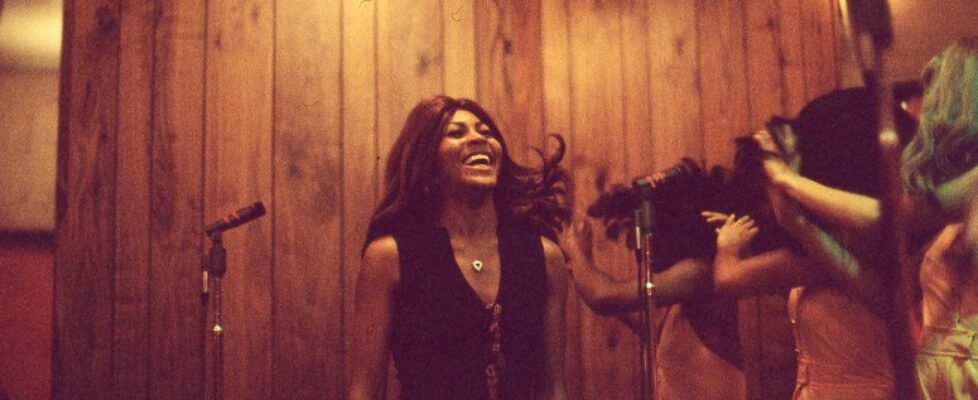
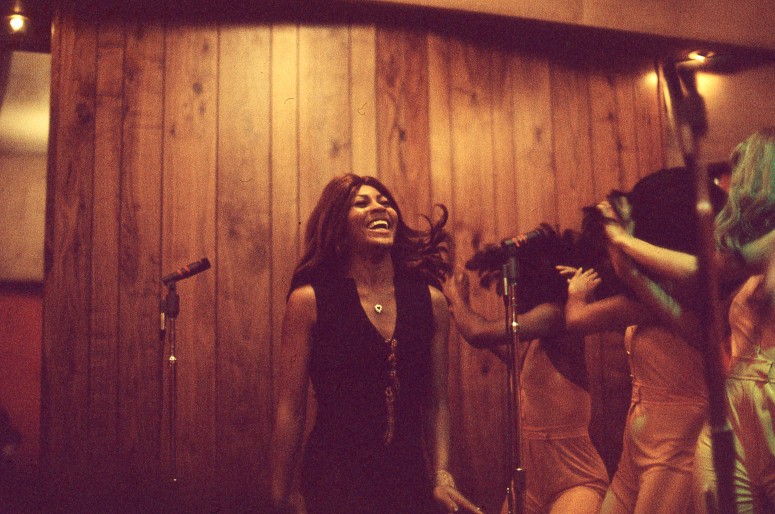
© Rhonda Graam

Revenge is a dish best served wearing high heels and huge hair in Tina, a new documentary portrait of legendary pop diva Tina Turner, which has just world premiered at the online Berinale ahead of its launch on streaming platforms later in March. As rock’s most famous domestic violence survivor, Turner’s tumultuous biography comes pre-loaded with compelling drama, gaining extra topical bite in the era of global feminist campaigns like #MeToo. But the key challenge for directors Dan Lindsay and T.J. Martin is how to bring freshness to a very familiar story that has already been laid bare on page, stage and screen. 

Anybody who has read Turner’s best-selling 1986 autobiography I, Tina, seen Brian Gibson’s 1993 biopic What’s Love Got to Do With It, or attended the recent hit stage musical Tina, will already know the main plot details here. When Tennessee teenager Anna Mae Bullock swapped a poor, unhappy childhood for marriage to charismatic but insecure band leader Ike Turner, she earned a new name and growing fame. Tina proved to be a fireball of raunchy rock’n’soul energy on stage, but life with Ike soon became a hellish ordeal of physical and sexual abuse.

Tina stuck with Ike for almost 20 years, partly due to low self-esteem and misplaced loyalty. But after one particularly savage beating, she finally walked out on their marriage and went through a gruelling, financially ruinous divorce. In the late 1970s, with her career in decline, the singer was cruelly dismissed as a washed-up nostalgia act by openly racist record label bosses. Fired by burning ambition, with support from her brash new Australian manager Roger Davies, she began turning her fortunes around. Her 1984 comeback album Private Dancer sold more than 10 million copies, won four Grammy awards and relaunched Tina as a record-breaking, stadium-filling, turbo-voiced superstar. A real weapon of mass seduction.

Lindsay and Martin re-examine and re-package this story with just enough nuance and depth to give it fresh currency. Their main selling point is a priceless archive of live and backstage footage, including explosively exciting performances of classic songs like Proud Mary and River Deep-Mountain High. Major credit is due here to editors Carter Gunn and Taryn Gould for splicing together such a rich, fluid, multilayered patchwork of vintage clips.

The directors also blend old and new interviews including a frank conversation with the 80-year-old Tina herself, plus various friends and collaborators including her German husband Erwin Bach, Oprah Winfrey and Angela Bassett, who portrayed the singer in What’s Love Got to Do With It. One of the film’s key assets is the original interview tape from 1981 in which Tina first exposed Ike’s abusive behaviour to the world, with new commentary from the original reporter, Carl Arrington.

Lindsay and Martin repeatedly stress how a callous media have always pestered Tina with intrusive questions about her violent first marriage. This feels slightly disingenuous given how the singer essentially admits that she first revealed Ike’s cruelty as a way to boost her flagging career, then later made his abuse a central theme of numerous memoirs and films, including this one. Ike himself died in 2007, but he appears here in archive footage, attempting to justify his mistreatment of Tina in evasive and unconvincing terms. Decades later, her memories of him seem tinged more with a generous, empathetic sadness than anger.

Despite securing impressive access to Tina and Bach in their luxurious Swiss home, the directors reveal very little about the singer’s last two decades of semi-retirement. There is nothing on her recent health struggles, for example, which include intestinal cancer and a kidney transplant. Although the film is dedicated to Tina’s late son Craig, who is interviewed on camera, his 2018 death by apparent suicide is discreetly overlooked. But these are minor omissions in an otherwise classy, warm-hearted and emotionally engaging documentary. Intended as a kind of career-capping encore, Tina contains few surprises, but it is a finely crafted tribute to a highly influential music legend who made history by turning tragedy into triumph.


Country: US/UK
Language: English
Year: 2021
Runtime: 118′
Directors: Dan Lindsay, T.J. Martin
Producers: Simon Chinn, Jonathan Chinn, Diane Becker
Cinematography: Megan Stacey, Dimitri Karakatsanis
Editors: Carter Gunn, T.J. Martin, Taryn Gould
Music: Danny Bensi, Saunder Juuriaans
Production companies: HBO Documentary Films, Lightbox
Distributors: HBO, Universal, Altitude 

Ventana
2021-03-06

Review: Window (2021)

Bernhard / Berlinale, Experimental Films, Festivals, Shorts Berlinale Shorts, Edgar Jorge Baralt / 0 Comments

© Edgar Jorge Baralt

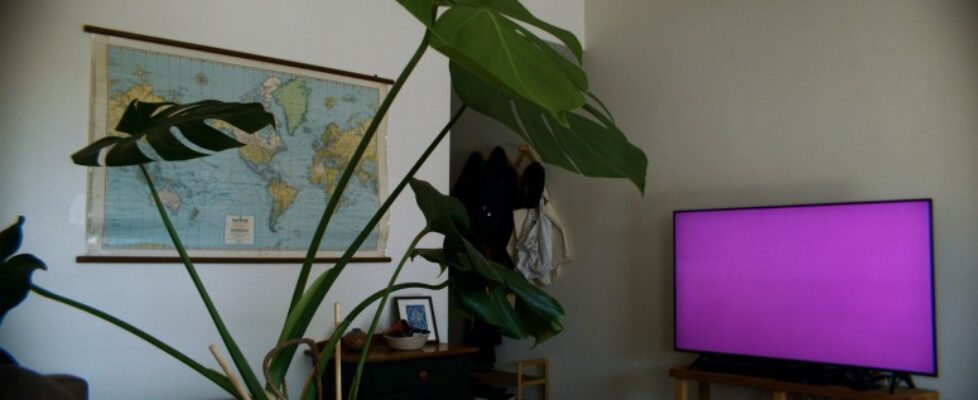
Sometimes the simplest and the most mundane things have the power to send us down the memory lane, and further in the direction direction to abstract. A snapshot photo of the stained glass window from Edgar Jorge Baralt’s childhood home in Caracas elicits memories in his short documentary video essay Window (Ventana) that has just premiered at Berlinale Shorts competition.

Baralt opens the film with an analysis of the photo itself in the voice-over narration which is used as the primary way of sharing his thoughts in the beginning of the film. Then he moves on to explain what that particular photo and that particular window mean to him personally. As the content of the narration gets more and more abstract in the vein of stream of consciousness, the imagery follows the cue. We get to see the vague recreation of the photo, using the simpler, more modern window and the coloured computer screens underneath it. Then Baralt projects the photo on the same screens. Later on, the things get more personal, the narration switches from English to Spanish, the slide show is projected on a living-room TV screen, two people hug in front of it, the electronic music loop kicks in and the imagery goes all the way to the realm of abstract, to the sky…

The Venezuela-born and Los Angeles based director Edgar Jorge Baralt refers to his Berlinale Shorts contender as a “Soft time-travel” film. There is no doubt that Window is a deeply personal work realized with almost no budget, based on the idea of showing the instability of the present by browsing through the pieces of past. Most of the work here is done by Baralt himself, he is credited as the writer/director, cinematographer, editor and music composer, as well as the narrator and cast member. The rest of the work, mostly in the sound department, is done by his creative partner Christina C. Nguyen who also served as the film’s additional cinematographer and fellow cast member.

The question is, however, if it actually works on the viewers, and the answer to it largely depends on the individual memories the viewers have. Technically, Window is an apt piece of cinematic work, but the road it takes from the theoretical via the personal to the abstract can prove to be a bit too free-wheeling for its own good.


Original title: Ventana
Year: 2021
Runtime: 10’ 35’’
Country: USA
Languages: English, Spanish
Directed by: Edgar Jorge Baralt
Written by: Edgar Jorge Baralt
With: Edgar Jorge Baralt, Christina C. Nguyen
Narrated by: Edgar Jorge Baralt
Cinematography by: Edgar Jorge Baralt
Editing by: Edgar Jorge Baralt
Music by: Edgar Jorge Baralt
Sound design by: Christina C. Nguyen
Sound recording by: Christina C. Nguyen
Produced by: Edgar Jorge Baralt

zonder meer
2021-03-06

Review: Zonder Meer (2020)

Bernhard / Berlinale, Festivals, Shorts Berlinale Shorts, Meltse Van Coillie / 0 Comments

Berlinale Shorts Competition

courtesy of flandersimage.com

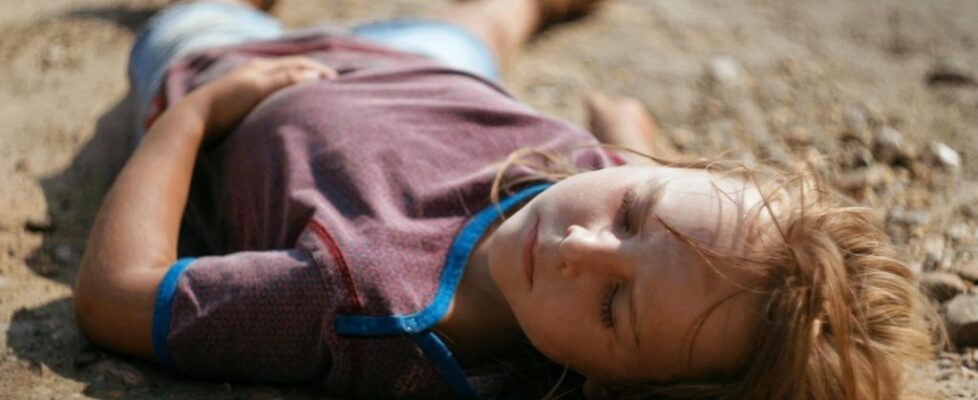
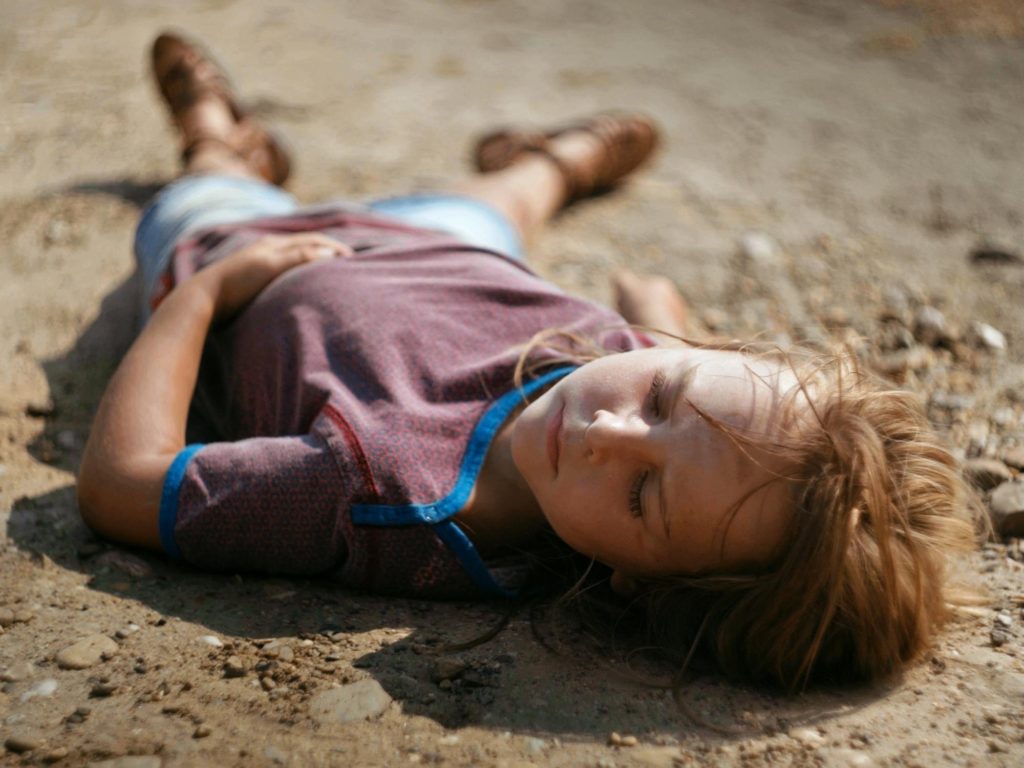
Everybody probably remembers their first encounter with death, no matter if the deceased was a close relative, a friend or an unknown person. Different defence mechanisms, usually coded by one’s age, were being set in motion at the time of such event. Zonder Meer, a short by Meltse Van Coillie, is a film about the encounter with the death told from a perspective of a young girl. After its world premiere at Leuven International Short Film festival in December, its international premiere took place at Berlinale Shorts.

Lucie (Wyns) is the middle child in the family of five. Her big brother Jeroom (Smeyers) enjoys teasing her and daring her to do stupid things, while her kid sister Lone (Genar) is blissfully unaware of things around her. Their parents (Eva Binon and Patrick Vervueren) are busy making plans and organizing stuff while on vacation in a lakeside camp.

A young boy they probably did not even know has disappeared and has probably drowned. It affects Lucie nevertheless, so deeply that she is not even aware that her life would never be the same again.

Zonder Meer is so carefully written that most of the concrete events and conclusions stay in a blur. Meltse Van Coillie shows a knack for visual storytelling, though, and with the help of her cinematographer and co-editor Harm Dens she creates a visual ballad consisting of long, beautifully composed shots. Light and shadows play in the dark as the search goes on and the sound scheme consisting of the sounds of nature and murmur of a tourist site is occasionally broken by the sound of a helicopter. The naturally warm, almost analogue-looking colour scheme serves the film well, while the boxy 4:3 aspect ratio and the use of shallow focus help us concentrate on our little protagonist and her inner turmoil. Zonder Meer is quite an intense visceral viewing experience.


Runtime: 14’ 23’’
Country: Belgium
Language: Flemish
Directed by: Meltse Van Coillie
Written by: Meltse Van Coillie
Cast: Lucie Wyns, Jeroom Smeyers, Lone Genar, Eva Binon, Patrick Vervueren
Cinematography by: Harm Dens
Editing by: Harm Dens, Meltse Van Coillie
Sound design by: Michel Coquette, Meltse Van Coillie
Sound recording by: Mattijs Driesen
Assistant directors: Juicy Ijselmuiden, Silke Van Rooy
Produced by: Peter Brosens, Jessica Woodworth, Meltse Van Coillie
Production company: Bo Films
Support by: Belgian Cinema from Flanders

WildSea_Tanya-Haurylchyk
2021-03-06

Berlinale review: From The Wild Sea (2021)

Bernhard / Berlinale, Documentaries, Festivals Berlinale Generation / 0 Comments

Berlinale Generation 14+ Competition

© Tanya Haurlychyk

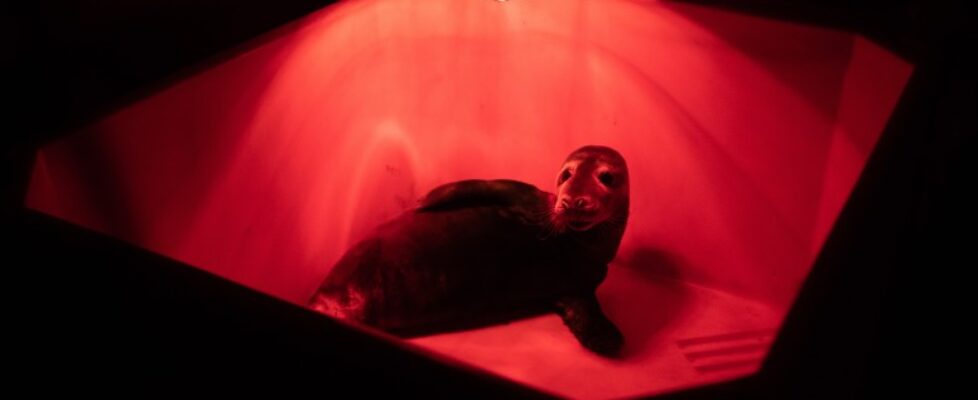
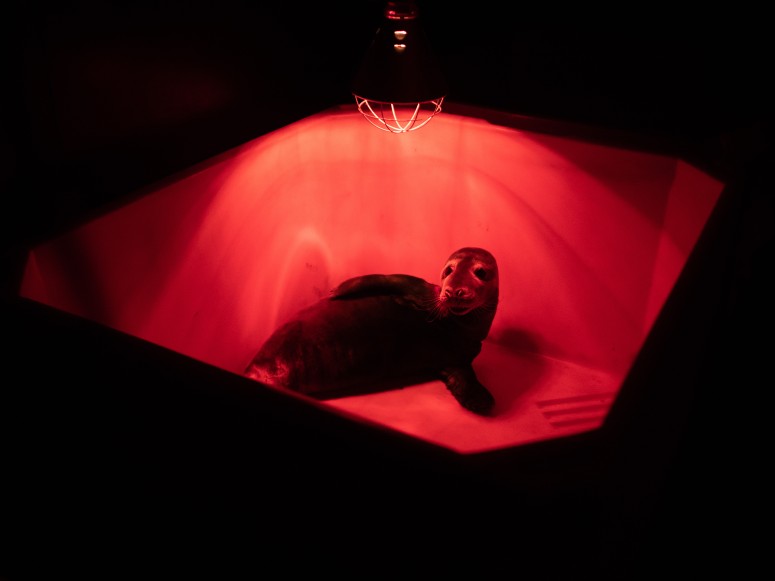
Sundae, Cranberry and Cotton Candy are about to be freed from their cages to return to the sea. A group of volunteers gathered at the beach is as excited as the sight of three seals whose tails are wagging in appreciation. The animals are visibly growing more and more impatient by the inviting sound of rolling waves, but now, after two long weeks of waiting for the weather conditions to improve, their carers can finally release them from the shelter where they were given the needed medical help. When the cage doors get open, a wild race towards the ocean begins. One of the seals doesn’t seem to get the direction right. Maybe it’s just the excitement that sends it sideways along the beach, or just the curiosity to see if this freedom is something temporary, a cruel joke, or a real deal.

Such scenes are something that the volunteers of Seal Rescue Ireland are used to. The number of sheltered animals – not just seals, has increased so much over the past few years that people are working long shifts to better the conditions of the rescued sea mammals. Some of volunteers we see working until late into night, tending to animals.

Robin Petré’s debut documentary From The Wild Sea opens with a title card quoting the information issued by The European Environment Agency that even remote marine areas are impacted by human activities, contaminants and marine litter, and that sea level rise and the increased frequency of storm events add to the coastal squeeze.

Animals don’t need those things explained. They feel the impact of climate change since quite some time. Seals, dolphins and whales suffer injuries from bycatch, from cuts inflicted by boat propellers or violent storms that cast them on rocky coasts, they get suffocated by- or get sick from swallowed plastic. Life in the seas and oceans became a day-to-day struggle for thousand of species, including birds who fall victims of oil spills.

Smeared with thick layers of oil, feathers stick in matted clumps, and birds are not just unable to fly, they can also develop burns and lose the ability to float. One big animal rescue organization in Holland is dedicated to the well-being of birds only. In Petré’s documentary, we see how young people dressed in white gowns bring swan after swan into a sterile facility where they get examined.

The documentary also follows welfare development and field support officer of the British Divers Marine Life Rescues Dan Jarvis on his duty along the coast of Cornwall. His vision of future is somber, and so is the one by his close collaborator James Barnett, a veterinarian who does the pathological examination on dead to research the consequences of environmental pollution on marine mammals.

In her debut feature length documentary which has just had its world premiere in the Generation 14plus competition of Berlinale, Robin Petré explores the relationship between nature and animals, looking at it from animal’s perspective. We can feel their dread when being held by force by the vets, just to be examined or their wounds disinfected.

Regardless of its good intentions, there is something strangely cold about this documentary that feels emotionally distant from the suffering it tries to depict. Simultaneously, rescuers’ words are flying by one’s ears like gusts of wind. They are as distant as places they were filmed at.


Original Title: Fra Det Vilde Hav
Country: Denmark
Language: English
Runtime: 78′
Year: 2021
Produced by: Hansen & Pedersen
Supported by: New Danish Screen
Producer: Malene Flindt Pedersen
Directed by: Robin Petré
Cinematographers: María Grazia Goya, Robin Petré
Sound Design: Thomas Pape
Editor: Charlotte Munch Bengtsen

deine_strasse
2021-03-05

Review: Your Street (2020)

Bernhard / Berlinale, Festivals, Shorts Berlinale Shorts / 0 Comments

Berlinale Shorts Competition

© Güzin Kar

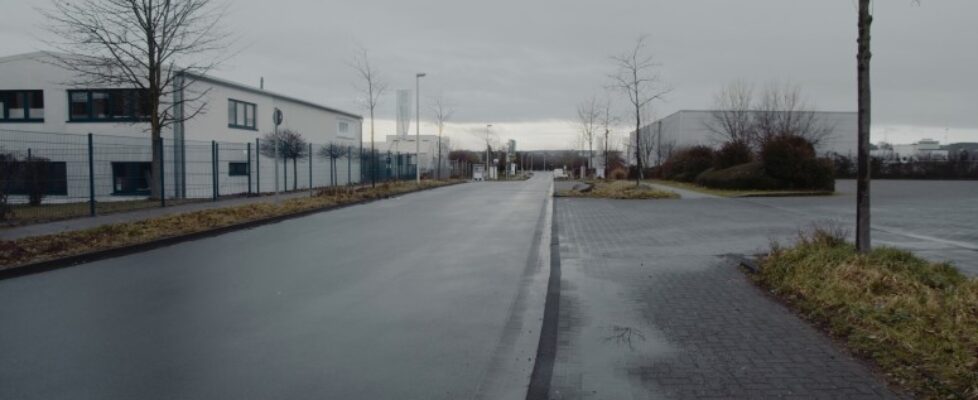
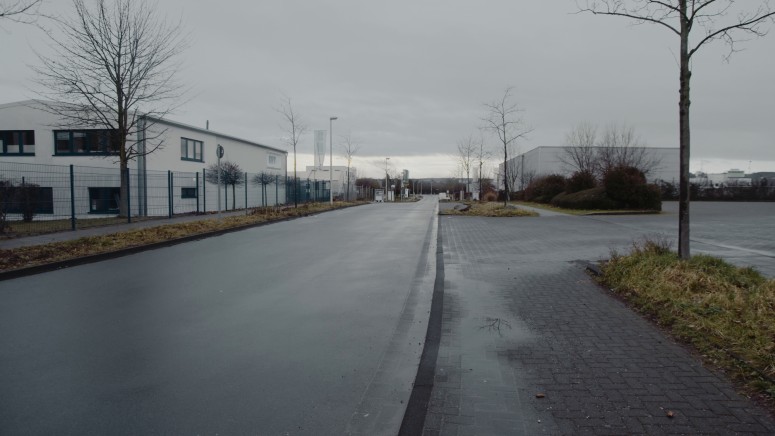
Cold rainy day falls heavy on an already grey street with look-alike boxy, white industrial buildings. Few young, leafless trees disturb the perfectly linear setting cut to host a car-wash center, a scrap yard, a large bakery, a garden center and an insurance company. “Whatever you need for life”, as the voice-over by the Swiss author and playwright Sibylle Berg explains in Güzin Kar ‘s short documentary essay Your Street.

Deserted, with no movement on its perfectly paved surface, the long street in the industrial part of Bonn could serve as a setting for a dystopian movie. A world erased of people, a deserted town after a nuclear catastrophe, a place where a deadly virus broke out and the last survivors hide deep inside their houses. But this is not fiction, and the street, secluded enough form the buzzing city life to be anything else than a temporary sheltered stage of employees swallowed by the belly of mass productivity, also serves as a memorial of an atrocious crime. It bares a foreign name, the one German speakers have trouble pronouncing – Saime-Genc-Ring. In Bonn, this name is probably never pronounced. It is more likely that it gets entered into the gps to get to one of those industrial destinations. Or, in the meanwhile, to some of the families brought to live there to be closer to their work-places. We don’t see them, but we witness a backyard of a house with an empty swing, and a parent holding his kid’s hand walking on the narrow side road. This kid still has a name someone’s calling and pronouncing correctly. A parent, a playmate. He is slightly older than a girl whose life was erased at the age of 4, and whose only memory was turned into a name of the street that barely anyone walks on. Maybe just a boy with his father. Or a worker on his way to the car. A mailman.

Saime Genc was the youngest victim of the racist arson attack in the German town Solingen that took place on May 29, 1993, killing five people, and injuring fourteen other family members. Saime got her own memorial far away from Solingen, and she didn’t join the urban pantheon of dead poets, philosophers and statesmen in a city center, but was given a “556 meter long, 6.6 meters wide street with the speed limit of 50 km/h” in the industrial part of Bonn, far enough from the place of crime to be causing “unease”.

Güzin Kar calls her short a filmic requiem consisting of wide shots and narration only, but it is far more than that. Your Street is a reminder of the segregation both in life and death, about the seemingly well-meant decisions made out of wish to change something that only halt or reverse the process of recognizing all lives as equally valuable.

The film had its world premiere in Winterhur before hitting the Berlinale, and is nominated for the Swiss Film Award.


Original Title: Deine Strasse
Country: Germany
Language: German
Year: 2020
Runtime: 7′ 22”
Written /Directed/ Produced by: Güzin Kar
Narrator: Sibylle Berg
Cinematographer: Felix von Muralt
Sound Design: Felix Bussmann
Editor: Simon Gutknecht
Colour Grading: Ramón Königshausen

dayisdone
2021-03-05

Review: The Day is Done (2021)

Bernhard / Berlinale, Festivals, Shorts Berlinale Shorts / 0 Comments

This review was originally published on Asian Movie Pulse

Berlinale Shorts Competition
Silver Bear Jury Prize

Courtesy of Berlinale

Almost three months after the world premiere of his sophomore feature “Starts Await Us” at Tallinn Black Nights Film Festival, Zhang Dalei is back in race with his short Day is Done in the Short Film Competition of Berlinale.

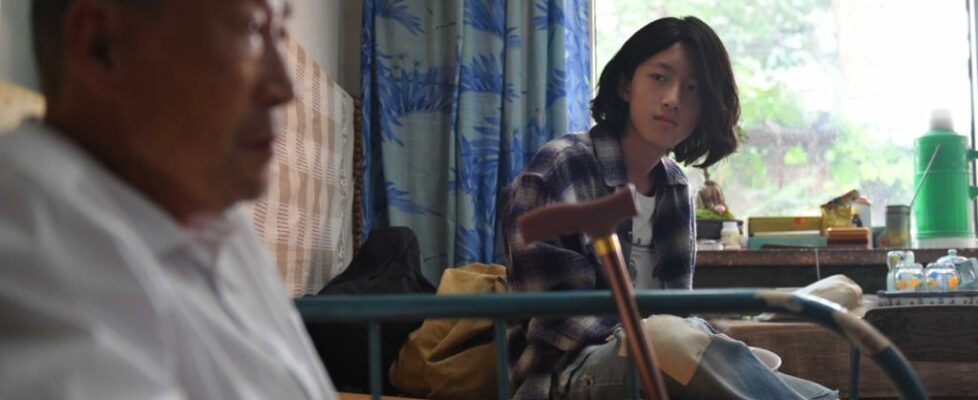
For those acquainted with Zhang Dalei’s work, the faces seen in “Day is Done” will not only look familiar, but the connection to his debut “The Summer is Gone” will be immediately established. Same actors return to their roles of family members, slightly older and put in a different day-to-day life context.

Xiao Lei (Kong Weiyi) travels from Inner Mongolia to China with his parents (Zhang Chen and Guo Yanyun) and uncle (Zhao Hua) to visit his grandfather. During the car ride, the conversation as mundane as it sounds has a magical impact on the viewer. You wonder about the Soviet products that were ‘of high quality and durability’ such as binoculars that could crush a walnut. You wish to know more about the day the uncle got so drunk, he laid down on the floor with his mouth smeared with spiced beef.

The interaction between the family members, with the camera switching its focus from one to the other, one humming a song, the other glazing through the window and the two conversing, is  handsomely caught by the lens of Lv Songye and edited by Dalei into a sequence one wants to be in. Lulled in the family’s harmonious togetherness, we follow their gaze out the window, almost recognizing people they recognize, like the cheerful singing bicycle driver Mengfu who speeds by the car singing the song about ‘the Chinese spirit’.

The grandfather’s house is a place where family unity gets a new dimension. The camera sneaks behind the bead curtain, windows, and screens like a cat, curious to know what’s going on, but too shy or unwilling to come closer. Conversations are being made, questions asked, and at the same time – there is always something else going on in the background, an activity in the front yard, a phone call, a sound coming out from the street.

And there is music, applied in the film with such emotional depth that you couldn’t imagine anything else than the melody of Li Jun Yi’s “Return to the XiNi River” or Johan Sebastian Bach’s Partita in A-Minor for Solo Flute performed by Horacio Franco playing to it. The flute will leave you almost as heartbroken as the un-eaten watermelon that the lonely grandfather (played by the always wonderful Li Xuejian) bought for his grandson Xiao Lei who is about to depart to study abroad.


Original Title: Xia Wu Guo Qu Le Yi Ban
Country: China
Language: Mandarin
Year: 2021
Runtime: 24′
Written/ Directed by: Zhang Dalei
Producer: Gao Yitian
DoP: Lv Songye
Production Designer: Lan Zhiqiang, Yuan Yue
Makeup Artist: Xu Xiao Zhou
Costume Designer: Zhang Pengtao
Sound Design: Li Danfeng
Sound Mixer: Si Zhonglin
Focus Puller: Yin Tianlun
DIT: Chen Bowen
Colourist: Fu Shu
Cast: Kong Weiyi, Zhang Chen, Guo Yanyun, Zhao Hua, Hao Mengfu, Li Xuejian

«‹ 2 3 4 5

Hello world!

Limo_2

Review: Limousine (2021)

CripCamp

Review: Crip Camp: A Disability Revolution (2020)

Consumed_Image_1_Shauna_Macdonald

GSFF review: Consumed (2020)

Palte

Review: Swamp (2020)

Courage

Review: Courage (2021)

zenska

Opal H. Bennett Named Co-Producer at American Documentary | POV

↑

© ubiquarian 2026
Powered by WordPress • Themify WordPress Themes