Scroll down to content
ubiquarian
Responz
RSS
Menu
  • #21669 (no title)
  • #21675 (no title)
  • About
  • Blog
  • Contact
  • Create your website with blocks
  • home
  • home2
  • home3
  • Sample Page
Scroll down to content
202106201_1
2021-03-05

Review: The Men Who Wait (2021)

Bernhard / Berlinale, Festivals, Shorts 0 Comments

This article was originally published on Asian Movie Pulse

Berlinale Shorts Competition
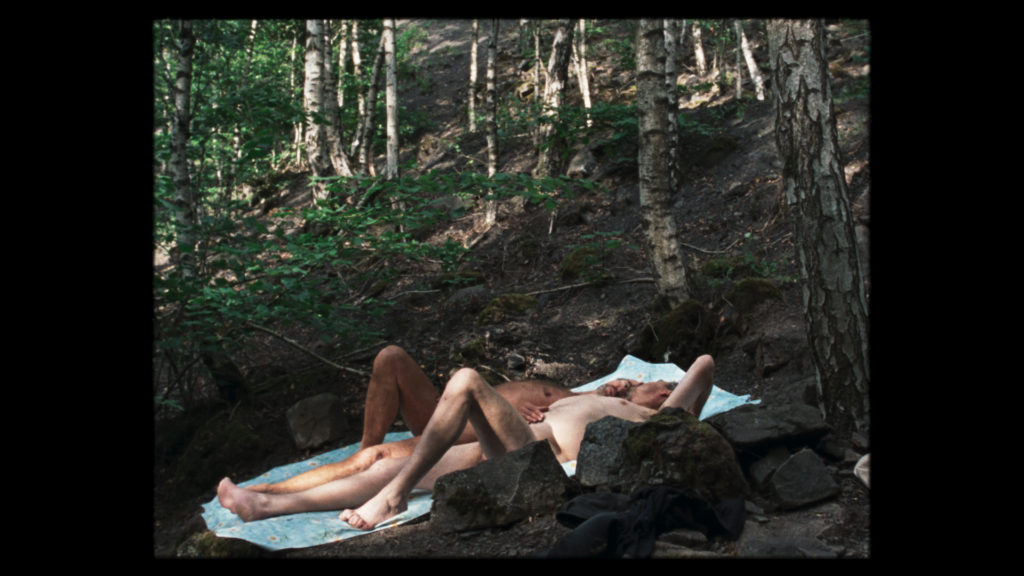
Courtesy of Berlinale

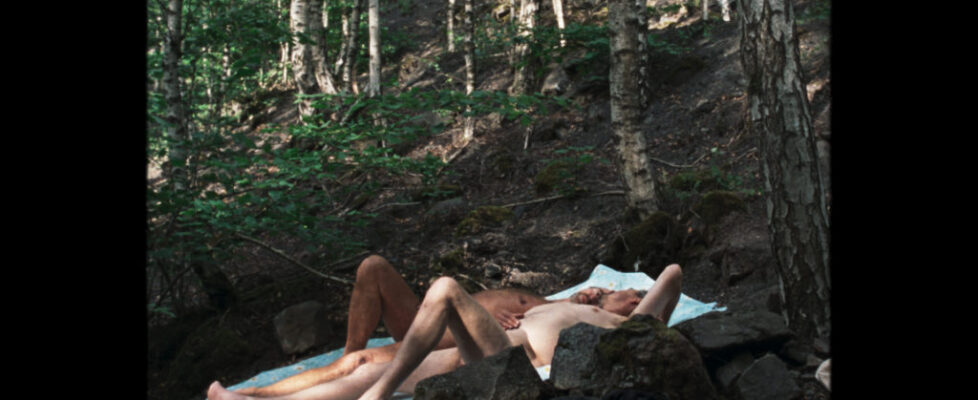
Truong Minh Quy’s Berlinale Shorts contender The Men Who Wait is a film about men seeking sexual contact on a slag heap that once belonged to a coal mine. The place where, once upon a time, generations of miners broke their backs underground is now covered by birch wood, with a river running under its slope. Men are cruising, waiting for the opportunity to meet the other, longing for those brief moments of pleasure somewhere in the shade of trees. An occasional jogger runs by, and hellos are exchanged.

A man is patiently waiting for someone to show up. It’s a windy day, and the forest is alive with sounds. Adding to the impressive impact the granular 16mm image leaves on the viewer, the sound design adds a bit of extra magic to “The Men Who Wait”. Lustful whispers and grunting blend with the rustling of trees and the swishing wind. A curious witness of the sexual act that unfolds at the foot of the slope also leaves an acoustic trace behind, sliding downhill sitting on one of his water containers. He is – unlike the two other men, not a guest here. The forest is his home. He has a deep connection to the soil, also to its dirty, mercilessly staining black colour. The exchange whispers.

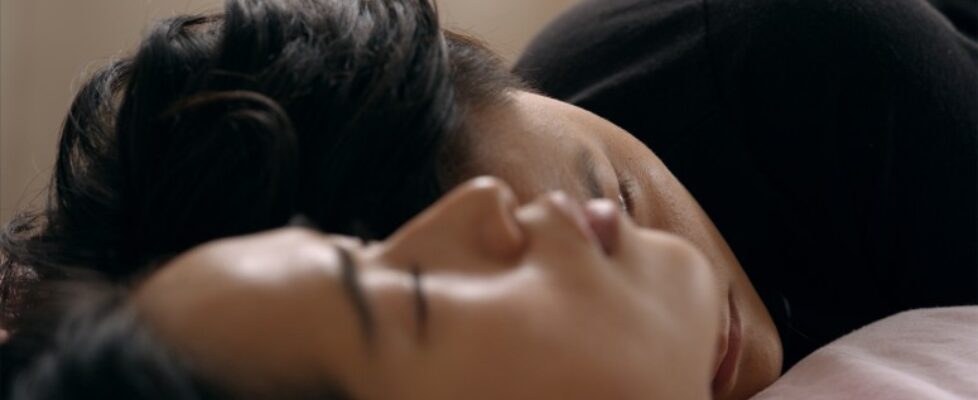
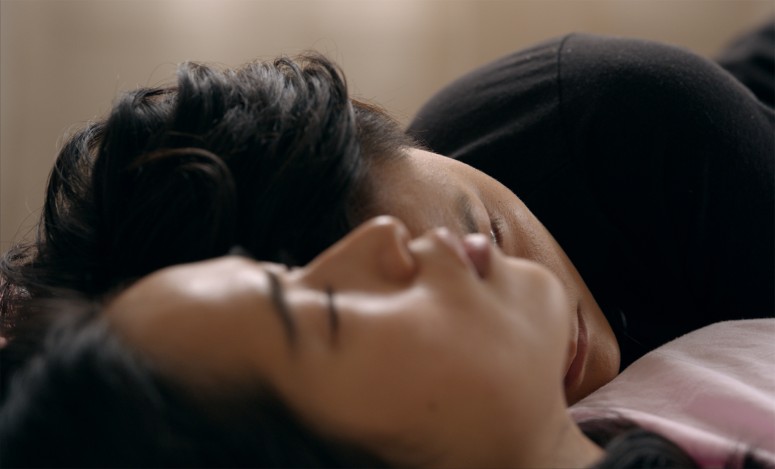
When sex is over, the bodies of two elderly lovers rest on a daisy pattern fabric. A one sided conversation is ‘lead’ below the crown of tree branches, but the magic of copulation is gone and their paths part.

The film was shot in June 2020, on the locations in North of France (Raismes) and Belgium (La Louvière), on 16mm with the breath-taking photography handled by Son Doan, who also worked as cinematographer on Truong Minh Quy’s critically acclaimed feature “The Tree House” (that premiered in Locarno’s Concorso Cineasti del presente in 2019). It’s important to mention that “The Men Who Wait” was edited on a Moviola cutting machine which allowed film editors Truong Minh Quy & Nicolas Graux to view the film while editing.

Both locations are a part of a long history of “forbidden” sexual practices in the mining areas, dating from the times when heterosexuality was the only acceptable thing. Many men were hiding their true identities, seeking pleasure in the protective vastness of the surrounding greenery.


Original Title: Les Attendants
Country: France/ Singapoore
Year: 2021
Runtime: 14′ 42”
Format: 16mm
Written/ Directed by: Truong Minh Quy
Produced by: Francois Bonenfant
Co-produced by: Xiao Dong Guo – Levo Films
Co-Producer: John Badalu
Cinematographer: Son Doan
Sound: Valentine Gelin, Yannick Delmaire
Editors: Nicolas Graux, Truong Minh Quy
Cast: Gérard Thomas, Jean-Francois Geneste, Souleymane Sanogo
13way_2
2021-03-03

Review: 13 Ways of Looking at a Blackbird (2021)

Bernhard / Berlinale, Experimental Films, Festivals 0 Comments

© Stenar Projects

Wallace Stevens’ poem Thirteen Ways of Looking at a Blackbird is being read integrally, in English, at the beginning of Ana Vaz’ newest experimental film-essay of the same title. The poem might be the source of the film, but, as Vaz’ work progresses, the scope widens to poetry, literature and even daily wisdom. 13 Ways of Looking at a Blackbird had its festival premiere at Berlinale’s Forum Expanded section, which suits it well.

After the poem is read, it is cut to 13 chapters, translated into Portuguese to be analyzed in a fashion just a tad freer than your basic high school literature class by Vaz herself, assuming the off-screen role of a teacher, while her young friends and subjects fit into the role of students. The power of poem, the thought and the topic of observing and being observed, however, transforms the film into a work of poetry on its own terms and merits.

13 Ways of Looking at a Blackbird is a very technical film. Vaz remains loyal to 16mm tape, creating a string of freely associated black and white footage in a boxy aspect ratio that seems almost vintage, highlighting the sense of rhythm not by editing, which is at places so off-kilter that the film seems dubbed, but with manipulations in sound design based on the background noises and the noise of the film projector. In that way, it achieves its “verse metrics” and even something resembling a rhyme.

The question is if the film outstays its welcome with its half an hour runtime, and the answer largely depends on the viewers’ viewpoints. As previously mentioned, it resembles a school class, which is usually not a good thing, but for the poetry buffs it might prove to be a plus. The fact is that, once we get the ropes of the structure, the film remains firmly on its predictable course, but Vaz and her collaborators manage to throw a couple of surprises into it, first by adding colour through the graphs, sketches, schemes and notes on a poem, and then by letting the film “breathe” that colour to the fullest. 13 Ways of Looking at a Blackbird is a poem to be felt rather than understood.

© Stenar Projects

Original title: 13 Maneiras de Olhar un Passaro Negro
Year: 2020
Runtime: 31’ 11’’
Country: Portugal
Language: Portuguese, English
Directed by: Ana Vaz
Written by: Vera Amaral, Mário Neto, Ana Vaz
With: Vera Amaral, Mário Neto, Ana Vaz, Paula Nascimento, Nuno da Luz
Cinematography by: Vera Amaral, Mário Neto, Ana Vaz
Editing by: Ana Vaz, Deborah Viegas
Sound design by: Ana Vaz
Sound by: Mário Neto, Nuno da Luz, Catarina Boieiro
Produced by: Ana Vaz, Anže Peršin
Production company: Galerias Municipais de Lisboa – EGEAC
Co-production company: Stenar Projects

MoreHappiness
2021-03-03

Review: More Happiness (2021)

Bernhard / Berlinale, Festivals, Shorts Berlinale Shorts, Livia Huang / 0 Comments

Berlinale Shorts Competition

© Livia Huang

There is no simple formula for reaching happiness in life. There actually never was one, but the quest for it seems even more pointless in our contemporary life with the rules of life changing so rapidly that the generational gap seems to be deepening faster and faster. However, we still seek advice from the elders, and certain experiences get transmitted from one generation to another.

The conversation about love and happiness between mother and daughter, 1st and 2nd generation Chinese immigrants in the US, is at the centre of Livia Huang’s short film More Happiness that premieres at the Berlinale Shorts competition. Huang is no stranger to the festival, since her previous film Who Can Predict What Will Move You played here last year at the Generation 14Plus section.

More Happiness opens with a site that could hardly be more opposed to the title: a bare tree is finely powdered by snow, suggesting a certain emptiness or a hardship to endure. The conversation between daughter in her early twenties (Tina Wonglu) and her mother (Rui Ying Lu) happens off-screen, accompanied by a different type of imagery such as water lilies opening up in spring and a family of swans swimming in the pond. We are witnessing the exchange of trans-generational wisdom with many questiosn being asked. One of them is – why is it important that your partner should love you more than you love him?

The answers are not simple because experiences differ. The mother has only one relationship on her mind, the one with the girl’s father (who is absent and quite probably deceased), and the daughter has a completely different kind of relationship in her head. We get to see flashbacks of her happiest moments with her former girlfriend (Joyce Keokham) with whom she shared the affection she’s trying to revive.

Are those flashbacks actual memories or memories laced with fantasy, with the film ending in a pretty much fantastic realm? We couldn’t possibly know it, and it does not really matter. Thanks to Hunag’s subtle scriptwriting and directing, and also to Jack Davis’ lyrical cinematography, Andrew Aaronson’s meditative editing and especially the fitting music composed by Fu Yuying and the perfect sound design by Noah Chevan, More Happiness reaches the emotional depths and the universal level.


Year: 2021
Runtime: 12’ 34’’
Country: USA
Language: Chinese
Directed by: Livia Huang
Written by: Livia Huang
Cast: Tina Wonglu, Rui Ying Lu, Joyce Keokham
Cinematography by: Jack Davis
Editing by: Andrew Aaronson
Music by: Fu Yuying
Sound design by: Noah Chevan
Sound recording by: Joe Stankus, Kim Garcia
Assistant director: Jack Sullivan
Produced by: Elise Shin

JoaquimVerissimo_CopyrightTerratremeFilmes2021
2021-03-02

Berlinale review: Jack’s Ride (2021)

Bernhard / Berlinale, Documentaries, Festivals Berlinale Forum, Susana Nobre / 0 Comments

Berlinale Forum

Joqim Veríssimo ©Terratreme Filmes 2021

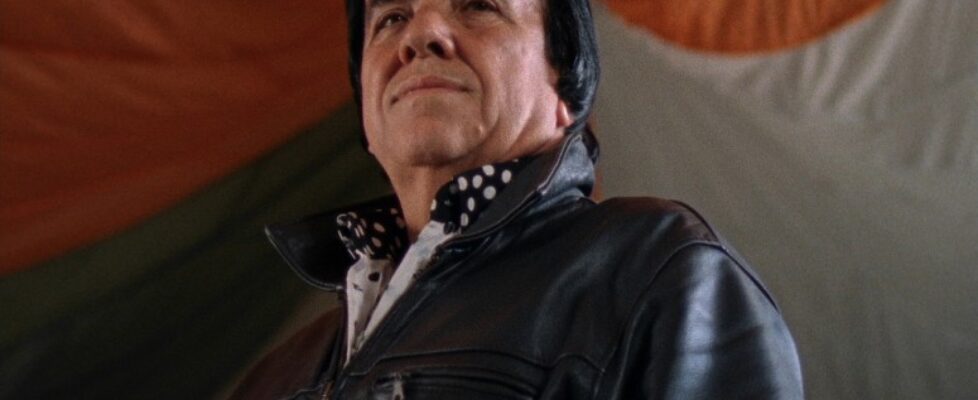
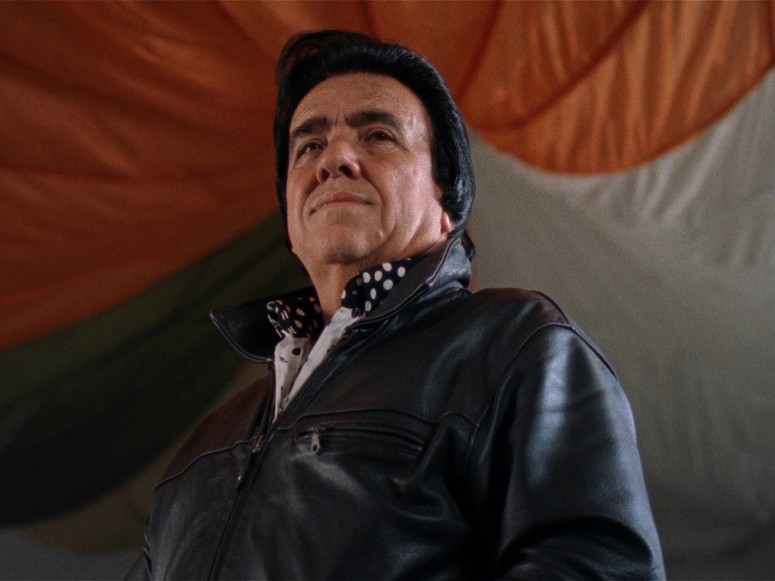
Joachim Veríssimo is going to retire in three months but in order to get his unemployment benefit he must show that he is ‘actively seeking employment’. So far, so I, Daniel Blake. But far from raging against the political establishment or despairing over the decline of industry in his native Portugal, Joachim goes patiently from place to place, collecting his forms, dressed splendidly and wearing an extraordinary Elvis helmet of blue black hair. As he does so he reflects on his life, and especially his experience as an illegal immigrant in the United States. 

The germ of Susana Nobre’s film was planted when she worked for the New Opportunities Programme, an adult education initiative that sought to reskill part of the aging population. And yet the documentary that came from this encounter sidesteps any social agenda as such. In some ways it is an investigation more on the work of memory and this can be seen in the many meta-effects Nobre employs. In this it feels as if it takes its tone from the character of its subject. Joachim’s officially sanctioned meandering sees him quite enjoying the task, pootling about the beautiful countryside, chatting with people, taking care of an old army buddy who’s gone blind, having a look in shop windows, perhaps to replenish his splendid wardrobe. 

But it’s when Nobre recreates Joachim’s time in New York that she aims for something more experimental. Like many immigrants, Joachim worked several jobs – “I never saw my son with his eyes open” he complains – before settling for a long stint as a driver. To provide the flashback we have Joachim reenact the scene, with New York now a back projection. This is not just the way memories become our own movies but with its grainy 16mm it’s a movie from the 70s. The idea of using subjects to recreate scenes from their lives is not particularly innovative – Joshua Oppenhemier’s TheAct of Killing (2012) is probably the most immediate example that springs to mind though to completely different ends – but here the technique seems particularly apt as Joachim is already something of a performer. When he replays a confrontation with an Irish-American friend who reneged on a loan, he plays a sub-Scorsese tough guy. Nobre’s decision to include herself filming some of these scenes hints at her own responsibility for framing Joachim’s memories filmically. This is how we want to frame his stories as well.   

Part road movie, part character portrait, Jack’s Ride depends a great deal on the quiet charisma of its subject. The man didn’t do anything particularly remarkable. As a chauffeur, he had some famous clients – Muhammad Ali and Jackie Kennedy – but a name dropping cabbie is hardly riveting. Ultimately, the Ride of the title comes to take on a Bill Hicks definition of Life being “all a ride”. As he faces retirement, and the strong hint at his own mortality, there’s a resilience and courage in the dignity with which he pursues his final administrative task. Modern Portugal might not have any more space for, or need of Joachim, but he’s still there, part of the landscape and community. And the world is richer for it.


Country: Portugal
Language: Portuguese
Year: 2021
Runtime: 70’
Producer: João Matos
Written/ Directed by: Susana Nobre
Cinematographer: Paulo Menezes
Sound: João Gazua
Art Director: Nádia Henriques
Editing: João Rosas, Susana Nobre
Sound Editing/ Sound Mix: Hugo Leitão
Colour Correction: Paulo Menezes
Production Director: Emídio Barbosa
Distributor: Terratreme

egon_2
2021-03-01

Berlinale review: Jesus Egon Christ (2021)

Bernhard / Berlinale, Festivals 0 Comments

Perspektive  Deutsches Kino

Paul Arámbula as Egon in David Vajda’s & Saša Vajda’s “Jesus Egon Christ“© Vajda Film UG

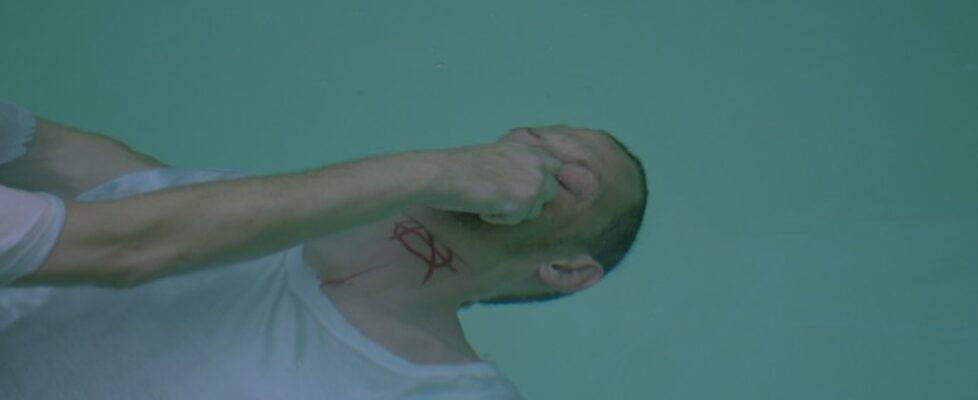
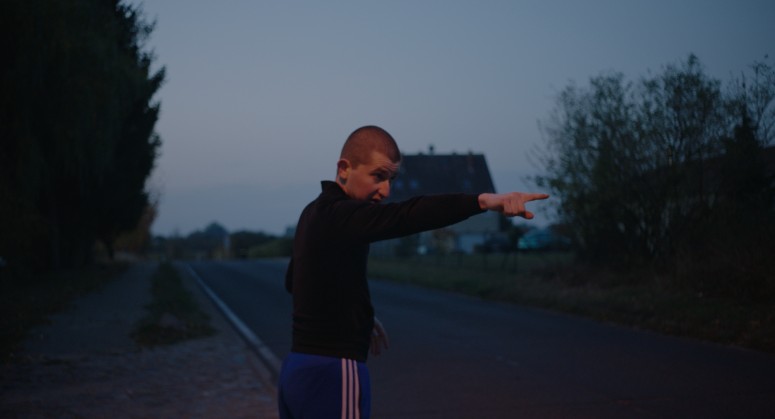
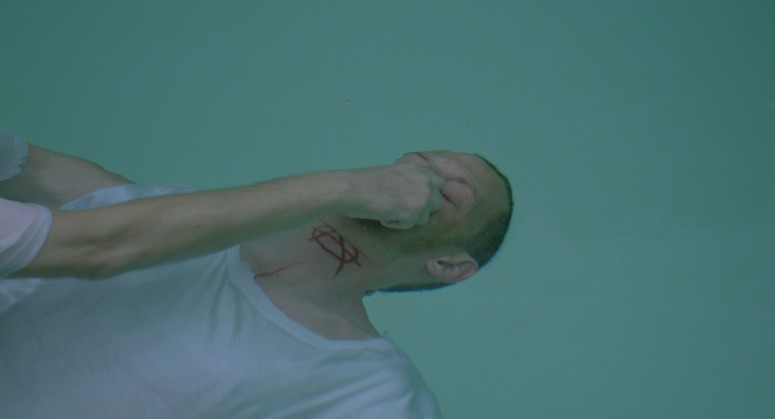
Deciding to review Jesus Egon Christ for Ubiquarian came as a spontaneous wish to analyse a film that doesn’t quite fit any strict classifications. Fiction is not what we write about if the film’s length surpasses the 40 minutes mark, and here we would be breaking the rule twice if it weren’t for a curious case of documentarisation of specific events played by a predominantly amateur cast. To one of them – Benjamin „Ben“ Stein, who passed away after the film was completed, the director duo David & Saša Vajda dedicate their fictiondocu based on a 2-year-long research at „methadone clinics, needle exchanges and on the streets“ of their neighborhood in Berlin-Neukölln.

Drug addiction is not the topic of the film which shows curiosity to discover what’s hiding behind the mask of substance abuse, people’s true identities and the way they go through the day.

An evangelical parish outside of Berlin, run by a self-proclaimed priest (Sascha Alexander Geršak), a former drug-abuser, houses a number of addicts. The priest is a somber character, not the emotional, helpful type. His vulnerable tenants – „sick little hearts and godless worms“ – have to go through the drug withdrawal cold-turkey only by the means of prayers and a bizarre form of help meetings. The bait for the complete submission is given in form of free meals and accommodation. Compared to other prospects – a spot under the birdge, a junky hide out, priest’s shelter is heaven.

The photography by the cinematographer Antonia Lange is stone-cold as the life she is filming. With the fluid camera movement, the people and their destinies are brought close to the viewer, but only just not to trasspass the border of decency. Night and day look the same. The problems pile up instead of going away. They are stored in the subconscience, but there is always a glimpse of hope.

The setting is ideal to set the story in. Secluded, humble, claustophobic.

A newcomer sets the tune to the narrative, a young man called Egon, played by the Berlin-based American musician/ performer Paul Arámbula. Watching him transform into a mentally unstable insomniac harmed by the extensive use of illicit substances, stuttering words, scratching his scalp while struggling to bring out a meaningful sentence, is a hair-raising experience. Arámbula’s portrayal of a fragile man whose mental illness is down-falling, is gripping. Among people with too many problems to deal with, his ’case’ isn’t seen as special. Nobody is alarmed by his strange behavior in a place where nothing is normal.

His psyche irreparably tarnished, Egon finds connection to Jesus who starts speaking to him in a language he finally can understand. The son of God seems to be sharing Egon’s dislike of showers, he even confesses of not being a miracle-maker, but merely a magician like David Copperfield, who can perform tricks.

Out of priest’s sight, the tenants have their own tricks to fight or feed their addiction. The latter is played, the first mostly improvised with non-actors being themselves.

Jesus Egon Christ has just world-premiered in the Berlinale’s Perspektive deutsches Kino program.  

© Vajda Film UG

Original Title: Jesus Egon Christus
Country: Germany
Language: German
Year: 2021
Runtime: 51’
Produced by: David Vajda
Written/ Directed by: David & Saša Vajda
DoP: Antonia Lange
Set Design
: Christina Chelaru, Lili Avar
Costumes: Christina Schmitt
Costume Assistant: Sophia Sigel
Make-up: Saskia Wegner
Sound Recording: Max Hartstang, Augusto Rousset
Gaffers: Pablo Ruiz Holst, Luca Pizzato
Camera Assistant: Joachim Neumann
Editors: David & Saša Vajda, Benjamin Mirguet
Colour Grading: Maximilian pauly, Abdul Twebti
Sound Design: Jan Brett, Ingmar Birk fehrle, Max Hartstang
Re-Recording Mixer: Jan Brett
Foley Artists: Luis Schöffend
Foley Recordist: Annika Ballweg
Cast: Paul Arámbula, Sascha Alexander Geršak, Angelo Martone, Roxanna Stewens, Benjamin Stein, Zora Schemm


«‹ 2 3 4 5

Hello world!

Limo_2

Review: Limousine (2021)

CripCamp

Review: Crip Camp: A Disability Revolution (2020)

Consumed_Image_1_Shauna_Macdonald

GSFF review: Consumed (2020)

Palte

Review: Swamp (2020)

Courage

Review: Courage (2021)

zenska

Opal H. Bennett Named Co-Producer at American Documentary | POV

↑

© ubiquarian 2026
Powered by WordPress • Themify WordPress Themes