Scroll down to content
ubiquarian
Responz
RSS
Menu
  • #21669 (no title)
  • #21675 (no title)
  • About
  • Blog
  • Contact
  • Create your website with blocks
  • home
  • home2
  • home3
  • Sample Page
Scroll down to content
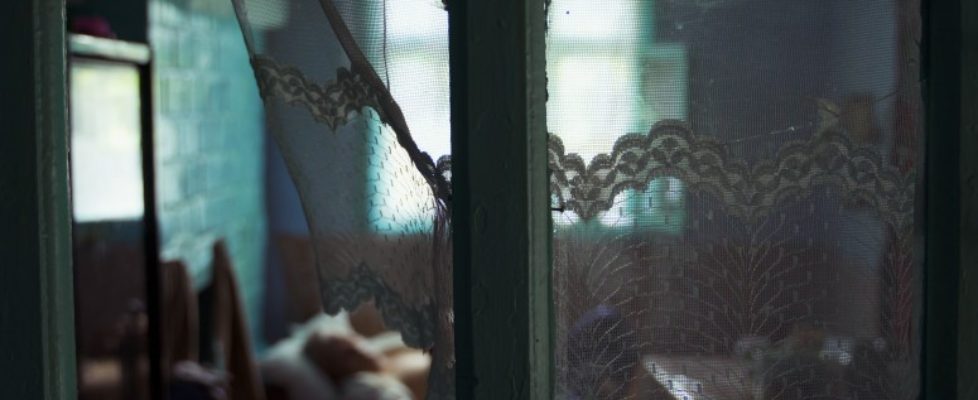
NanuTudor_OlgaLucovnicova
2021-03-14

‘My Uncle Tudor’, Berlinale review: The illusion of Consent

Bernhard / Berlinale, Festivals, Shorts Berlinale Shorts / 0 Comments

Berlinale Shorts Competition
Golden Bear for Best Short Film

© Olga Lucovnicova

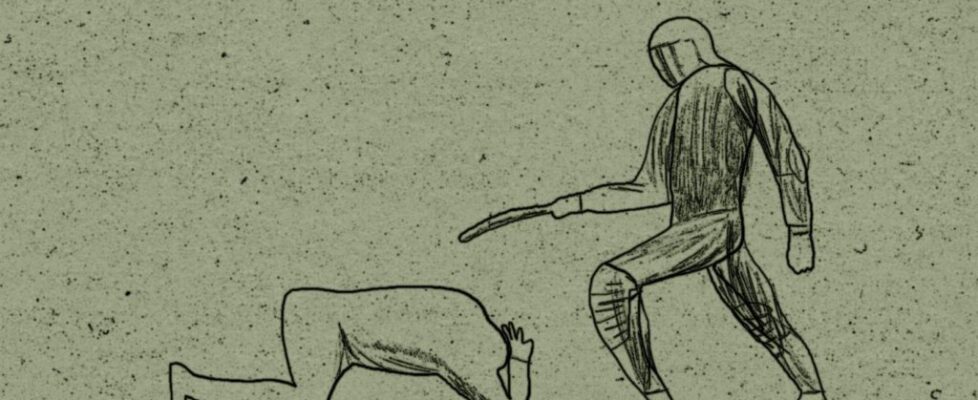
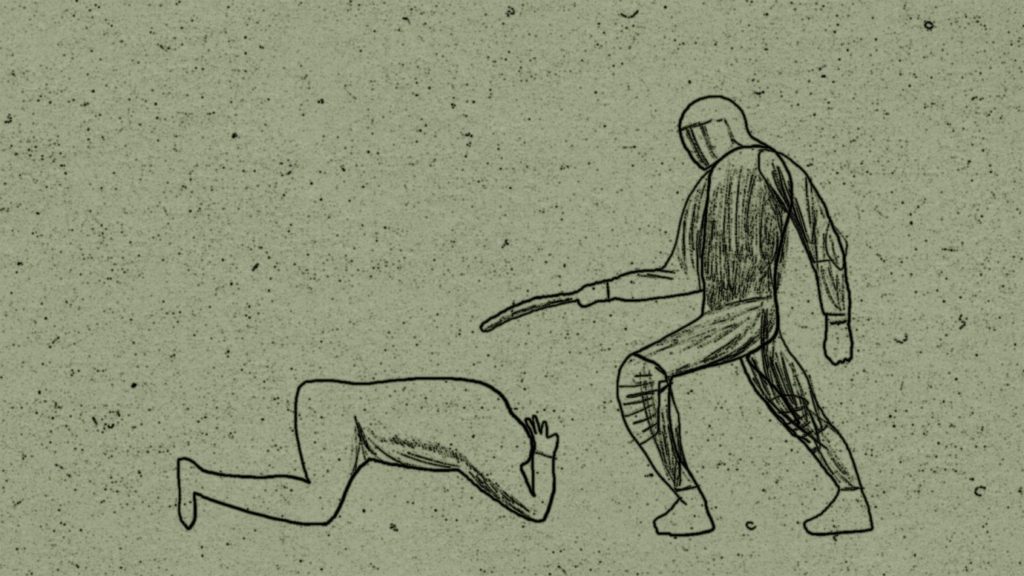
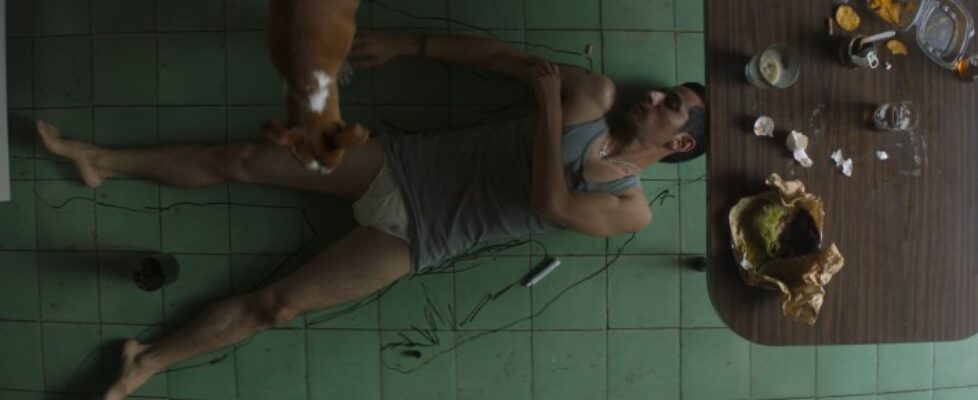
The Golden Bear-winning short film “My Uncle Tudor” takes a walk down memory lane, into the heart of darkness, to look up answers to some very unpleasant questions.

How did it happen for the first time? Was it romantic, pleasant, unpleasant, or embarrassing? There are different degrees to evaluate these categories, and the correct answer probably contains elements of more than one from the list.

But above all, was it consensual? There should be no degrees or percentages here, but in the mind of many, including the eponymous antihero, it’s all a matter of perception.

Fleeting Moments of Her Memory

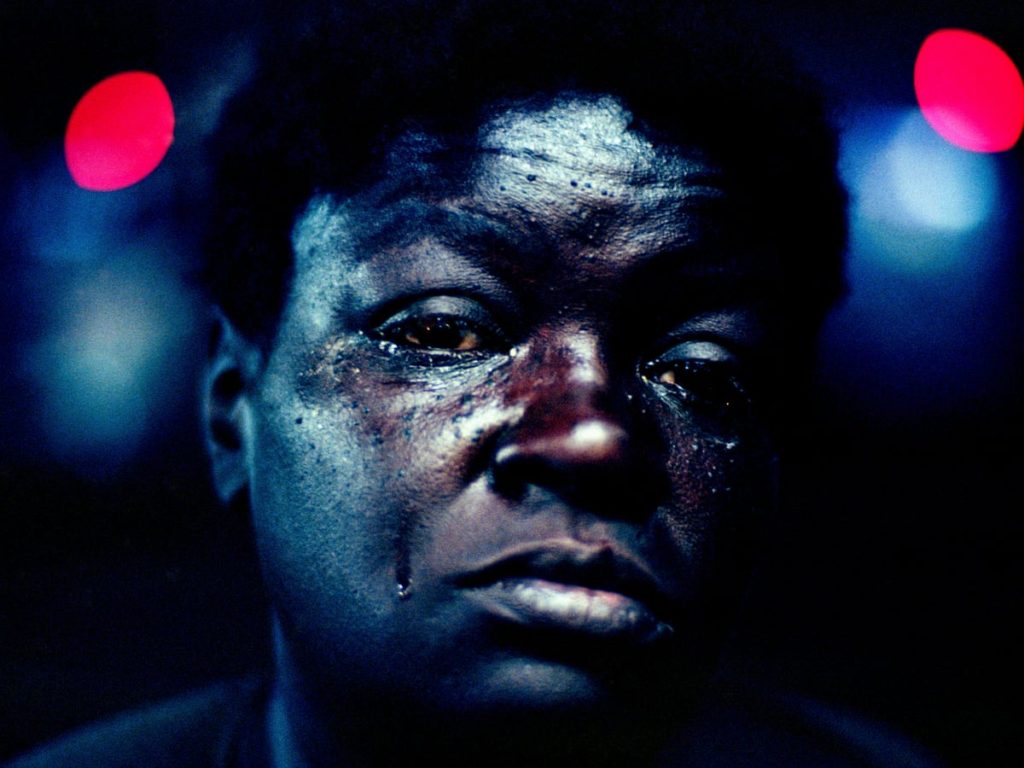
Yes, My Uncle Tudor is a film about rape. I understand that the slow reveal is a powerful narrative tool here – we are slowly invited into a dreamy childhood home of the author, where time seems to stand still, evoking a vision of a better, bygone world; convincingly led to believe that this is a bittersweet film about nostalgia – but not to come out with it in this review would equal “not talking about it”, and that is the main point of the film. To talk about it and acknowledge it for what it really is.

Uncle Tudor is an inhabitant of the described childhood dreamland, together with a chorus of ethereal elderly ladies who watch old photographs, reminisce about the times, and sing in a heavenly voice. From the start, Tudor is depicted with a sense of estrangement: through the veil, out of focus, partly hidden behind another person. Expertly, the seed of doubt is planted in the audience: why not show us the main character? Slowly, the veil of mystery is lifted when the author starts to ask Tudor about the memories, and whether his memories resemble her own or not. And Tudor really shows himself.

Degrees of Depravity

When it becomes clear that the author remembers too much for a complete denial, Tudor switches to Semantics. “You weren’t so small” (9 years), “I only put it between your legs” (not inside). One mitigating circumstance after another, crowned by the nonchalant statement: “I think I behaved nice with you.”

It is an argument of technical detail, shocking in its mundanity. Its voice is covered with tracking shots of little details in the house: Details, probably unchanged since childhood days. Potent reminders of a childhood trauma. The details don’t just speak but scream at you in a muted voice. Silent witnesses of “only”, “just” and “nice”.

Act of Resistance

The real hero of the story is of course the author Olga Lucovicova, because it is her story. There is no degree of separation here: it is an unflinching look into a gripping personal nightmare. In an interview to Berlinale1, Lucovnicova explained how the idea of the film met great resistance from the family throughout the process, because the vision of a perfect family needed to be upheld.

Here, the author goes against herself and all of her kin to uncover something that has haunted her a long time. Throughout the film, Lucovnicova synchronizes our feelings with hers. At first, the false sense of security, then the anxiety creeping in slowly, and finally, the stupendous indifference of all the parties involved.

—

In Estonia, only last week a female football player confessed to being a lover of a Brazilian coach since she was 14 years old2. The man is over sixty, and his explanations were: 1) Big love, 2) She turned 18 pretty soon after, and 3) She was the one who wanted it.

The society seems to side with the coach. It’s not happening in a remote village somewhere in Moldova, and not years ago, in another time, but right here and now. Which makes Olga Lucovnicova’s “Uncle Tudor” not just a powerful poetic narrative documentary, but also a poignant weapon in fight against the illusion of consent.

11 https://www.facebook.com/watch/?v=570830760541148

22 https://news.err.ee/1608141274/football-league-launches-investigation-into-sexual-abuse-allegations


Original Title: Nanu Tudor
Countries: Belgium/ Portugal/ Hungary
Language: Romanian, Russian
Year: 2020
Runtime: 20′
documentary form
Produced by: Olga Lucovnicova
Co-Produced by: Universidade Lusófona, Lissabon/ University of Film and Arts, Budapest
Written/ Directed by: Olga Lucovnicova
Director of Photography: Olga Lucovnicova
Editor: Olga Lucovnicova
Young
2021-03-11

Review: Young Hearts (2021)

Bernhard / Berlinale, Festivals, Shorts Berlinale Shorts / 0 Comments

Berlinale Shorts Competition

Courtesy of Berlinale

One thing is certain: no one in their right mind would ever want to go back to their teen years and live through them again. Think about all the inner anxieties, uncertainties about who we are, how we are supposed to think and feel, the inability to formulate our thoughts and speak openly about our feelings in order to be understood.

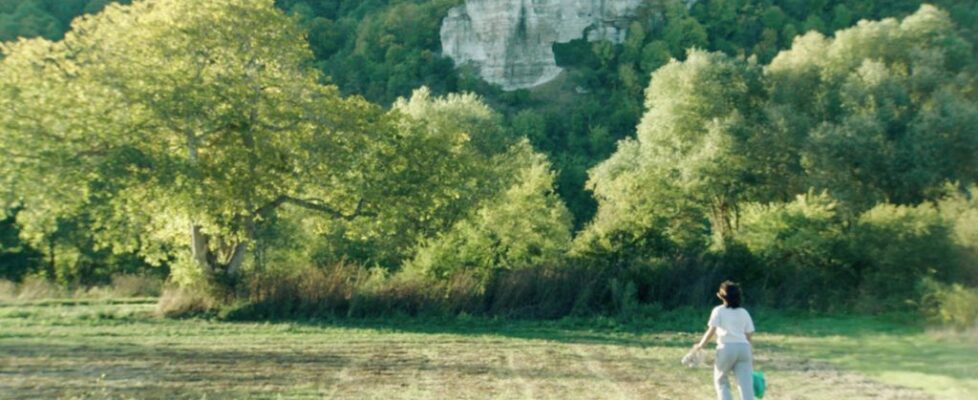
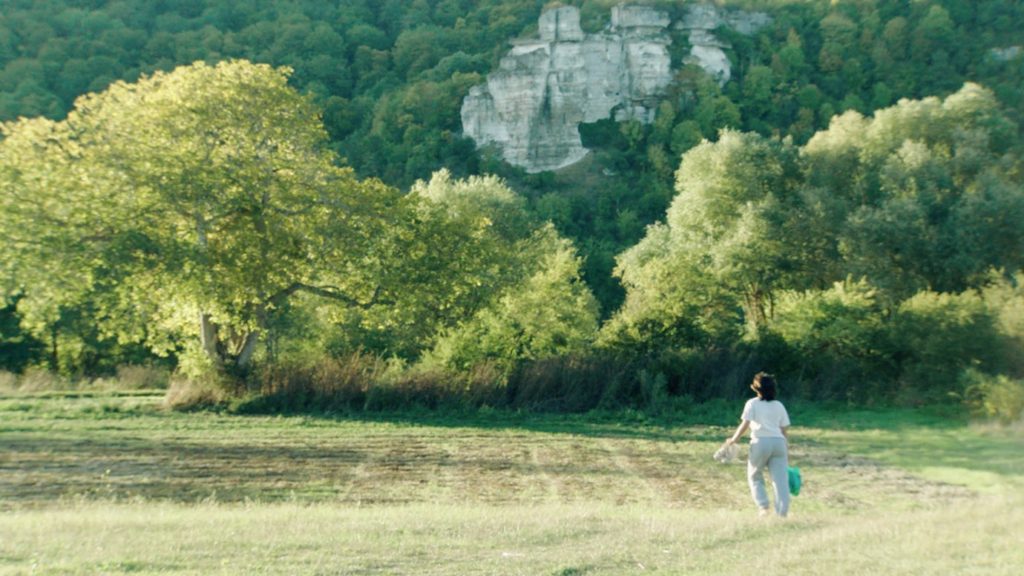
Young Hearts (or Si t’as un coeur in original, which is not the same thing and it would translate as If You Have a Heart), the screenwriting and directorial debut of the acclaimed Paris-based stage director Émilie Vandenabeele, is a film just about that: a group of teenagers trying to connect to one another while feeling time pressure. It premiered in this year’s Berlinale Shorts Competition.

Yuna (Mathilde Le Borgne), Lucie (Lucie Vincentelli), Arthur (Arthur Velten) and Jurijn (Artis Antonini) have their separate dynamics as a group and between one another. Somebody likes someone. Somebody likes to tease someone. Somebody knows someone’s secrets and somebody thinks they know all about somebody else based on few memories from the past. The summer is coming to an end and initiative of sorts needs to be taken in order for things to change or at least clear.

It might seem as a knotty network of relationships, laced by the inflation of teenage drama and sprinkled with the volatility of their communication. It is, but it is not necessarily a bad thing, especially in the hands of a talented stage writer, actress and director such as Vandenbeele who has the complete control. The dialogue here, or at least the perfect calibration of its harshness and mellowness at just the right moments, is a thing to admire, while the directing done in a classical European art house style (hand-held camerawork, the rhythmic changes between the wide shots and close-ups and the contrasts between the sun-kissed, richly green nature in the day and the cool blues of the night) fits the bill.

Young Hearts is here to remind us why ageing is not a bad thing after all, but also to motivate us to understand teenagers in our surroundings. For them, their drama is real.


Original Title: Si t’as un coeur
Country: France
Language: French
Year: 2021
Runtime: 22′
Producers: Maud Deschambres, Bastien Ehouzan
Written/ Directed by: Émilie Vandenameele
Cinematographer: Juliette Barrat
Sound Design: Cécile Février, Tom Allibert-Bardoux
Sound Mixing: Clément Chauvelle
Music: Lambert Plauzolles, Valentin Portron, Megi Xexo
Editor: Matthieu Parmentier 
Cast: Artus Antonini, Mathilde Le Borgne, Arthur Velten, Lucie Vincentelli

1001 attempts
2021-03-10

Review: One Thousand and One Attempts to Be an Ocean (2021)

Bernhard / Berlinale, Experimental Films, Festivals, GSFF (Glasgow Short Film Festival), Shorts Berlinale Shorts, Wang Yuyan / 0 Comments

Berlinale Shorts Competition

Courtesy of Berlinale

In the promotional text for the Chinese-born France-based filmmaker and multidisciplinary artist Wang Yuyan, One Thousand and One Attempts to Be an Ocean, it is stated that if you do not want to drown, you have to be an ocean. Of course, that motto should not be taken literally, even though the content of this experimental-documentary collage of short snippets from the videos available on the internet is sometimes quite literal. The film premiered at this year’s edition of Berlinale Shorts and is about to have a tour on the festival circuit starting from Tampere.

The film starts with the beginning of a painting process and blue colour being poured over an empty white canvas, and ends with a completed ocean-themed painting, and the surface underneath it stained as the result of the artistic process. In the meanwhile, we have a collage of short clips, sometimes literally ocean-themed, sometimes not, sometimes touching the common places of the modern life like the industrial production, global warming and car accidents, ocasionally offering the commentary.

Wang’s directing, essentially composed of editing short clips (probably 1001 of them, I did not count them personally, but they are all listed in the ending credits) together in the rhythmical fashion, is apt for a piece of video-art. The real hero in this work is the sound designer Raphaël Hénard whose choice of sentences in English played in quick loops and manipulations with them regarding the speed and the shifts create the hypnotic feeling of a rave party to some trance / minimal soundtrack.


Runtime: 11’ 30’’
Country: France
Language: English
Directed by: Wang Yuyan
Editing by: Wang Yuyan
Sound design by: Raphaël Hénard
Colourist: Juliette Barrat
Produced by: Eric Prigent
Production company: Le Fresnoy – Studio national des arts contemporains
Sales by: Square Eyes

strange-object
2021-03-09

Review: Strange Object (2021)

Bernhard / Berlinale, Documentaries, Festivals, Shorts Berlinale Shorts, Miranda Pennell / 0 Comments

Berlinale Shorts Competition

courtesy of Berlinale

Sometimes the whole film has to be watched to understand what it is actually about. Miranda Pennell’s short documentary Strange Object, which premiered recently at Berlinale Shorts, is deliberately constructed that way so the viewer has to walk the same route of exploration as the filmmaker did previously, in order to understand the filmmaker’s thoughts on the road of discovery.

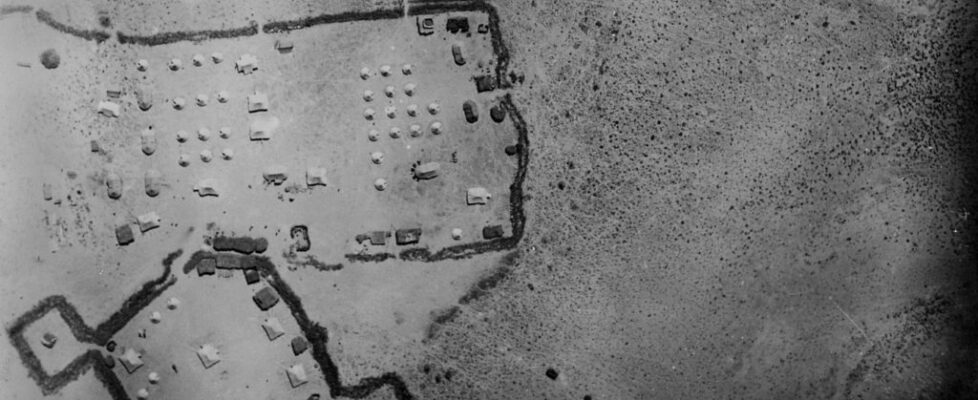
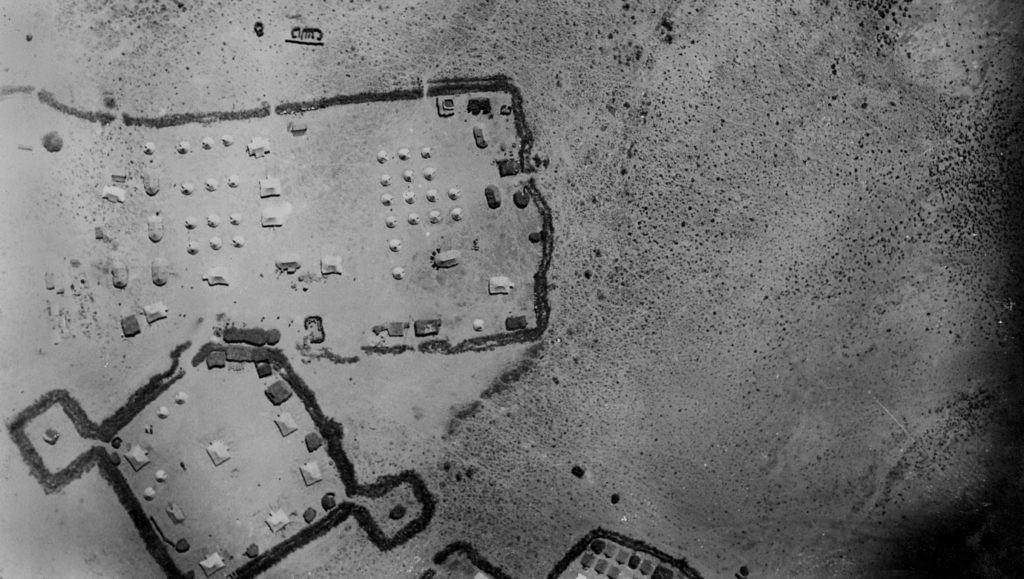
It all starts with a red leather-bound photo album with photos taken by the Z Unit in 1920, in a strange and foreign land somewhere in the British Empire. The photos kept in that album document a desert landscape that could be from another planet, and also some men-made stone structures – probably a type of settlement. The holes in the ground, however, signal that something violent happened there, and, as the pages are being turned, we get sucked into a story of the colonial conquest, terror, destruction and history-writing.

Everything in Pennell’s film comes from different sources. The photos from the album were taken by the Z Unit of Royal Air Force stationed in nowadays Somalia and the album itself was compiled in Berbera, British Somaliland in 1920. It is kept at The National Archives in London. The quotes used for narration are taken from a 1923 book called “The Mad Mullah of Somaliland” by Douglas Jardine, secretary of administration in the same colonial territory that was in office from 1916 to 1921. The mad mullah of the title is actually an anti-colonial resistance leader Mohamed Abdullah Hassan.

The key thing, however, is the sound and its brilliant design. The sounds samples come from an open source, but they are arranged masterfully to create the atmosphere of different actions. Some of them are clearly “set” in the archive, as we here page-turning, footsteps, doors opening, re-typing and murmur. The others, focused on the sounds of the nature, accompany the photos and add one more level to them. As the film progresses and the story about the photos and what is on them gets clearer, the sounds in the film’s soundscape get more abstract.

In the end, the strange object of the title is explained and is not that strange at all. That is unfortunate for our civilization built on destruction and our history that elevated imagination and prejudice to the level of science, but at the same time it is kind of fortunate for Miranda Pennell’s film.


Runtime: 15’ 10’’
Country: UK
Language: English
Directed by: Miranda Pennell
Written by: Miranda Pennell
Narrated by: Miranda Pennell
Editing by: Miranda Pennell
Sound by: Miranda Pennell
Produced by: Miranda Pennell

vadim on a walk
2021-03-09

Review: Vadim on a Walk (2021)

Bernhard / Berlinale, Festivals, Shorts Berlinale Shorts, Sasha Svirsky / 0 Comments

Berlinale Shorts Competition

courtesy of Berlinale

Stepping out of the comfort zone is never easy, but hardly any life coach or a new age smartass could explain us the basic reason for feeling unpleasant when finally taking the step to personal freedom. Probably the most basic reason for being scared of new things is the difficulty to re-orient oneself in new spaces. That confusion is the primary subject of Sasha Svirsky’s animated short film Vadim on a Walk that has recently premiered at the Berlinale Shorts competition.

We meet our titular protagonist while he’s sitting in a transparent square space, picking up the courage to step out of it and explore the unknown world that lays in front of his eyes. As he moves on, his stream of consciousness, delivered by the means of voice-over narration, gets wilder and wilder, switching the topic of his thoughts faster and faster. It is followed by the switches in the animation technique and style, back and forth, with simple hand drawings and computer rendering. The protagonist’s mental landscape is also reflected in the auditive component of the film, both in the sound design that shifts between clarity and confusion shown in distortion and the loops, and in the musical background that moves from the typical synth-infused retro electronica to the uneasy acoustic territory of “Nintendo-core”.

Sasha Svirsky comes from the background in painting and is a self-taught animator that likes to play with the stereotypes, outside of his artistic comfort zone. He does the same thing with Vadim on a Walk in a manner that is not exactly groundbreaking, but effective in what it’s trying to convey.


Original title: Vadim na progulke
Year: 2021
Runtime: 8’ 04’’
Country: Russia
Language: Russian
Directed by: Sasha Svirsky
Written by: Sasha Svirsky
Narrated by: Alexey Prosvirin
Animated by: Sasha Svirsky
Edited by: Sasha Svirsky
Music by: Alexey Prosvirin
Sound design by: Alexey Prosvirin
Produced by: Andrey Krzhanovsky, Nikolay Makovsky
Line producer: Nadezhda Svirskaya
Production company: School Studio Shar
Supported by: Ministry of Culture of the Russian Federation, Alma Mater Foundation Worldwide
Sales by: School Studio Shar

Motorc_StefanieReinhard
2021-03-08

Motorcyclist’s Happiness Won’t Fit Into His Suit (2021)

Bernhard / Berlinale, Festivals, Shorts Berlinale Shorts / 0 Comments

Berlinale Shorts Competition

© Stefanie Reinhard

The understanding of beauty, with all its socially rooted codes and trends that trod along, is the cruelest judge of who, what and how gets accepted, cherrieshed and loved, and this is not something that formed its shape yesterday, nor in the 20th century or even back in Middle Ages. Humankind’s relationship to “attractive” is tricky, and not so detached from the mechanisms of power. Along these lines, Motorcyclist’s Happiness Won’t Fit Into His Suit kicks off with a quotation by an unnamed woman that each one’s responsible for their beauty, and that being ugly is an insult to other people. This clearly is a right introduction to the local (filmic) wisdom “To each their own motorcycle”.

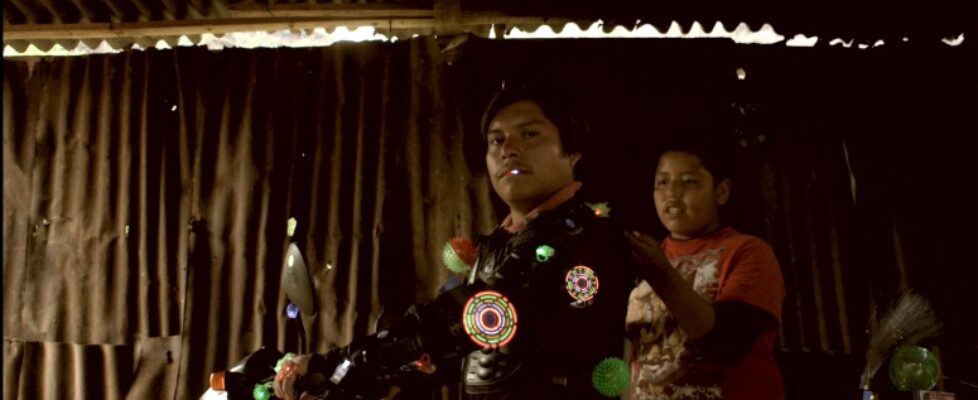
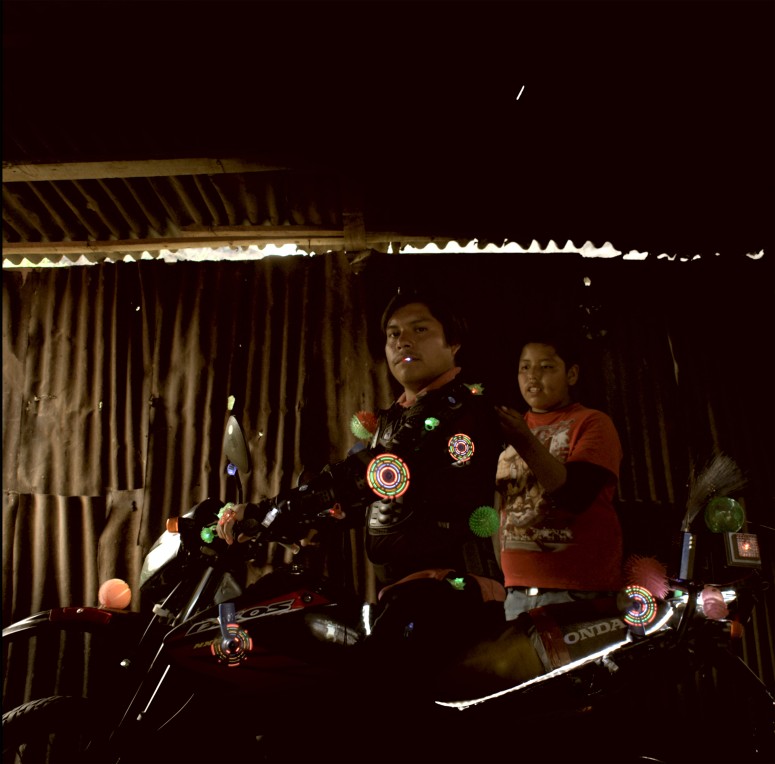
A sturdy young man is proudly demonstrating his bike. Not that he is talking or pointing at anything in particular. A bit pretend-busy by checking a command or two, he is clearly satisfied with his iron horse. His gaze straight into the camera lens screams “look at my bike!” moments before his leather jacket gets brought in with pompeous grandeur by four young people. The man, obviously a leader, is all set to get the engine rolling to conquer the area.

When the rider starts the engine, we are still boxed in his royal red “warrior” tent, with only a slight idea what’s outside. Although in command of a motorized cavalry waiting for him in the greenery, he wants to be the first one to explore. “Him and no one else” was getting into the jungle, is something that Hernan Callejas allegedly said to his exploration brigade back in the 16th century conquest of Mexican territories. He wasn’t actually first, considering it was the rest of them cutting through plants and scaring off indigenous people. Back at that time, it was the conquistadors’ helmets that shone in their cold elegance.

In his Berlinale Shorts contender Motorcyclist’s Happiness Won’t Fit Into His Suit, Gabriel Herrera paints a nonconformist picture of the Spanish conquest of Indigenous lands, set in modern context. The relationship between new and ancient, modernity and nature is put into a play of reversed roles. “The new world was full of unexpected objects, unreasonable plants, drunk animals, unknown prayers. He dressed them all in his own suit…”

The beauty of the conqueror. His shiny armor and display of superiority over those he came to erase on his expedition, for a higher purpose. He dominates the nature and the foreign habitat, dressed in his best clothes.

This is a film that will certainly travel a long festival road. Shot on 16mm and shown in the boxy 1:1 aspect ratio, Motorcyclist’s Happiness Won’t Fit Into His Suit is a window into a parallel universe of history brought forward in the now.


Original title: Al motociclista no le cabe la felicidad en el traje
Country: Mexico
Language: Spanish
Year: 2021
Runtime: 10′
Directed by: Gabriel Herrera
Written by: Gabriel Herrera, Stefanie Reinhard
Produced by: Susana Bernal
Production: Black Maria Producciones
Co-produced by: Artemio Narro
Supported by: Goethe Institut, Disruptiva
Cinematographer: Stefanie Reinhard
Sound Design: Gabriel Herrera
Sound Editor: Naybi Suya, Rodrigo Navarro, Pablo Herrera
Sound Mixing: Ricardo Artaega
Sound Recording: Alajandra Hernández
Editor: Gabriel Herrera
Production Designer: Luis Castaneda
Cast: David Illiescas, Ángel Morales, Lisandro Robles, Estefania Guerrero, Ulises Robles, Joel Ramirez

copmovie
2021-03-08

Review: A Cop Movie (2021)

Bernhard / Berlinale, Documentaries, Festivals Alonso Ruizpalacios, Berlinale Competition, Yibran Asuad / 0 Comments

Berlinale Competition

© No Ficcion

Straight up cop movies are not easy to find on the lists of Berlinale competition titles. There are some notable exceptions, with José Padilha’s highly controversial title Elite Squad (2007) winning the Golden Bear award in 2008, as the most striking example. It seems that the Berlinale veteran Alonso Ruizpalacios who already has two Silver Bears in his pocket (his 2014 title Güeros was awarded as the best debut feature, while his 2018 based on true events heist thriller Museum scoped the best script award) lays his complete hand of cards on the table with A Cop Movie just with its title, but we are in for a surprise here. Awards-wise, the end result is another Silver Bear, this time for the outstanding artistic contribution (Yibran Asuad’s editing), while the Netflix distribution deal will secure the film’s exposure to a wider audience in the months to come.

The film opens to a female police officer’s voice-over narration set against a reconstructed sequence that covers one of the “adventures” of her job. Teresa once successfully delivered a baby albeit having no medical training and was celebrated as a hero by the family and neighbours of a woman she helped. That simple example raises many questions and shows some of the paradoxes of the Mexican society, such as where was the ambulance that was called, if Teresa’s intervention was legal at all, and what would have happened if something went wrong.

More delicate situations of a day to day cop routine in Mexico City, such as the lack of funding, the defiant attitude of the citizens from all the social classes, and the question of bribe among other things are exposed, as another officer, this time a guy called Montoya takes over the narration to present himself. In the next passage, it is revealed that Teresa and Montoya are not just partners in the squad car, but also in real life, which makes their story very film-friendly, especially in a full-on action sequence of chase through the hallways of a subway station, although not quite likely to happen in the real life.

The real surprise comes next: “Teresa” and “Montoya” might not be the real cops at all, but the characters for an upcoming movie, as we learn that they are played by the actors Mónica Del Carmen and Raúl Briones, respectively. The actors take over the film and their immersive, method-style preparations for the roles, from the training at the academy to actually patrolling the streets and facing the general population while “playing the role” becomes its primary content.

However, the social and psychological observations we get on the margins of the action are the real gem within this beautiful film. The key thing is the power and the attitude towards it. Different people have different motivations to join the force, from the family tradition and the genuine respect for the police work, to the existential reasons and even the pathological ones, such as to have a power and the ability to use and abuse it. The most striking contrast comes in the portrait of Raúl, who is a hippie, bohemian type of character and who has trouble playing the figure of authority.

Some comparisons could be drawn to the works of other filmmakers, such as Robert Greene’s plays on the audiences regarding the faction and fiction. There is bit of Peter Nicks’ work (especially his 2017 title The Force) in A Cop Movie’s DNA, while the parallels between it and Luke Lorentzen’s Midnight Family are hard to avoid regarding the complicated context of the Mexican society where the public services are systematically defunded. On the other hand, A Cop Movie is quite an original and sincere film whose imperfections (such as the missed opportunity to make a point once the real Teresa and Montoya and the actors who play them appear together in the same frame) make it even more genuine.

Technically, A Cop Movie is an ambitious work. The play with different styles and formats of footage shot by the newcomer Emiliano Villanueva are coded in a clever, not too obvious manner, while Asuad’s award-winning editing is a thing to marvel. Following Ruizpalacios’ vision and under his supervision, A Cop Movie is a one of a kind blend of diffusion and clarity and a must-see documentary.


Original title: Una película de polícias
Year: 2021
Runtime: 107’
Country: Mexico
Language: Spanish
Directed by: Alonso Ruizpalacios
Written by: Alonso Ruizpalacios, David Gaitán
Cast: Mónica Del Carmen, Raúl Briones
Cinematography by: Emiliano Villanueva
Editing by: Yibran Asuad
Sound design by: Javier Umpierrez
Sound by: Isabel Muñoz Cota
Production design by: Julieta Álvarez Icaza
Costume design by: Ximena Barbachano de Agüero
Make-up by: Itzel Peña García
Colourist: Phaedra Robledo
Assistant director: Pablo Pérez Lombardini
Produced by: Daniela Alatorre, Elena Fortes
Production companies: No Ficción, Cinema Maquina
Distribution by: Netflix

Barbieblut_UluBraun2021
2021-03-08

Review: Glittering Barbieblood (2021)

Bernhard / Berlinale, Festivals, Shorts Berlinale Shorts / 0 Comments

Berlinale Shorts Competition

© Ulu Braun

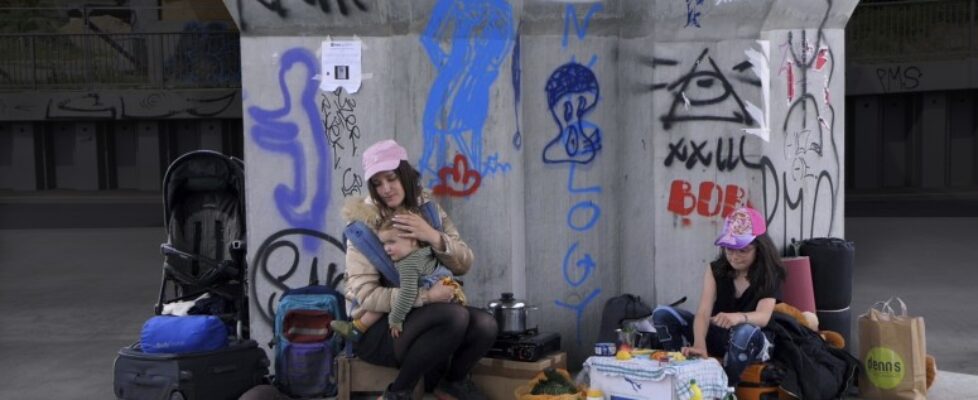
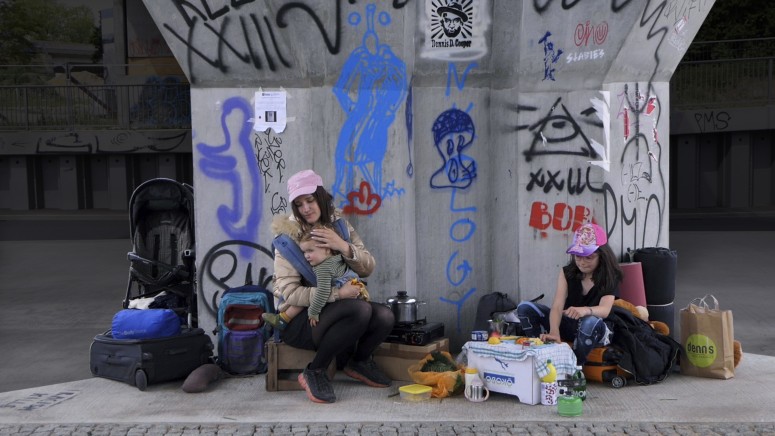
When right after the opening credits a little girl’s voice starts whispering about her new camera by which she films whatever she finds interesting, we don’t expect to see a young homeless family of three under a bridge: a mother (Gina-Lisa Maiwald) holding her baby, and a girl (Mietze Maiwald) preparing food in an improvised open “kitchen”. Surrounded by suitcases, sleeping bags, pram and shopping bags, the clean, washed, manicured, kempt and content family gets ready for their meal. With the traffic above their heads, and the construction work going on right in front of their eyes, their only irritation (although expressed in soft, composed voices) seems to be coming from the garbage carried by the river. Otherwise, all’s just perfectly normal. It’s another day in homeless paradise. Or – are they homeless at all? If not, why are they carrying around all that gear?

In Ulu Braun’s alleged documentary, the viewer is challenged to discover a larger picture through the fantasy world shared by mother and daughter. But, where to start? Maybe with a flier showing a certain Dennis D. Copper – “the saint of the streets”? The identities of many faces that briefly appear on the screen are also unknown. At one point the family will spy upon a group of people in some backyard. “My friends from before are talking about rent prices, racism, female quotas and corruption in the FIFA”, the woman explains. By the look of it, it must some kind of shared community that both of them obviously belonged to once upon a time. Or- did they?

I could end every single paragraph written about this film with a question. Or – two?

We are supposed to “paint-by-numbers” according to Ulu Braun, but how that’s another thing. The path mother and daughter are walking (or flying) is convoluted. There is no way telling what connects those dots, the places and faces. Sometimes, the abstract gets attenuated. A story or two are told, but then it’s back again to the unstable camera movement, the blur and the narrative whose structure is violently shaken and stirred.

People talk, eat peanuts, juggle, they walk dogs or deliver food. Barbie is also present now and then. In a beauty parlor to calm down a crying kid, or on a sticker. She is there in fantasy talks. But there is no glitter, not in the slightest. Not even in the blood.

One of the mysteries of the film gets solved towards the end, and the face of Dennis D. Cooper (“Big Worm”) appears again in Detroit, on his tombstone on thegraveyard next to the former Packard Automotive Plant. But – why did he become the saint of a German town’s streets?

Glittering Barbieblood should a comment on modern urban living, on a big social gap between the privileged and the invisible, but its inaccesible audio-visual language makes it an unlikely international festivals’ choice.

Written/ Directed/ Produced by: Ulu Braun
Camera: Kai Herrmann
Sound: Jochen Jezussek
Visual Assistance: Ella Hebendanz, Milan Braun, Niina Lehtonen Braun
Music by: Fritz Rating
Cast: Gina-Lisa Maiwald, Mietze Maiwald, Dietlind Sommer
Supported by FFA (German Federal Film Board)

one hundred steps
2021-03-07

Review: One Hundred Steps (2021)

Bernhard / Berlinale, Documentaries, Festivals, Shorts Bárbara Wagner, Benjamin de Burca, Berlinale Shorts / 0 Comments

Berlinale Shorts Competition

courtesy of shortfilm.de

From the colonial, Eurocentric and hegemonic point of view, the technology, the culture and everything considered to represent the way of life are being exported from the dominant civilization(s) to the less developed ones. The truth is, however, that the culture itself is more universal and travels more freely and fluidly, regardless of codes what “belongs” to which civilization. In the 80s, the Irish filmmaker Bob Quinn tried and managed to deconstruct the standard narrative by finding a connection between the North African and the Irish culture.

Quinn’s work Atlantean is the starting point of Bárbara Wagner’s and Benjamin de Burca’s eighth joined short film One Hundred Steps and is also referenced directly in it at one point, being the only part in analogue and in colour in otherwise digitally shot black and white film. One Hundred Steps had its world premiere at Berlinale Shorts.

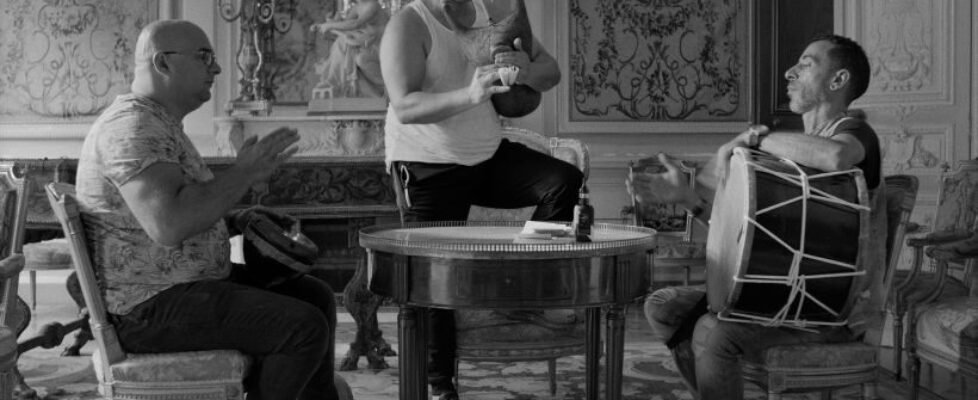
It consists of two mirrored parts, each set in a formerly privately owned luxurious property turned into a museum in two different countries. First of the two takes place in a countryside manor in the south of Ireland built by English barons who later rose to the status of earls. It starts as an old fiction feature, with a man and his daughter arriving late for the guided tour, even building a bit of tension when the young girl wanders off to do some sightseeing on her own. When the tour is over, the songs are being sang in Gaelic and the step-dance is being performed.

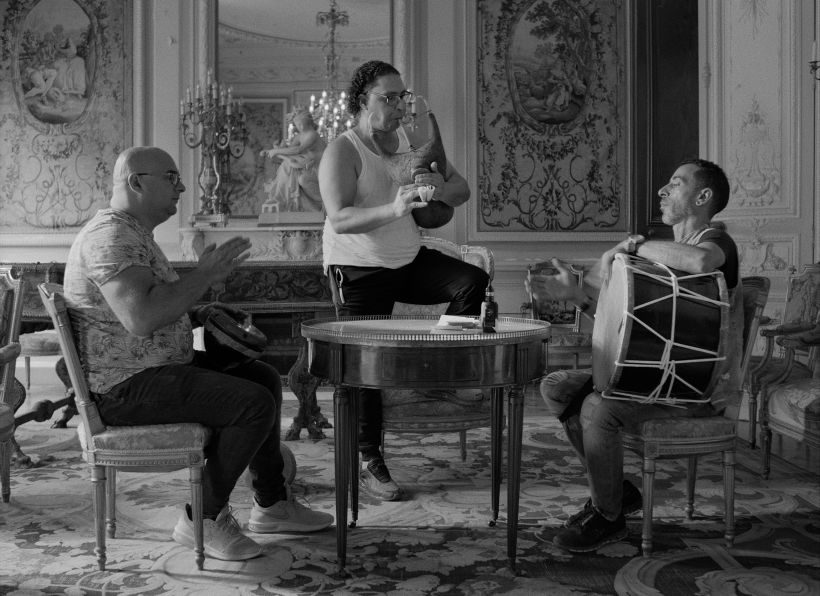
The second part of the film takes us to the south of France, to Marseilles and to a bourgeois urban palace in the centre of the city. The mechanics of the plot is similar, a woman comes late to the guided tour and the music, both instrumental and a capella ensues, drawing the parallels between the different cultural heritages, from the Arabic to the Occitan to the Celtic and eventually to modern French and English.

Wagner and de Burca prove their point here in a seemingly effortless and highly elegant fashion, blurring the lines between the documentary and the fiction filmmaking in a proper artistic essay. The camerawork in the shades of grey handled by Pedro Sotero and Joana Luz is simply marvellous, especially during the perfectly controlled steadicam shots taking us from one “action” to another, while the precise editing Daniela De Lamare suits the purpose perfectly. Brilliantly exhibited, One Hundred Steps takes it point across easily.


Runtime: 31’ 17’’
Country: Germany, France
Languages: English, Gaelic, French, Occitan, Arabic
Directed by: Bárbara Wagner, Benjamin de Burca
Written by: Bárbara Wagner, Benjamin de Burca, Pedro Sotero, Joana Luz, Daniela De Lamare
Cinematography by: Pedro Sotero, Joana Luz
Editing by: Daniela De Lamare
Sound design by: Gábor Ripli
Colourist: Sergi Sanchez
Produced by: MichelBalagué, Bárbara Wagner, Benjamin de Burca
Production companies: Volte, Volte Films
Commissioned by: Manifesta 13 Marseilles, Visual Centre for Contemporary Art Carlow
Supported by: Arts Council of Ireland, Bundesregierung für Kultur und Medien, Medienboard Berlin Brandenburg, V-A-C Foundation, Ammodo
Sales by: Volte

IWalkOnWater
2021-03-07

Reflections 15: “This is my story, this is my song, praise in my saviour…”

Bernhard / Reflections 0 Comments

Film still from ‘IWOW: I Walk on Water‘ (2020) © Khalik Allah

The ebb and flow of the natural world is rhythmic yet complex; there are patterns, but their meanings are interpretive. Khalik Allah has an ability to visually express this sentiment, both questioning and skewering it. In his words, “I go beyond the form to the content.” It sounds simple enough, but as with everything Allah says and photographs, there is a needling that sticks around; there is something more to grapple with, to listen to, to touch.

It is joyous, challenging, and rare that a film like IWOW: I Walk on Water (2020) comes along. It is beautiful, frustrating, boring, sublime, and most of all, thorny. So much so, that it demands more temporal contemplation of its viewer than its lengthy runtime allows. At just under three-a-half hours, watching IWOW felt like a slog. Yet, I might never stop thinking it over, and can just barely skim the surface of what Allah is doing with the work. To engage fully is to go further – to view and to listen again, and then again, and again, yet there is a resistance in me to do so.

I am as interested in the work as I am in its affect: Allah is not making films for casual consumption, nor is he modest about who and what he is presenting. There is a sincerity even in his bullshit: he claims to be the son of God, but he is tripping on mushrooms when he says it. He offends his mother with this proclamation but it means more, and deeper than the false iconography of embodying a higher being. He doesn’t proselytise but he is preaching. It’s as if his practice of filmmaking is alchemical; his visual methodology touches the four core elements of our world; earth, air, fire, and water; allowing him to transcend its tangibility. What he is reaching for is God-like but not necessarily Godly. Allah offers us a haptic vision of his interior and exterior world, that we might have some kind of sensory understanding of who and what he’s looking at and talking about.

Aside from not being interested in recounting the plot or premise of a film, I wouldn’t dare try to surmise what IWOW is, or is not. Instead, allow me to say this: when we see water, lapping, it is not an entity that moves on its own; it is guided and touched by air, it is permeating yet stopped by earth, and it is, in its very existence, connected to or in conversation with its binary opposite, fire. The imagery of a dragonfly in extreme close-up is as significant as the subjects he shoots, just as the sounds of water are as revealing as the sounds of sirens cutting through personal testimony. Words espoused are like crashing waves– sometimes our ears welcome the gentle connection on offer, and sometimes it feels violent and destructive to receive.

Allah’s mother tells him, “You can be Jesus-like,” and he responds with yet more hyperbole, “I am a genius.” It would be too easy to dismiss this as narcissism – though that may also be at play. But this is where writing about films, and film criticism, becomes especially tricky, and important. Because context is everything. Sure, Allah says he is a genius, that he is Jesus, and that his subject, Frenchie, is God. But these are not the only things he says. He also says, “I don’t believe in white people,” (while we look at a black and white image of an art gallery and its sign that reads, ‘European Art’), “The shit that I teach you is because I’m trying to learn,” and “God only has one son and the son of man is racist.”

For a film as dense and thorny as Allah’s, which has led critics to write things like, “IWOW feels at points like the sort of artist’s work that might be at home in a gallery, and it invites a floating attention span that might make some viewers want to dip in and out,” (Jonathan Romney for Screen Daily); “Though Khalik’s intoxicating style is certainly accessible in short bursts, the idea of putting a novice in front of this almost-three-and-a-half-hour behemoth feels like they would be lost in a beautiful-looking inside joke,” (Vikram Murthi for RogerEbert.com); and “No one releases a three-hour-plus record of urban decay and the minutiae of their personal life without a touching faith in audience attention spans – or a complete indifference to them,” (Danny Leigh for Financial Times). This mode of writing is either patronising to the reader or a fair way of excusing high among the plastic arts to greet the status quo.

But as Allah is so deeply entangled in his own work – as problematic as my own style of first person, subjective-as-understanding-the-world critical writing – it is also a judgement on him and his pursuit of authenticity (which isn’t without its own set of deeply complicated ethical questions – concerning both filmmaking and being – I recommend reading Tom Seymour’s piece for The Art Newspaper for more on this). This question around critical writing is always present but feels especially relevant right now as spaces such as galleries (let alone cinemas) are not available for such films to screen in. I can’t help but wonder how differently IWOW might have affected me if I had have seen it in either a cinema or gallery context. In particular, it reminded me of my experience of Wang Bing’s Crude Oil (2008), at Courtisane film festival in 2018. Crude Oil is fourteen hours, documenting a workday at a remote Chinese oil field. Duration is crucial. But I didn’t watch it in its entirety. I saw maybe four hours – a little over a quarter of the film, and yet would say I have ‘seen’ it.

Unlike Netflix’s two-minute algorithm that records such viewing as data, we (culturally? artistically? collectively?) consider works of such duration, that ‘hang’ in the gallery, or spaces of similar setup, imagining already that the ‘viewer’ (visitor?) will not run the course, as a different offering to films that screen in a cinema, which ask (demand?) full and sole attention. Light in the dark is a very powerful thing.

My own desire (if not realisation) of seeing such durational works in their entirety and as intended – by whom? Wang Bing never imagined anyone would sit for 14 hours to watch Crude Oil, as he told us in Ghent, yet it was curated in such a way at this particular festival that one very nearly could, if not for toilet and other comfort breaks – this aside, exhibition matters, especially where criticism is concerned. Response, much like the art it works in relation to, has form as well as content.

This past week, unlike most of my contemporaries, I didn’t attend Berlinale, or Woche der Kritik (Berlin Critics’ Week). I did, however, read two reviews of IWOW that fundamentally misunderstand the medium they are discussing, one that calls it a “collage of video, celluloid and 16mm,” (Peter Bradshaw for The Guardian), and another that says it was “shot on a mixture of video, film and 16mm,” (Ed Potton for The Times). If 16mm is not film… and if Allah is using Celluloid (quick wiki for anyone wondering) then surely that ought to be the headline of the review, if not cultural breaking news.

The work of the critic, however, is equally as open to interpretation as art. Some might deride me for not attending an A-list festival from home, especially when I am so eager to watch Radu Jude’s new film. Others might consider it appalling that my column wears the inconsistency of its writer on its sleeve; it is sometimes late, its length varies, it’s often meandering and perhaps only occasionally insightful – certainly more curious than authorial. But, like Allah’s documentary (if we are sure we need such a term to delineate his work from other moving image modes), it is also the product of the practice of its maker.

Zarina Muhammad wondered about this in conversational style over at the white pube this week with her piece titled, “what do critics do?”, and though she outlines a number of seminal answers (10) the full answer is as endless as the number of people who consider themselves critics. For me, writing is a practice from which an alchemical process is possible; where patterns are present but affect is, even if meaning is not, interpretive. It is not the desire to sit outside or even in counter to the mainstream that makes the work along its fringes thorny. It is the sincere pursuit of sublimation and self that necessarily imbues and embodies it so.

«‹ 2 3 4 5 ›

Hello world!

Limo_2

Review: Limousine (2021)

CripCamp

Review: Crip Camp: A Disability Revolution (2020)

Consumed_Image_1_Shauna_Macdonald

GSFF review: Consumed (2020)

Palte

Review: Swamp (2020)

Courage

Review: Courage (2021)

zenska

Opal H. Bennett Named Co-Producer at American Documentary | POV

↑

© ubiquarian 2026
Powered by WordPress • Themify WordPress Themes